Clear Sky Science · en
Individual activity of forest rodents correlates to pathogen communities
Why rodent personalities matter for our health
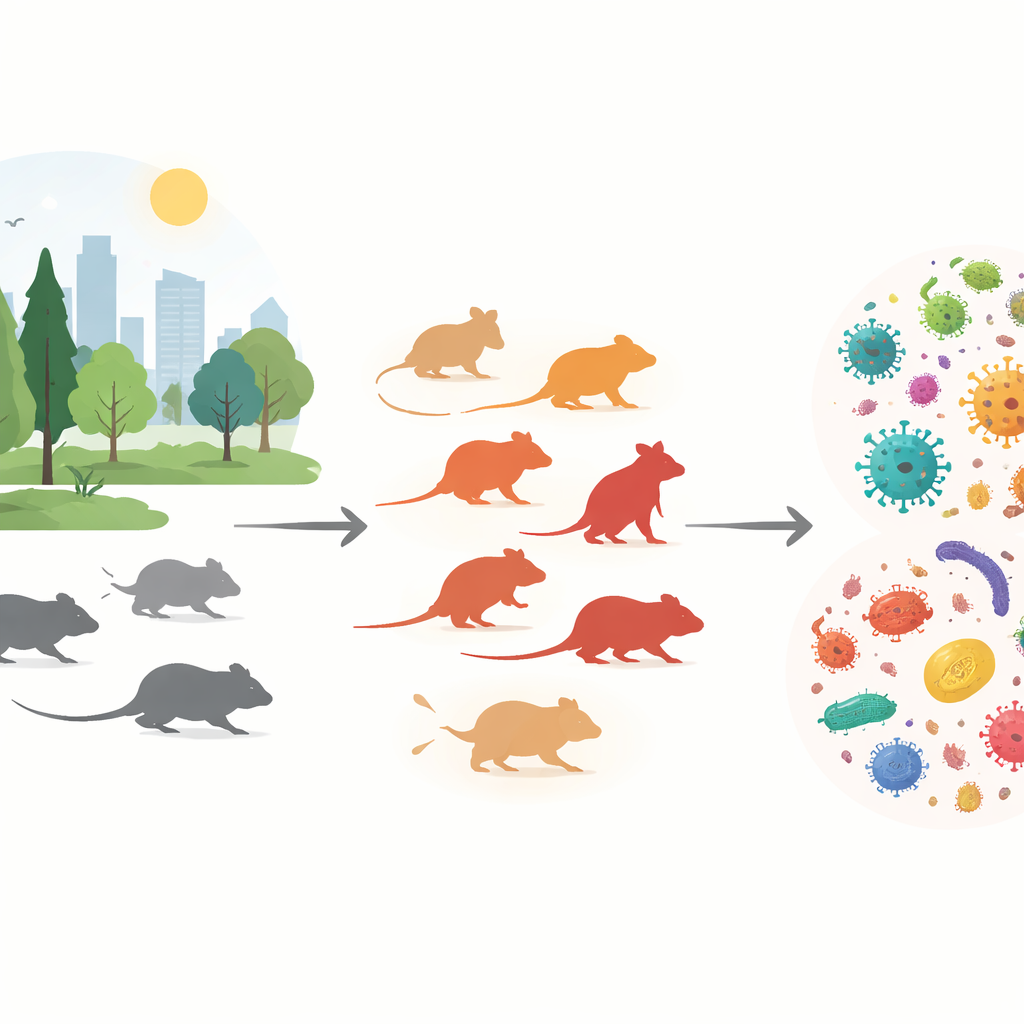
In forests and city parks around the world, small rodents quietly share space with people. These animals can carry a range of germs that sometimes jump into humans and cause disease. This study asks an unexpected question: does a rodent’s “personality” — how bold or active it is — change which germs it carries? By linking simple behavior tests with modern DNA methods, the researchers show that more active wild rodents host different and often richer communities of pathogens than their calmer neighbors.
Shy and bold neighbors in the undergrowth
Not all animals behave the same way. Some individuals explore every corner of their surroundings, while others stick to cover. Scientists call these consistent patterns “personality traits,” and in rodents they often fall along two main lines: how bold an animal is when leaving shelter, and how active it is when moving around. In this study, researchers worked in a German city park and a nearby forest, catching three common species of wild rodents. Each animal was run through two standard tests: one that measured how quickly it emerged from a dark tube into a bright arena (a sign of boldness), and another that tracked how much of the open area it explored (a sign of activity).
Reading the invisible passengers
After the behavior tests, a subset of 93 rodents was humanely collected so the team could examine the tiny organisms living on and inside them. They carefully combed the fur to count fleas, ticks, and lice, and then used DNA sequencing on spleen samples to detect bacteria and related microbes. This approach allowed them to screen broadly, without targeting any single disease in advance. They identified six types of pathogenic bacteria and one group of microscopic parasites, along with three kinds of external parasites. Some of these, such as Bartonella and Borrelia, are known to infect humans through bites from fleas or ticks.
Active animals, richer pathogen communities
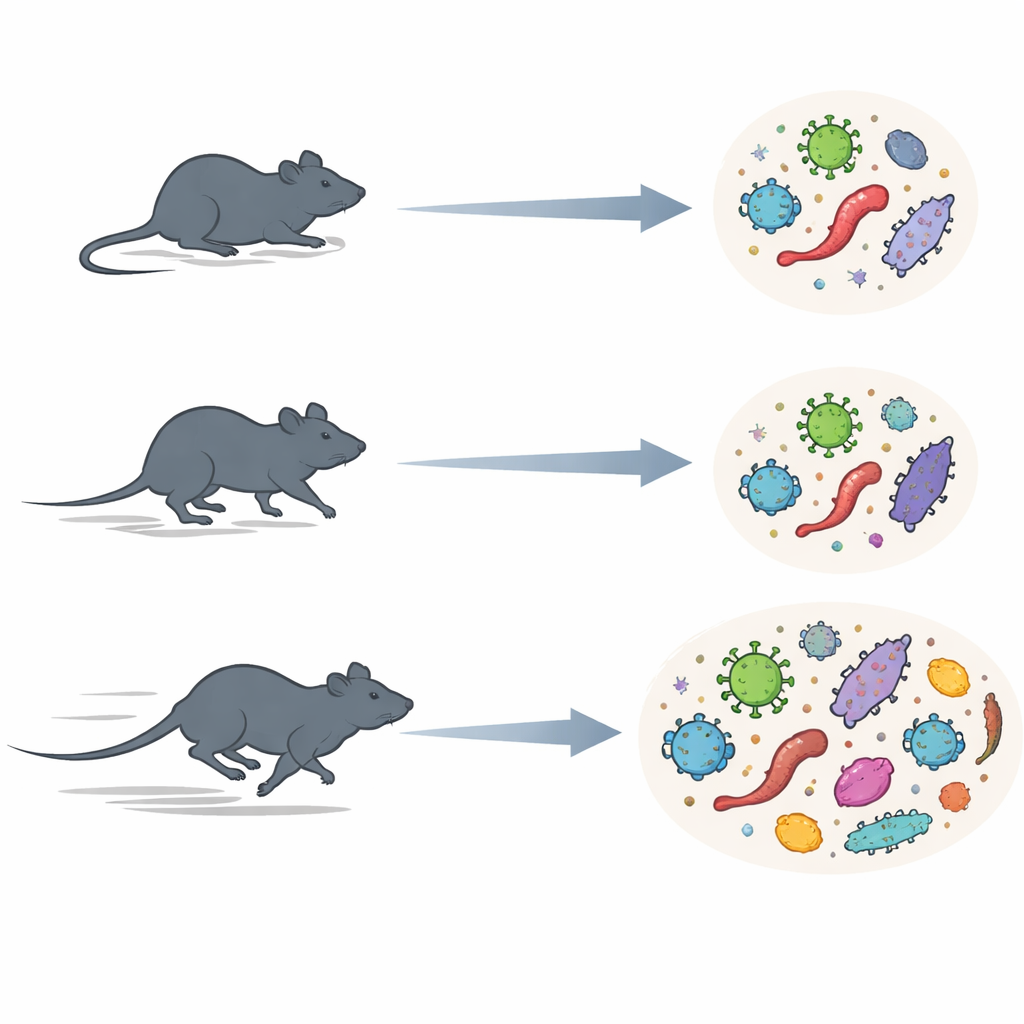
When the researchers compared behavior with infection data, clear patterns emerged. The overall mix of pathogens found inside the rodents varied mainly with species, season, and whether the animals came from the forest or the park. Yet behavior still mattered: within each rodent genus, activity levels explained about 7–9% of the differences in pathogen communities. More active rodents were more likely to carry Bartonella, the most common pathogen in the study, and in one vole species, highly active individuals were also more likely to host parasites from the Sarcocystidae family. In contrast, boldness had little effect on which pathogens were present inside the body.
Shy bodies, more ticks
External parasites told a slightly different story. Fleas and ticks were more frequent in the forest than in the park, and males tended to carry some pathogens more often than females, probably because males roam farther and interact more with other animals. Surprisingly, when it came to ticks, shyer rodents — those that delayed emerging from shelter — were more often infested than bold ones. Earlier work suggests that shy individuals prefer denser, taller vegetation, which is also favored by many tick species. In other words, cautious rodents may choose hiding places that are rich in ticks, increasing their chances of being bitten even if they move less overall.
What this means for tracking disease risk
By combining behavior tests with detailed pathogen screening, this study shows that individual differences in activity can shape the “mini-ecosystem” of germs living in wild rodents. Highly active animals tend to carry more kinds of pathogens at once, which may put extra pressure on their immune systems and make them important links in chains of transmission. At the same time, shy animals can be key hosts for certain parasites like ticks because of where they choose to live. For public health and wildlife managers, this means that watching how animals behave — not just which species are present — can improve predictions of where and when disease risks will be highest.
Citation: A. Eccard, J., Firozpoor, J., Escobar, M. et al. Individual activity of forest rodents correlates to pathogen communities. Sci Rep 16, 14684 (2026). https://doi.org/10.1038/s41598-026-51276-6
Keywords: rodent behaviour, zoonotic pathogens, ticks and fleas, wildlife disease ecology, animal personality