Clear Sky Science · en
Domain-specific effects of hunger on attention and choice
Why Feeling Hungry Shapes Only Some of Our Choices
Most of us have gone grocery shopping on an empty stomach and watched cookies win over carrots. But does that same hungry state also make us more impatient with money decisions or more selfish toward others? This study asks a deceptively simple question with big everyday implications: when we are hungry, does our thinking change across the board, or mainly when food is involved?
How the Researchers Put Hunger to the Test
To tease this apart, the scientists invited 70 adults to the lab twice: once when they stayed hungry after an overnight fast, and once after drinking a protein shake designed to take the edge off their hunger. In each session, participants faced three kinds of decisions. First, they chose between foods that were especially tasty or especially healthy. Second, they made money decisions that traded a smaller reward soon against a larger reward later. Third, they decided how to split money between themselves and a charity, pitting selfish against generous options. Throughout these tasks, a sensitive eye-tracking device recorded where and how long people looked on the screen, revealing how attention moved during the decision process. 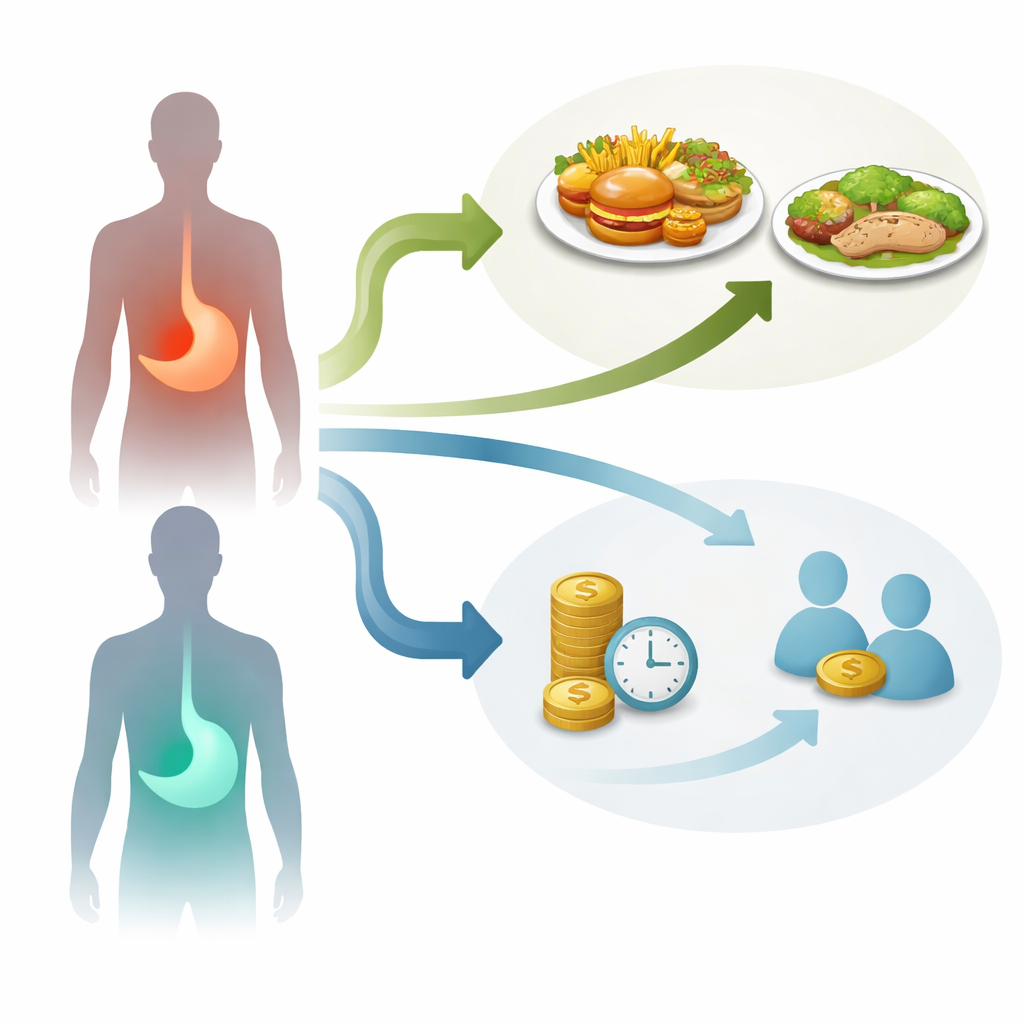
Hungry Minds Go Straight for Tasty Food
The pattern in food choices was clear. When participants were hungry, they chose tasty foods over healthy ones more often than when they were sated. Their eyes also gave away how this happened. In the hungry state, people looked longer at the tasty option and were more likely to ignore the small nutrition label that signaled how healthy the food was. That shift in gaze fully explained the shift in choice: once the researchers accounted for where people looked, the direct effect of hunger on picking the tasty item largely disappeared. In other words, hunger did not simply flip an internal switch labeled “I want junk food”; it redirected visual attention toward tempting items and away from health information, and the choices followed the eyes.
Money, Time, and Sharing Stay Surprisingly Stable
When decisions moved beyond food, the story changed. In the money-over-time task, people generally preferred to wait for larger rewards rather than grab smaller ones right away, and this tendency did not reliably change with hunger. Similarly, in the sharing task, participants typically favored more prosocial (charity-friendly) options, and hunger did not make them noticeably more selfish. Eye movements reinforced this domain-specific pattern. Looking longer at a given option still made that option more likely to be chosen, but hunger did not systematically pull attention toward the “hotter” options in these non-food tasks. People did not look more at impatient money offers or more selfish splits when they were hungry; their visual search patterns stayed essentially the same.
Peeking Inside the Decision Process
To understand the mental machinery behind these patterns, the authors turned to a mathematical model that treats choice as a gradual “accumulation” of evidence in favor of one option or the other. This model can separate different ingredients of the process, such as how strongly taste versus health matters, how much unattended information is discounted, and whether people start out biased toward one type of outcome. In the food task, hunger increased the weight given to taste and made health information count much less whenever people were not directly looking at it. In contrast, the corresponding settings in the money and sharing tasks barely shifted with hunger. Even though there were hints that hunger slightly weakened a built-in tendency to favor later, larger rewards, the core way people evaluated trade-offs in these non-food decisions remained stable.
What This Means for Everyday Life
Altogether, the results point to a reassuring but nuanced conclusion. Being hungry clearly nudges us toward tastier, less healthy foods by steering our eyes and our mental calculations toward immediate flavor and away from health. Yet the same physiological state does not seem to make us broadly more impulsive with money or more selfish in social situations, at least under the conditions tested here. In practical terms, avoiding food shopping or menu decisions when ravenous may help us eat better, but we need not worry that skipping lunch will automatically turn us into short-sighted spenders or less generous people. Hunger, it seems, targets the food domain rather than rewriting our decision-making across the board. 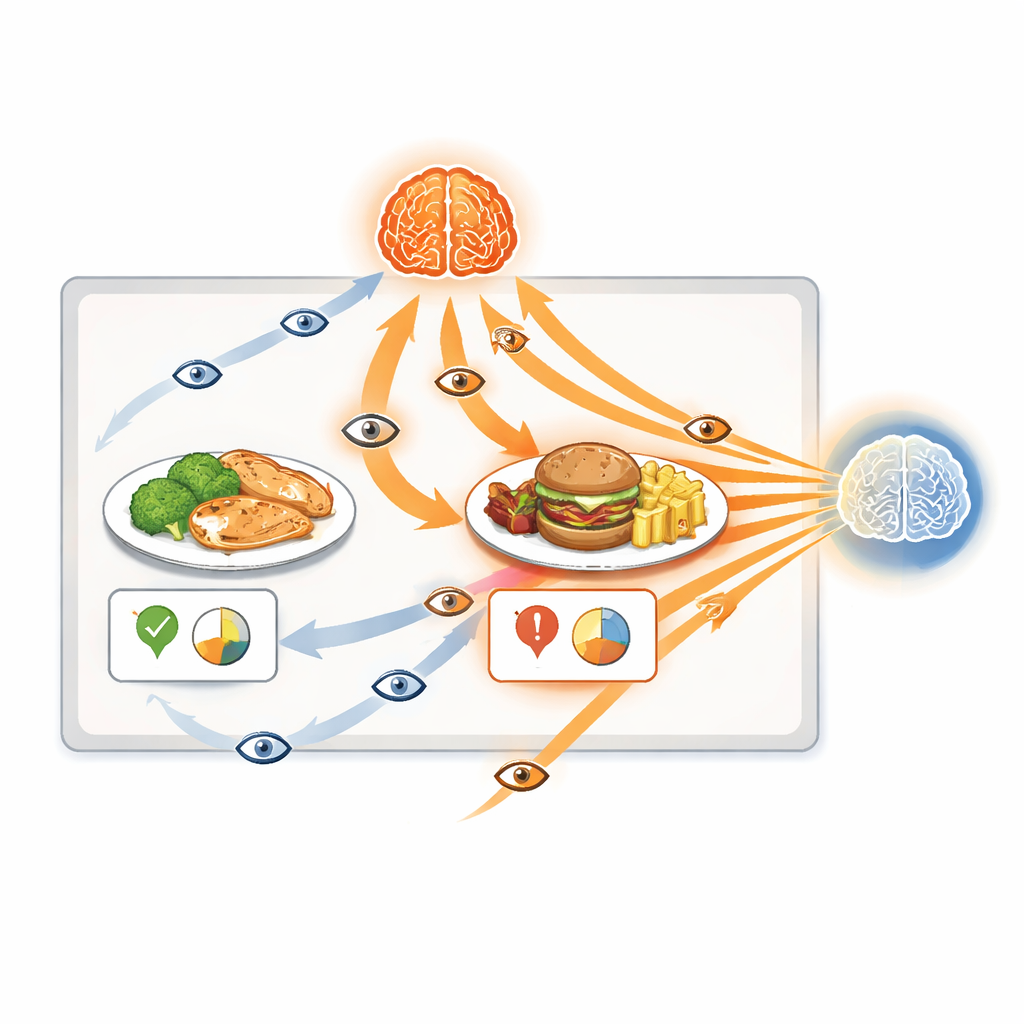
Citation: March, J., Ting, CC., Park, S.Q. et al. Domain-specific effects of hunger on attention and choice. Sci Rep 16, 13030 (2026). https://doi.org/10.1038/s41598-026-48772-0
Keywords: hunger, food choice, attention, decision making, self-control