Clear Sky Science · en
Longitudinal stability of cognitive impairments in post-COVID-19 syndrome assessed with the tablet-based Oxford Cognitive Screen-Plus
Why this lingering brain fog matters
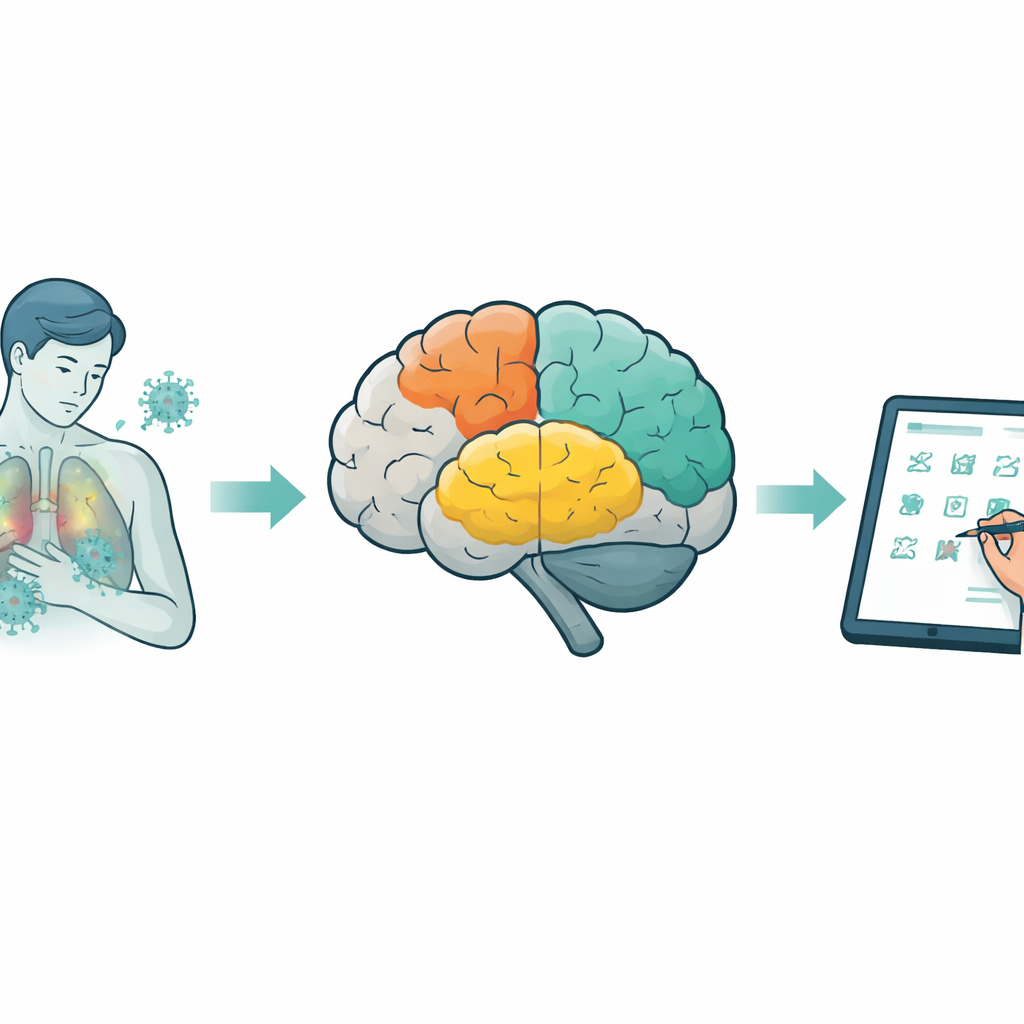
Many people who recover from COVID-19 continue to struggle with problems like poor concentration, forgetfulness, and mental fatigue, often described as “brain fog.” These issues can make it hard to work, study, or manage everyday life, yet doctors still know surprisingly little about how long they last or whether they get better on their own. This study followed a group of working-age adults with post-COVID-19 syndrome (PCS) over several months to find out whether their thinking problems improved, worsened, or stayed the same, using a modern tablet-based test to track changes carefully.
A closer look at thinking problems after COVID
Post-COVID-19 syndrome refers to symptoms that persist for at least three months after the initial infection and cannot be explained by something else. Among these, cognitive problems—especially with memory, attention, and planning—are some of the most disruptive. Earlier work by the same research team had already shown that many PCS patients scored below healthy norms in these areas when tested about five months after infection. However, that first study offered only a snapshot in time and could not say whether these thinking problems were on the way out, here to stay, or getting worse.
Following the same patients over time
To tackle this question, the researchers invited patients from their earlier study at a German post-COVID clinic to return for repeat testing using the same tool, the Oxford Cognitive Screen-Plus (OCS-Plus). This is a brief, stylus-based test run on a tablet that measures several core mental abilities: how well people take in new information, remember it later, focus on relevant details, switch between tasks, and copy or recall simple figures. Eighty-one adults, most in their forties and all unvaccinated at the time they caught the virus in 2020 or early 2021, completed two rounds of testing spaced about four and a half months apart. The team also tracked symptoms of depression and fatigue, which are common in PCS and might influence mental performance.
What stayed sharp and what stayed impaired
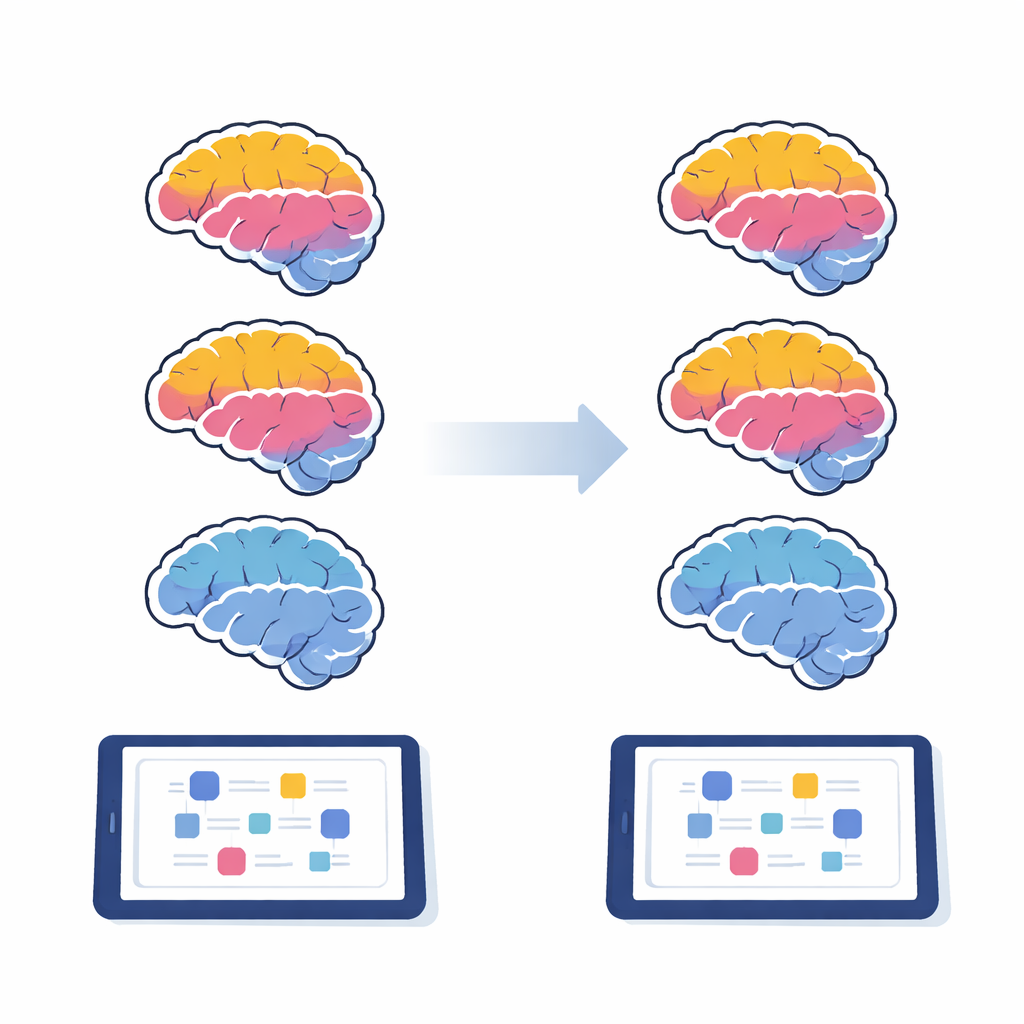
Basic abilities such as knowing the date, recognizing objects, and understanding word meanings were largely intact in nearly all participants at both visits, suggesting there was no general collapse in thinking skills. But when the researchers looked at the more demanding tasks—delayed memory, attention, and executive functions such as mental flexibility—they found a striking pattern: on average, scores did not change in a meaningful way between the first and second visit. Statistical tests showed no consistent trend toward improvement or deterioration, and additional analyses indicated that any small differences were too minor to count as clinically important. Even for abilities that looked normal at the first visit, performance stayed essentially flat over time rather than drifting up or down.
Mood, fatigue, and timing made little difference
The team also asked whether changes in how tired or depressed patients felt might explain any shifts in thinking performance. Using standard questionnaires for fatigue and mood, they compared changes in these symptoms with changes in test scores. Once again, there was no clear link: people who became less fatigued or less depressed did not show noticeably larger improvements in thinking, and those whose symptoms worsened did not show clear declines. Likewise, patients who waited slightly longer between assessments did not show different cognitive trajectories from those who returned sooner, at least within the roughly four-month window studied.
What this means for people living with brain fog
For this group of patients—many of whom had relatively severe illness early in the pandemic—thinking problems such as poor memory, reduced attention, and difficulties with mental flexibility did not fade on their own over several months, but also did not get worse. In everyday terms, this suggests that for some people with PCS, brain fog may be a stable, ongoing problem in the short to medium term rather than a temporary inconvenience that quickly clears. While the study cannot answer what happens over years, it underlines the need for continued monitoring and timely support, including targeted cognitive rehabilitation, rather than simply waiting for symptoms to disappear.
Citation: Kozik, V., Reuken, P.A., Katrin, K. et al. Longitudinal stability of cognitive impairments in post-COVID-19 syndrome assessed with the tablet-based Oxford Cognitive Screen-Plus. Sci Rep 16, 12589 (2026). https://doi.org/10.1038/s41598-026-48476-5
Keywords: post-COVID-19 brain fog, cognitive impairment, long COVID, digital cognitive testing, longitudinal follow-up