Clear Sky Science · en
Serum CCL1 discriminates infectious and sterile systemic inflammation in sepsis and acute pancreatitis
Why some inflammation needs antibiotics and some does not
When people arrive in the emergency room with high fever, low blood pressure, and failing organs, doctors must quickly decide whether the body is fighting an infection or reacting to internal injury without germs. That choice largely determines if powerful antibiotics are started immediately or held back. This study explores a blood molecule called CCL1 that may help doctors tell infectious sepsis apart from a severe but germ-free condition called acute pancreatitis, and even hint at how sick a patient with sepsis might become.

Two dangerous illnesses that look alike
Sepsis and acute pancreatitis are both medical emergencies marked by whole-body inflammation and a risk of organ failure. In sepsis, the trigger is an infection somewhere in the body, such as the lungs or urinary tract. In acute pancreatitis, the pancreas becomes inflamed, often because of gallstones or alcohol, but no bacteria are necessarily involved. At the bedside, both illnesses can cause similar symptoms and standard blood tests for inflammation, like C-reactive protein or interleukin-6, often rise in both. Because antibiotics are vital in sepsis but usually not needed in pancreatitis, a clearer way to distinguish these conditions would be valuable.
Looking at the body’s immune brakes
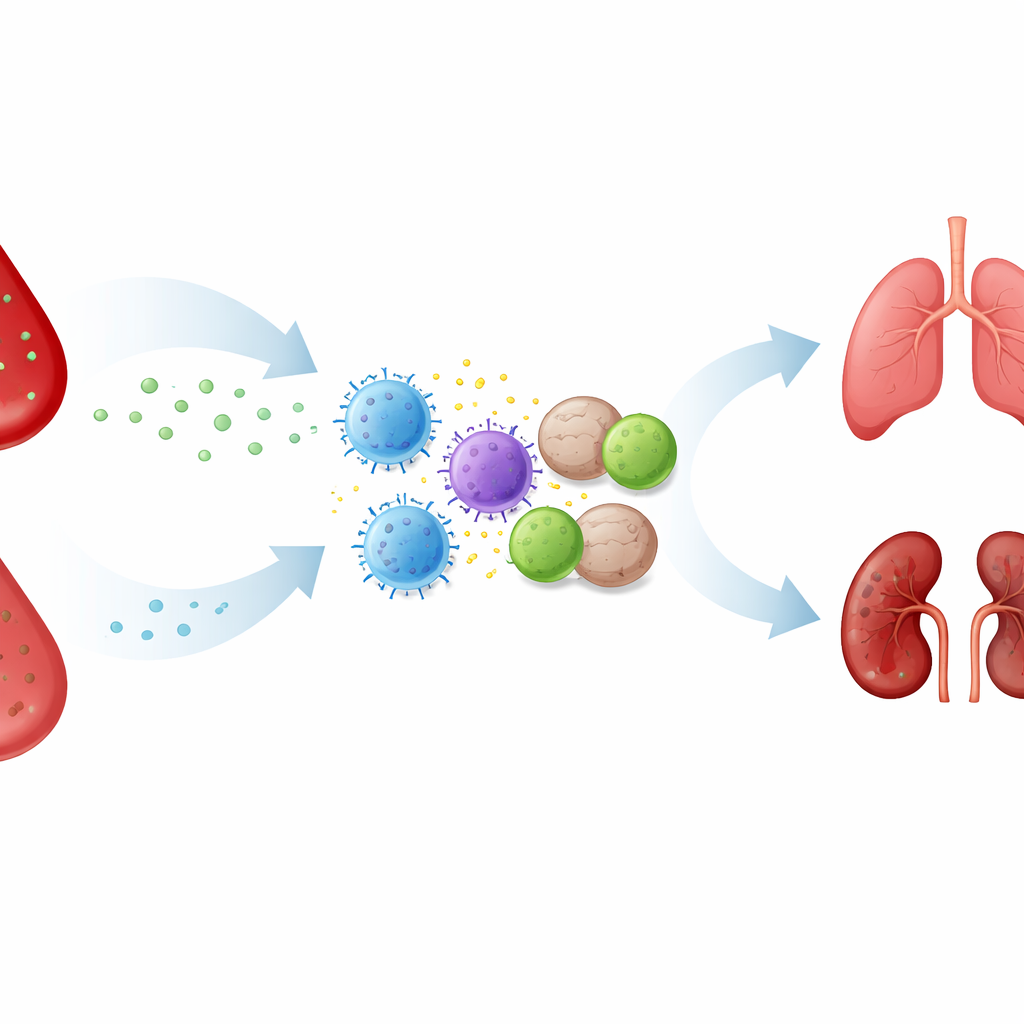
The research team focused on a special type of immune cell known as regulatory T cells, which act as brakes on the immune response. These cells are guided through the body by small signaling proteins called chemokines. Two such chemokines, CCL1 and CCL22, are known to attract regulatory T cells and are easy to measure in blood. The scientists asked whether levels of these molecules differ between people with sepsis, people with acute pancreatitis, and hospital patients who were ill for other reasons but did not have major inflammation or infection.
Following blood signals over time
The study enrolled 159 patients at a single hospital: 15 with confirmed sepsis, 45 with acute pancreatitis, and 99 hospitalized controls without active infection or strong inflammatory disease. Blood samples were collected on several days after admission, and common markers of inflammation were measured alongside CCL1 and CCL22. As expected, the standard tests for inflammation rose in both sepsis and pancreatitis and could not reliably tell the two apart. In contrast, CCL1 showed a striking pattern: it was consistently lower than normal in patients with acute pancreatitis, while patients with sepsis tended to have higher CCL1, especially several days into their illness. This difference allowed the researchers to separate the two conditions based on CCL1 levels alone at multiple time points. CCL22, however, did not show a useful difference between the two diseases.
Linking the signal to organ damage
The researchers also examined whether CCL1 levels were related to how badly organs were affected in sepsis patients, using a standard score that summarizes the function of vital organs. They found that higher CCL1 levels went hand in hand with less organ failure early in the course of sepsis. Patients with more CCL1 tended to have smaller increases in their organ failure score and were less likely to need care in an intensive setting. This suggests that CCL1 is not only a distinguishing marker between types of inflammation but may also reflect how well the body is coping with severe infection.
What this could mean for future care
The study suggests that a single blood measurement of CCL1 could help doctors tell infectious sepsis from sterile inflammation due to acute pancreatitis, potentially guiding more precise use of antibiotics. It also hints that higher CCL1 may be linked to a better early course in sepsis, possibly because it is tied to immune pathways that restrain harmful overreaction. While the findings need to be confirmed in larger groups of patients and turned into practical cut-off values for clinical use, CCL1 emerges as a promising new piece of the puzzle in managing life-threatening inflammation.
Citation: Vornhülz, M., Müller, J., Takken, L.L. et al. Serum CCL1 discriminates infectious and sterile systemic inflammation in sepsis and acute pancreatitis. Sci Rep 16, 14391 (2026). https://doi.org/10.1038/s41598-026-47750-w
Keywords: sepsis, acute pancreatitis, biomarkers, inflammation, immune regulation