Clear Sky Science · en
Spatiotemporal distribution of SARS-CoV-2 vaccines and vaccine-related proteins in mice and humans
Why this research matters to everyday life
Many people have wondered what happens to COVID-19 mRNA vaccines inside the body after the shot is given. Do the vaccine molecules travel widely, how long do they stay, and which cells actually make the spike protein that trains our immune system? This study in mice and in deceased vaccinated people traces where the vaccine mRNA and spike protein go over time, helping to answer safety questions and guide how future mRNA vaccines could be designed.
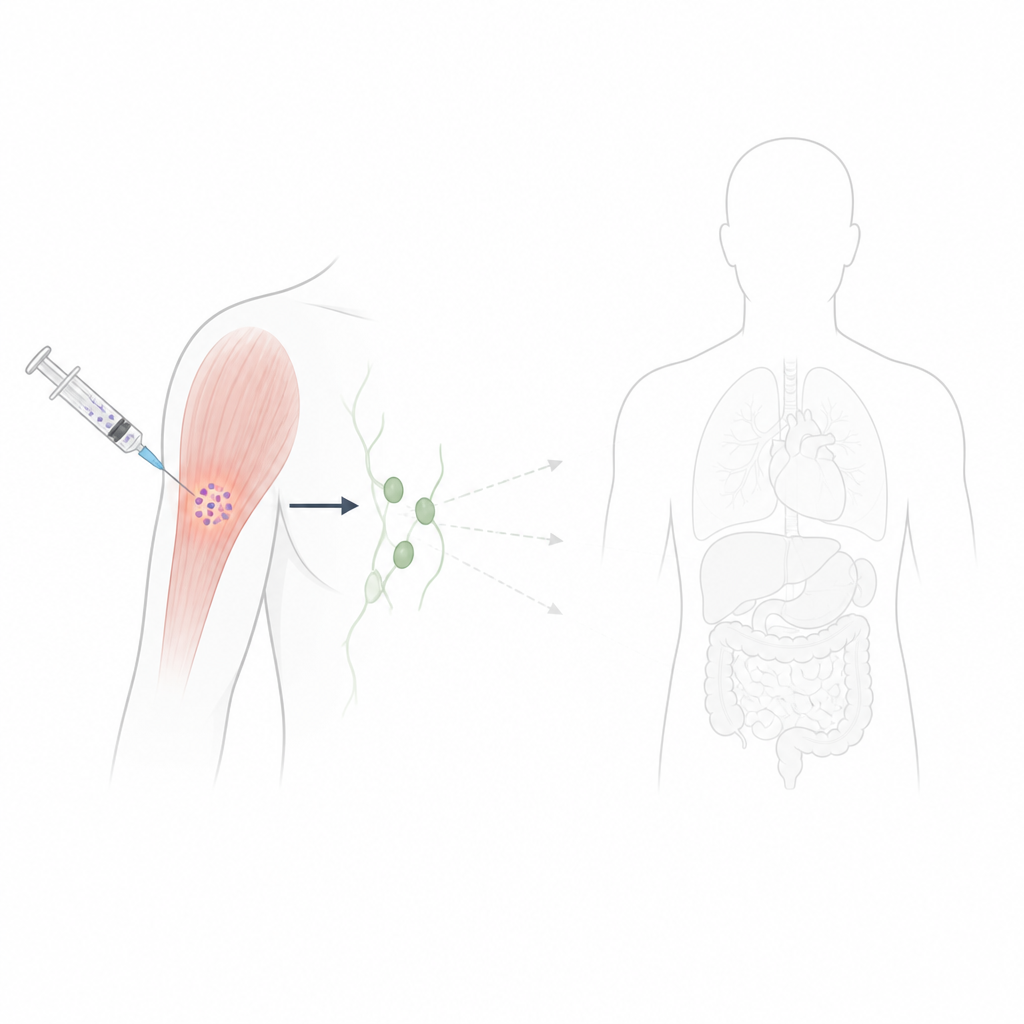
Following the journey of the shot
The researchers focused on two widely used COVID-19 mRNA vaccines and asked two basic questions: where is the vaccine’s genetic message found, and where is the resulting spike protein made? They examined tissues from laboratory mice that received a single injection into the leg muscle and from adults who died within two weeks of vaccination but not because of the vaccine. Using sensitive molecular tests, they measured the presence of vaccine mRNA and used tissue staining methods to locate spike protein in muscles and organs.
What happens in mice
In mice, vaccine mRNA showed up quickly at the injection site and in several organs. Levels in the injected muscle were highest one day after the shot and then fell rapidly, becoming undetectable after about a week. Outside the muscle, the spleen showed the strongest signal, while other organs such as liver, lungs, heart, and kidneys had lower amounts that disappeared within a few days. Spike protein in the muscle peaked around day one and then faded, mirroring the decline in mRNA. Together, these findings show that in mice the vaccine message spreads briefly, is especially visible in immune-related tissues, and is then cleared.
What happens in humans
In human autopsy samples, the picture was different. Vaccine mRNA and spike protein were detected almost exclusively in the deltoid muscle where the shot had been given, and only in people who died within a few days of vaccination. The researchers did not detect vaccine mRNA or spike protein in major organs such as liver, kidney, lungs, or spleen under their testing conditions. They also found very little vaccine mRNA in blood. This suggests that, at least in this older and medically fragile group, the vaccine material remained largely confined to the injection site rather than spreading throughout the body.
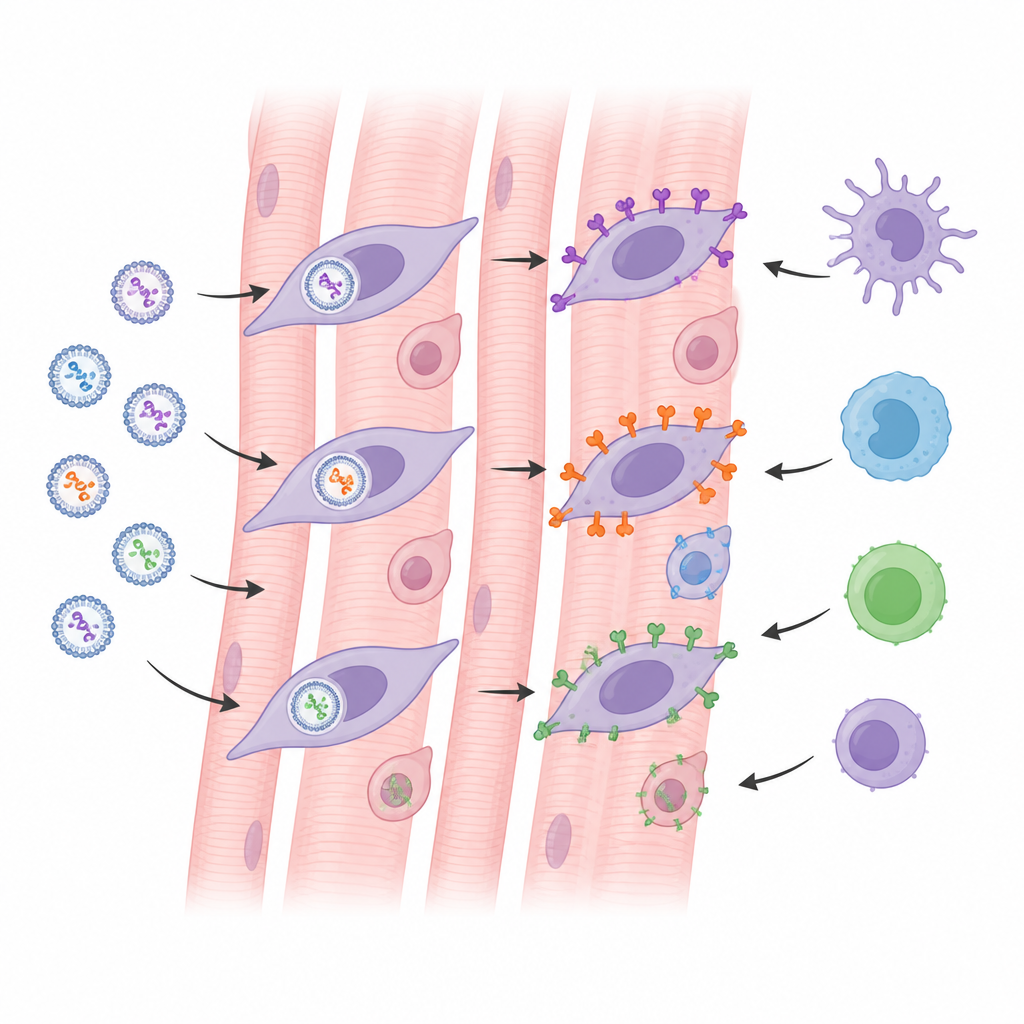
Which cells do the work
By looking closely at stained muscle sections, the team identified the main cell types making spike protein after vaccination. Rather than classic immune sentinels, the dominant producers were fibroblasts, which are support cells in the connective tissue between muscle fibers, and muscle stem cells known as satellite cells. These cells readily took up mRNA and displayed spike protein. Immune cells such as macrophages and other antigen-presenting cells were present in the area and formed a local inflammatory reaction, but they rarely showed spike protein themselves. Similar patterns appeared after an adenovirus-based COVID-19 vaccine, although spike production there was more widespread.
What this means for vaccine understanding
To a non-specialist, the key message is that in this study the COVID-19 mRNA vaccines did not linger broadly throughout the body. In mice, the vaccine message appeared briefly in several organs but was mostly gone within a week, while in humans it was found only at the injection site in the days after vaccination. Local support cells in the muscle, rather than roaming immune cells, were the main spike producers that likely help attract and activate the immune system. These insights clarify how and where mRNA vaccines act in the body and may help scientists fine-tune future vaccines for infectious diseases and cancer.
Citation: Heinrich, F., Lücke, J., Zhang, S. et al. Spatiotemporal distribution of SARS-CoV-2 vaccines and vaccine-related proteins in mice and humans. Sci Rep 16, 15479 (2026). https://doi.org/10.1038/s41598-026-47568-6
Keywords: mRNA vaccines, COVID-19 vaccination, spike protein, vaccine distribution, immune response