Clear Sky Science · en
EneA of Aspergillus fumigatus is a regulator of secondary metabolism and enhances nscA expression in presence of polyenes and Streptomyces
Why this fungus and its tricks matter
Aspergillus fumigatus is a common mold found in soil and compost heaps, but in people with weakened immune systems it can cause life‑threatening lung infections. Doctors rely on powerful antifungal drugs, yet this microbe is surprisingly good at surviving both in the wild and inside patients. This study reveals how a single fungal control switch, called EneA, helps the mold sense antibiotic molecules in the soil and medicines in the clinic, then respond by churning out chemical defenses that protect it from drugs, rival bacteria, and even the human immune system.
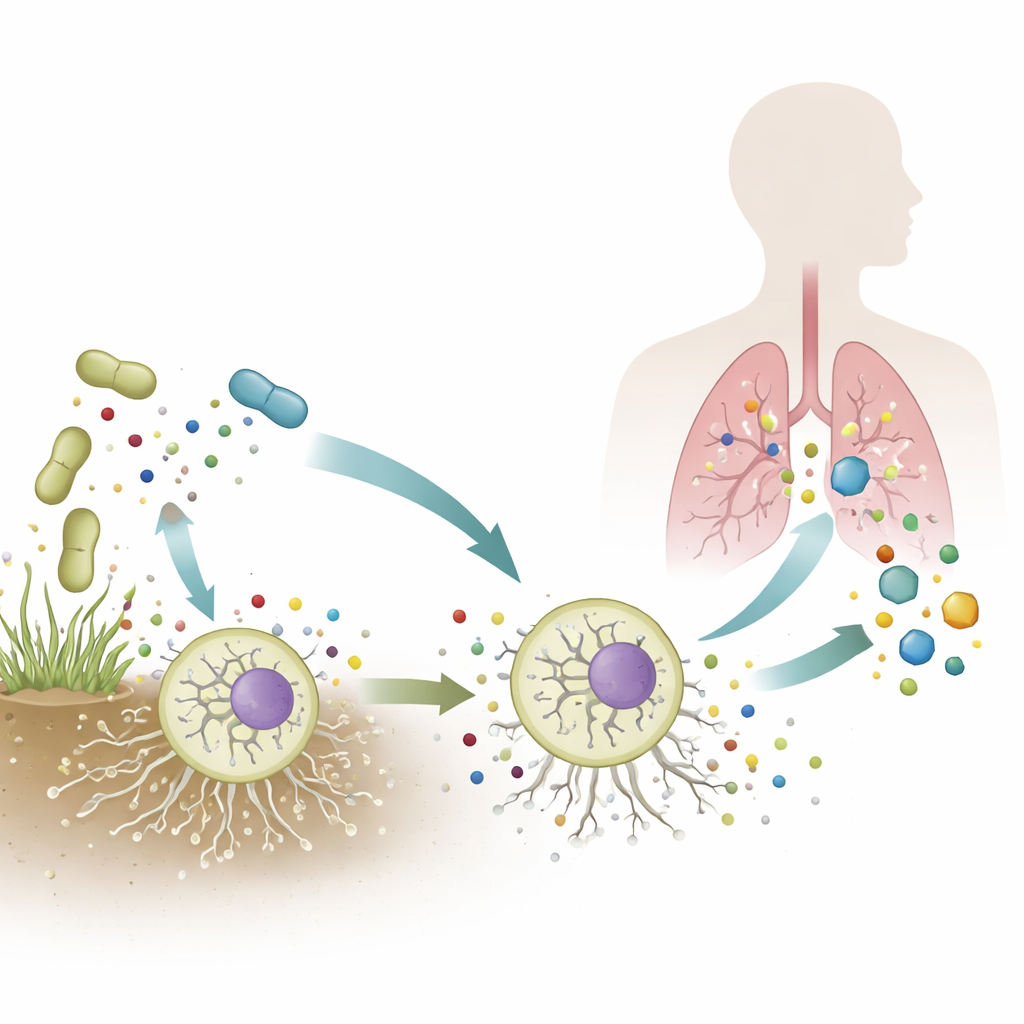
A hidden control switch in a dangerous mold
The researchers focused on EneA, a member of a large family of fungal regulators that turn groups of genes on or off. In A. fumigatus, many of these genes are devoted to “secondary metabolites” – small molecules that are not essential for basic growth but act as toxins, signals, or shields. When EneA was artificially turned up, the fungus dramatically changed its genetic activity: hundreds of genes became more active, including nearly a hundred involved in secondary metabolism spread across at least nine different gene clusters. Several of these clusters produce known toxins, and one, the neosartoricin/fumicycline cluster, makes a molecule that can dampen human immune responses.
How drugs and soil neighbors wake the system
The team next asked what naturally activates EneA. They looked at polyenes, a class of antifungal molecules that includes the hospital drug amphotericin B and the soil antibiotic nystatin made by Streptomyces bacteria. When the fungus was exposed to these polyenes, it grew poorly if EneA was missing, showing that EneA is needed for adaptation to this drug family. At the same time, polyenes boosted the activity of a key gene, nscA, which launches neosartoricin production. This boost depended on EneA: without it, nscA barely responded. Intriguingly, when the fungus was grown with liquid from cultures of Streptomyces noursei, EneA and nscA were again activated, even though nystatin itself was no longer detectable. This suggests the mold can sense other bacterial metabolites as an early warning signal and switch on its chemical defenses before polyenes appear.
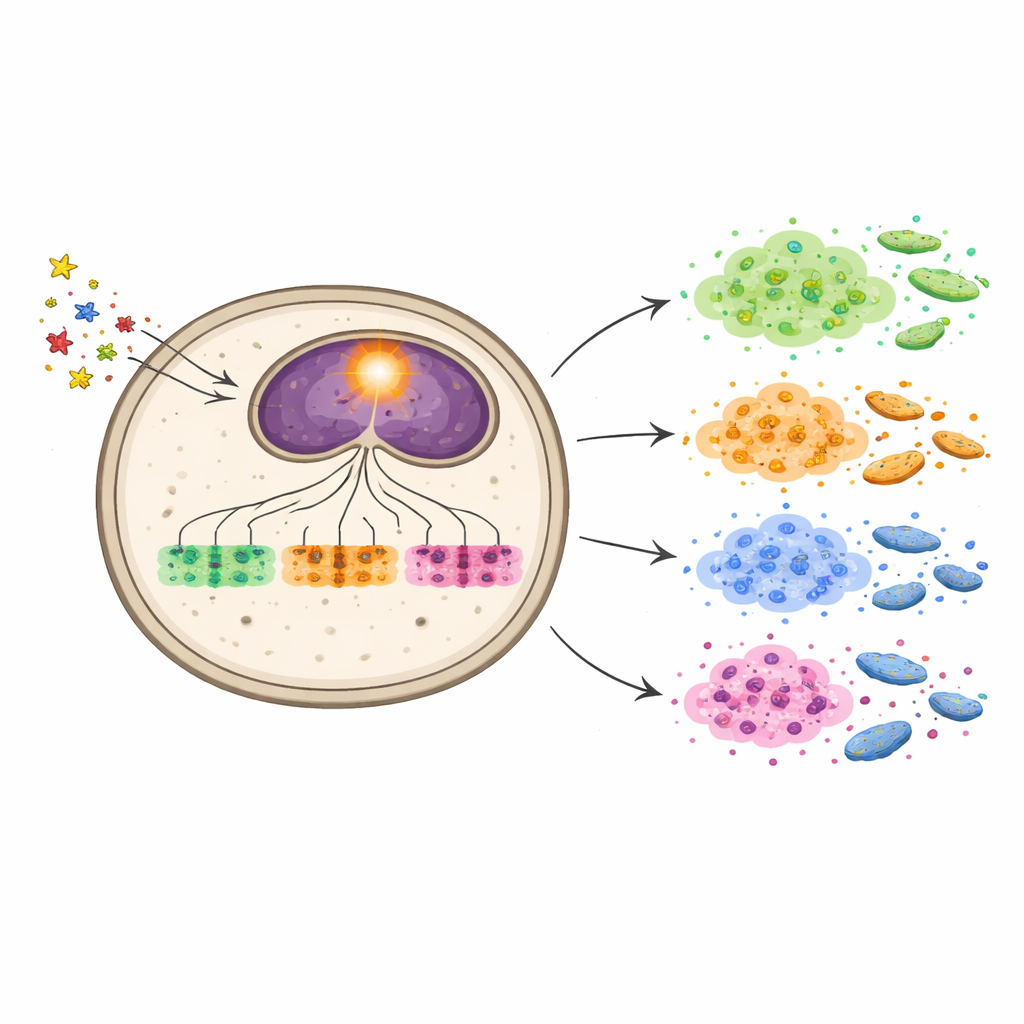
Two routes to the same chemical weapon
Inside the fungus, nscA is usually controlled by another regulatory protein, NscR, located next to it in the neosartoricin gene cluster. The authors dissected how EneA and NscR cooperate. Under normal drug exposure, amphotericin B increases EneA activity, which in turn requires NscR to fully activate nscA and the rest of the cluster. However, when EneA was forced to very high levels, the fungus could switch on nscA even if NscR was deleted. This reveals two distinct circuits: a polyene‑responsive path that needs both EneA and NscR, and an EneA‑overdrive path that bypasses NscR. The fungus can therefore rewire its response depending on how strongly EneA is expressed, giving it flexibility to deal with different stresses in soil or in the host.
Fungal chemistry that disarms drugs and rivals
Do these EneA‑controlled chemicals actually matter for survival? To find out, the scientists extracted metabolites from a strain overproducing EneA and from a normal strain. Metabolites from the EneA‑boosted fungus strongly slowed the growth of S. noursei in laboratory tests, while extracts from the normal strain had little effect. The same EneA‑dependent extracts also lessened the damage caused by amphotericin B to A. fumigatus, allowing the fungus to grow better in the presence of the drug. Surprisingly, deleting nscA did not make the fungus more sensitive to amphotericin B, even when EneA was overexpressed. This means that other metabolites, induced alongside neosartoricin, are chiefly responsible for blunting the drug’s toxicity, while neosartoricin likely plays a bigger role in undermining the host immune response.
What this means for patients and the environment
Overall, the study positions EneA as a central switch linking environmental signals from soil bacteria and medical antifungal treatments to a broad chemical response in A. fumigatus. By turning on multiple metabolite clusters at once, EneA helps the mold repel bacterial competitors, neutralize polyene drugs such as amphotericin B, and potentially weaken the immune defenses of infected patients. In practical terms, this work suggests that long‑term polyene therapy could unintentionally strengthen the fungus’s chemical arsenal. Targeting EneA itself, or the web of metabolites it controls, may therefore offer new ways to keep this opportunistic pathogen in check.
Citation: Bunz, O., Gerke, J., Bader, O. et al. EneA of Aspergillus fumigatus is a regulator of secondary metabolism and enhances nscA expression in presence of polyenes and Streptomyces. Sci Rep 16, 12038 (2026). https://doi.org/10.1038/s41598-026-47215-0
Keywords: Aspergillus fumigatus, antifungal resistance, secondary metabolites, Streptomyces interactions, amphotericin B