Clear Sky Science · en
Anti-trypanosomal, anti-inflammatory, and neuroprotective effects of Cichorium intybus sesquiterpene lactones in experimental Trypanosoma evansi infection
Why a common herb matters for a hidden livestock disease
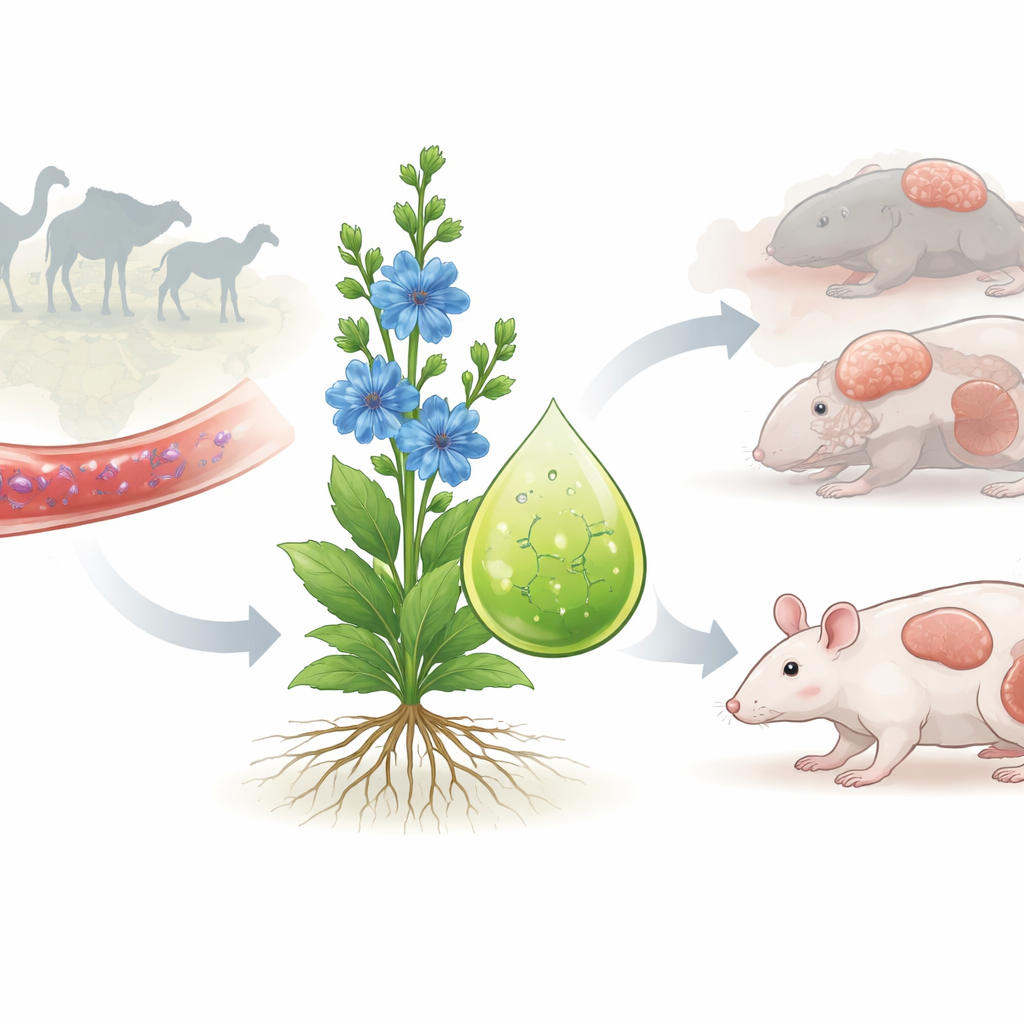
Across many parts of Africa and Asia, a microscopic parasite called Trypanosoma evansi silently drains the health of camels, horses, and other animals, causing weight loss, anemia, and even death. Farmers lose milk, meat, and work power, and existing drugs are expensive and increasingly less effective. This study asks a simple but important question: can natural compounds from chicory, a familiar leafy plant, help tame this parasite and protect the brain and blood of infected animals?
A costly parasite and limited treatments
T. evansi is spread by biting flies and infects a wide range of animals, especially camels and horses, in many Middle Eastern and tropical regions. Once in the bloodstream, it multiplies rapidly, causing bouts of fever, severe anemia, weight loss, and damage to organs including the brain and spleen. Because the parasite constantly changes its surface coat, vaccines are unlikely to work. Control today relies on a handful of drugs that are costly, not always available, and increasingly undermined by drug resistance and side effects. These problems have driven scientists to explore medicinal plants as a source of new, safer antiparasitic compounds.
Chicory as a source of helpful plant chemicals
Chicory (Cichorium intybus) is a Mediterranean plant long used in traditional remedies for liver problems, joint pain, and digestive troubles. Its leaves and roots are rich in natural chemicals, including a group called sesquiterpene lactones, along with flavonoids and other antioxidants. Earlier laboratory work suggested chicory extracts can harm several parasites in test tubes. In this study, the researchers focused on a fraction of chicory leaves that was especially rich in sesquiterpene lactones and tested it for the first time in living animals infected with T. evansi.
Testing chicory in infected rats
The team used four groups of rats: healthy controls, infected but untreated animals, infected rats treated with the standard drug diminazene, and infected rats given the chicory fraction by mouth every day, starting two weeks before infection and continuing afterward. They tracked parasite levels in the blood, standard blood counts, blood sugar and fats, signs of inflammation, and markers of oxidative stress in the brain. They also examined the rats’ brains and spleens under the microscope to see how much structural damage the infection caused and whether chicory could lessen it.
What the researchers found
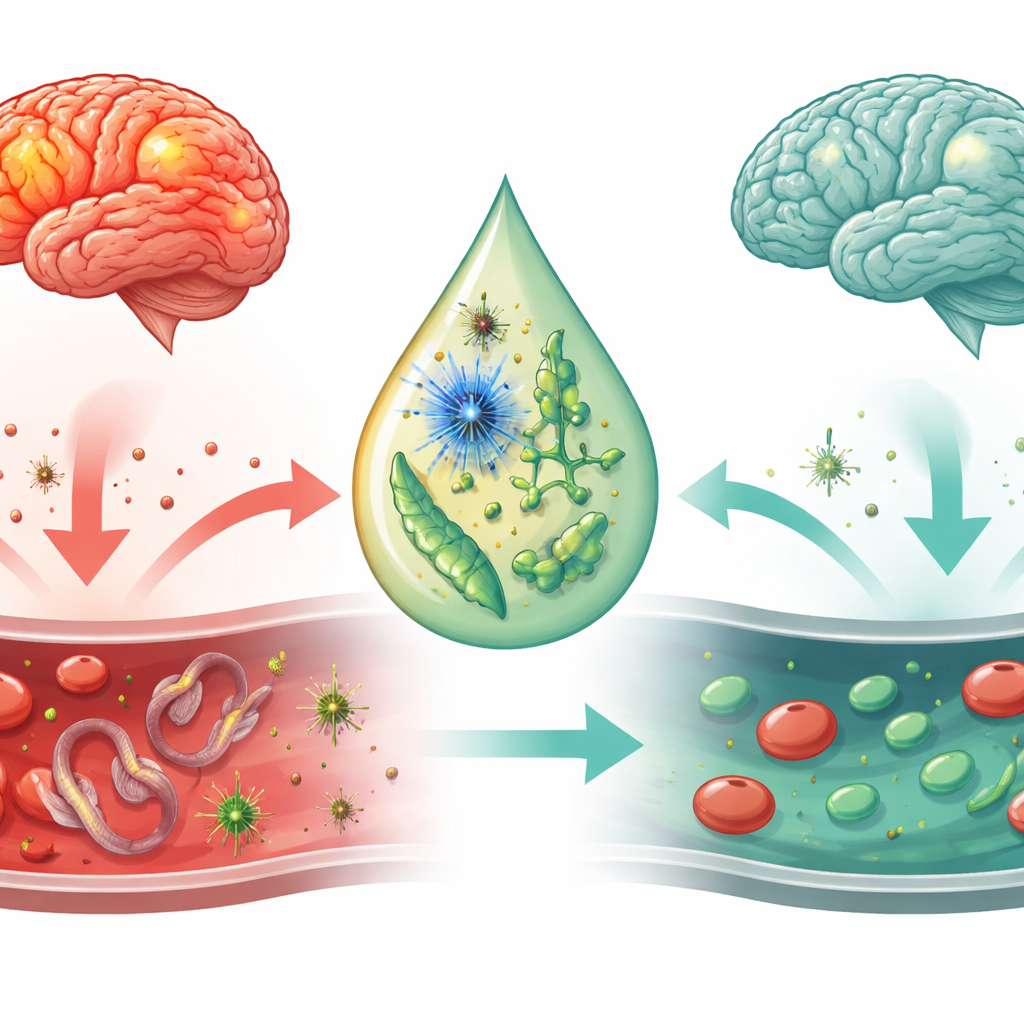
In untreated infected rats, parasite numbers in the blood soared. These animals developed anemia, abnormal white blood cell counts, low blood sugar, and disturbed fat levels. Their brains showed oxidative stress, with depleted natural antioxidants and higher activity of the enzyme acetylcholinesterase, which regulates a key brain messenger. Tissue slices from their brains and spleens revealed cell loss, inflammation, and structural damage. Diminazene almost cleared the parasites and largely normalized blood and biochemical changes, but did not fully protect the brain. Chicory did not completely remove the parasites, yet it significantly reduced their numbers and clearly improved many of the infection-related changes: anemia and inflammatory blood markers were less severe, blood sugar and fat profiles improved, brain antioxidant defenses were stronger, and brain and spleen tissues showed milder damage.
How chicory seems to protect blood and brain
Alongside lowering parasite levels, the chicory fraction shifted the immune response away from a highly aggressive, tissue-damaging state. In infected rats, genes for pro-inflammatory messengers were turned up, while genes for calming, regulatory messengers were turned down. Chicory treatment reversed much of this pattern, increasing anti-inflammatory signals and reducing excessive inflammation that can harm organs. At the same time, it countered oxidative stress in the brain by raising natural antioxidant defenses and curbing harmful byproducts of fat damage. The chicory fraction also brought the overactive brain enzyme acetylcholinesterase closer to normal, hinting at a protective effect on nerve function.
What this means going forward
To a lay reader, the takeaway is that a carefully prepared extract from a common plant, chicory, helped infected rats cope far better with a serious blood parasite. It did not fully cure the infection, but it lowered parasite levels, eased inflammation, protected blood chemistry, and reduced visible damage in the brain and spleen. The authors emphasize that this is an early, short-term study in rats, not a ready-made treatment for camels, horses, or people. Still, the findings suggest that sesquiterpene lactones and related compounds from chicory could be developed into new drugs or supportive therapies that work alongside existing medicines, especially against parasites that are becoming resistant to current options.
Citation: Sawerus, M.G., Kamel, H.H., Ahmed, W.M.S. et al. Anti-trypanosomal, anti-inflammatory, and neuroprotective effects of Cichorium intybus sesquiterpene lactones in experimental Trypanosoma evansi infection. Sci Rep 16, 13522 (2026). https://doi.org/10.1038/s41598-026-47119-z
Keywords: Trypanosoma evansi, chicory, sesquiterpene lactones, antiparasitic plants, neuroprotection