Clear Sky Science · en
Experimental pulmonary arterial hypertension in mice with a pathogenic SOX17 variant
When blood pressure in the lungs goes wrong
Pulmonary arterial hypertension is a rare but deadly disease in which the arteries that carry blood from the heart to the lungs become thick and narrow, forcing the heart to work harder. Doctors know that inherited changes in certain genes can raise the risk, but for one such gene, called SOX17, exactly how this happens has been a puzzle. This study uses a combination of human data, computer modeling, and a specially engineered mouse to show how a single DNA change in SOX17 can disturb multiple pathways in the lung and how blocking one of these pathways can ease disease signs in animals.
A single gene change with big impact
The work began with a woman in her thirties who had a severe form of pulmonary arterial hypertension that did not respond well to standard drug combinations and led to right heart failure. Genetic testing revealed that she carried a specific SOX17 variant, swapping one building block in the protein for another at a key position. SOX17 helps control how other genes are switched on and off, so the team suspected this subtle change might badly affect its function. Using computer simulations of the protein bound to DNA, they found that the variant altered how the SOX17 region that grips DNA sits in space, hinting that it could disturb gene control in lung vessel cells.
Building a mouse model that mirrors the patient
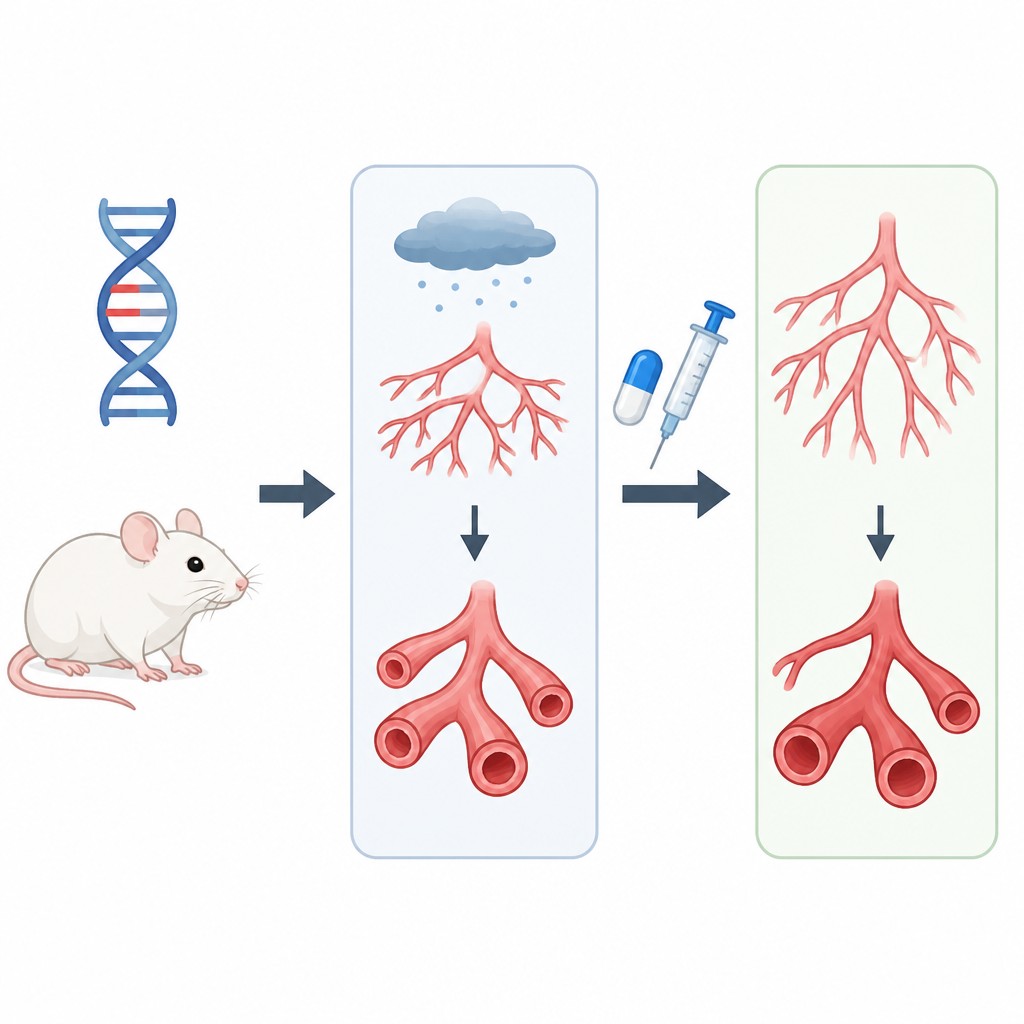
To test this idea in a living system, the researchers used CRISPR gene editing to create mice carrying the same SOX17 variant in just one of their two gene copies, matching the patient’s situation. When these mice were kept in normal air, they survived, but exposing them to low oxygen levels, which stress the lung circulation, unmasked clear signs of disease. Their right heart chambers were heavier, the pressure inside these chambers was higher, and the muscular layer of their small lung arteries was thicker than in normal mice. Together, these changes showed that the engineered mice developed a form of pulmonary arterial hypertension that resembles the human condition.
Hidden chemical pathways in lung arteries
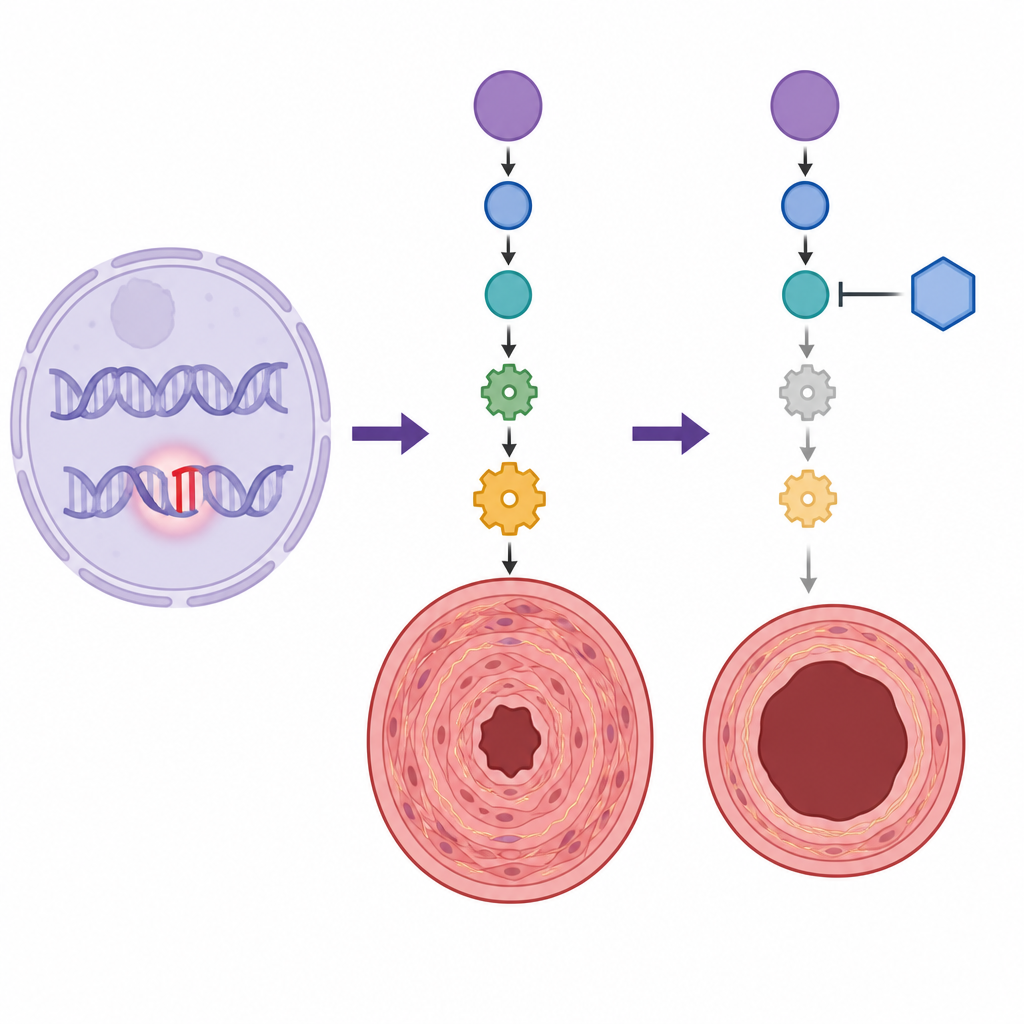
The team then asked which genes in the lungs changed their activity because of the SOX17 variant. By sequencing RNA from lung tissue, they found hundreds of genes turned up or down, with strong shifts in groups involved in handling foreign and hormone-like chemicals. One gene stood out: Cyp1b1, which makes an enzyme that transforms estrogen and other compounds and has been linked before to pulmonary arterial hypertension. In the SOX17 variant mice under low oxygen, Cyp1b1 activity was higher than in normal mice. At the same time, genes that help maintain healthy vessel walls, including Bmpr2 and the collagen genes Col4a1 and Col4a2, were reduced, suggesting that the variant disturbs several connected pathways that shape the structure and behavior of lung arteries.
Testing a blocking drug in stressed mice
Because Cyp1b1 is controlled by a sensor called the aryl hydrocarbon receptor, the researchers tried a drug that blocks this sensor in their mouse model. Mice carrying the SOX17 variant and kept in low oxygen received regular injections of the blocker, while comparison groups received no drug. In the variant mice, the treatment lowered Cyp1b1 activity, reduced right heart weight, lowered pressure in the right ventricle, and lessened thickening of the lung artery walls. In normal mice, the same drug had only small effects on gene activity and vessel structure. Further RNA analysis showed that the blocking drug partially restored Bmpr2, Col4a1, and Col4a2 activity in the variant mice, strengthening the idea that these pathways are intertwined.
What this means for people with risky genes
Taken together, the findings show that a single DNA change in SOX17 can tip many signals inside lung blood vessels toward narrowing and stiffening, at least when combined with low oxygen stress. The mouse model mirrors the human disease in important ways, although the animal signs are milder than those seen in patients. By pinpointing the rise of Cyp1b1 and the drop in Bmpr2 and collagen genes as part of this chain, and showing that a blocker of one pathway can soften disease signs in mice, the study suggests new directions for understanding and possibly targeting pulmonary arterial hypertension in people who carry harmful SOX17 variants.
Citation: Shinya, Y., Hiraide, T., Momoi, M. et al. Experimental pulmonary arterial hypertension in mice with a pathogenic SOX17 variant. Sci Rep 16, 16168 (2026). https://doi.org/10.1038/s41598-026-46893-0
Keywords: pulmonary arterial hypertension, SOX17, mouse model, CYP1B1, gene variant