Clear Sky Science · en
Assessment of food hygiene knowledge and practices among food handlers in Ondo West Local Government Area, Ondo State, Nigeria
Why clean food matters to everyday life
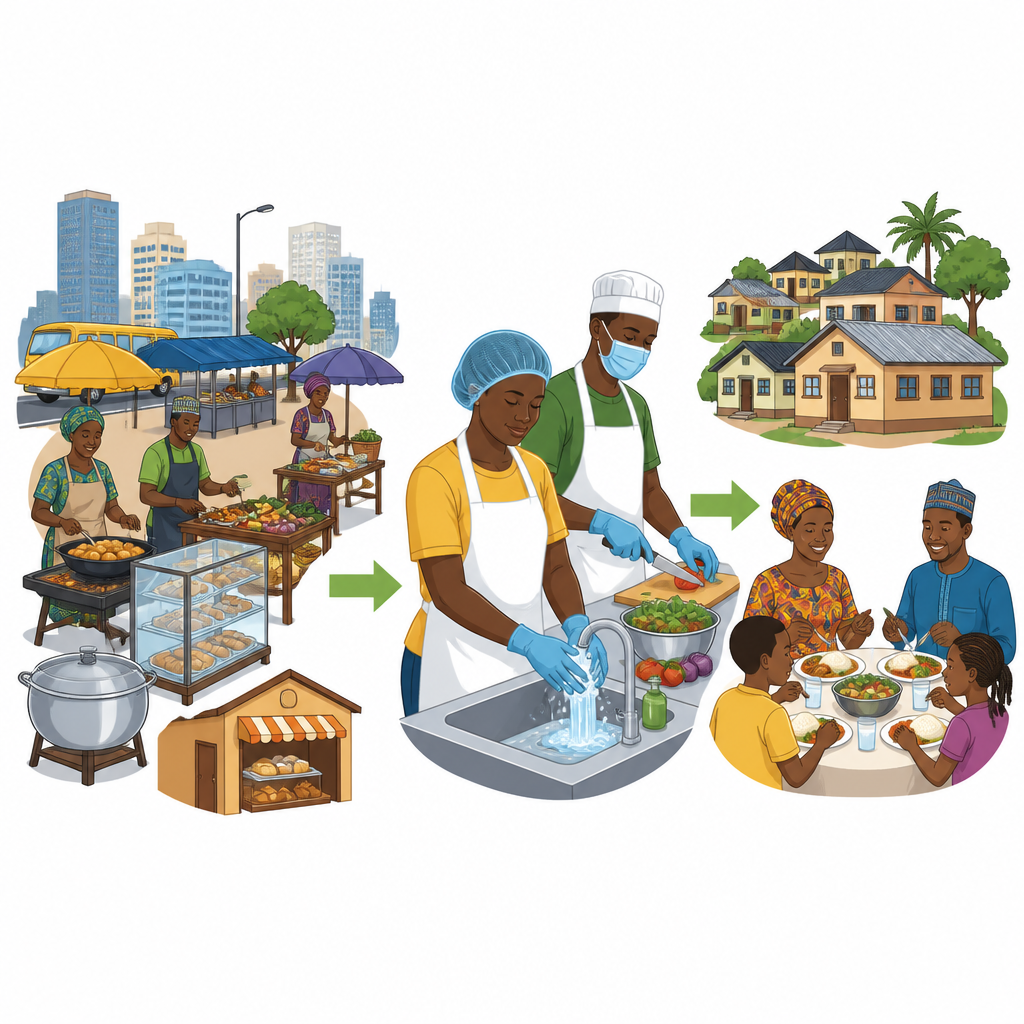
Every meal bought from a street stall, market table or bakery carries a quiet promise that it will not make us sick. Yet foodborne illnesses still affect millions of people each year, particularly in countries where informal food vending is common. This study looks closely at food handlers in Ondo West, a local government area in southwestern Nigeria, to find out how much they know about food hygiene, how carefully they apply that knowledge, and what might help keep their customers safer.
Taking a closer look at local food workers
The researchers carried out a community survey of 220 people who handle and sell food in everyday settings such as street stalls, market tables, bakeries, catering services and butcher or fishmongering points. All participants were adults with at least three months of experience in their current job. Trained interviewers visited their workplaces and used a structured questionnaire to ask about personal background, understanding of safe food handling and self-reported daily hygiene habits, as well as access to training. Responses to questions on knowledge and practice were scored and then grouped into “high” or “low” knowledge and “good” or “poor” practice to make patterns easier to see.
What food handlers know about staying safe
Overall, just over half of the food handlers showed high knowledge of food hygiene. Most respondents recognised that good personal cleanliness, frequent handwashing and clean work surfaces are crucial for preventing foodborne disease. They also understood that pests such as rats and insects signal unsafe conditions, and that mixing raw and cooked foods can spread germs. Slightly fewer showed strong awareness of more technical details, such as correct cooking temperatures and proper cold storage, suggesting that some important points are not yet fully understood. Education level and type of workplace were linked to how much people knew, while age, gender and years of experience were not.
How knowledge shows up in daily habits
Self-reported hygiene practices were even more encouraging. Nearly four out of five food handlers said they followed good hygiene routines, including regular handwashing, use of protective clothing like aprons and hair coverings, and support for regular inspections of food premises. Most believed that good hygiene prevents disease and valued the idea of training. However, fewer than half had actually received formal food safety training, and many were unsure whether the training they did receive was detailed or practical enough. Because the study relied on people describing their own behaviour, some may have painted a rosier picture than reality, but the responses still reveal strong awareness of what should be done.
Linking what people know to what they do
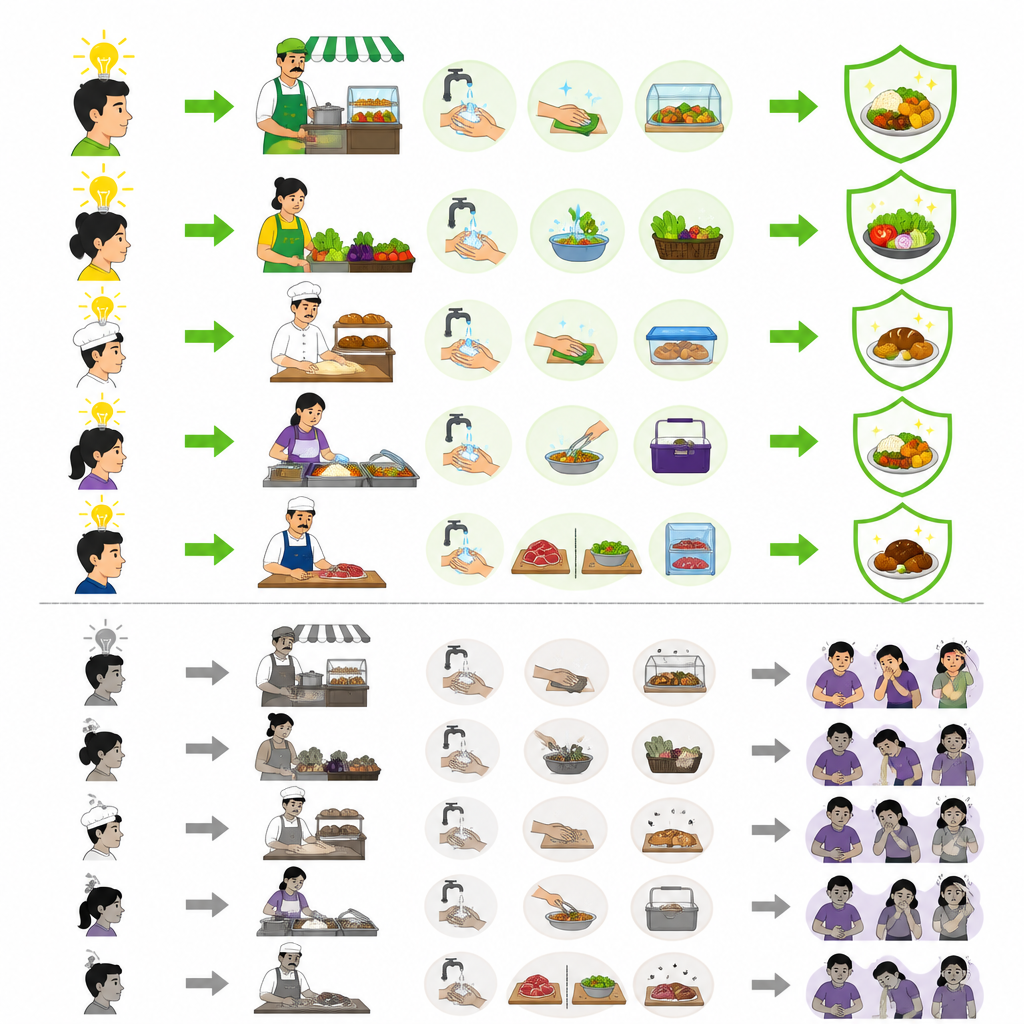
When the researchers compared scores, they found a clear connection between knowing more and doing better. Food handlers with higher knowledge scores were much more likely to report good hygiene practices than those with lower scores. In fact, statistical analysis showed that workers with high knowledge were several times more likely to have good practices. Surprisingly, whether someone had ever been formally trained did not, on its own, predict better knowledge or better hygiene behaviour. This suggests that the content, quality and follow up of training matter more than simply attending a course once.
What this means for safer meals
The study concludes that food handlers in Ondo West generally understand the basics of food hygiene and often report following recommended steps, which is good news for the many people who rely on them for daily meals. At the same time, uneven access to solid, practical training and differences between workplaces leave gaps that can still lead to unsafe food. The authors argue that regular, structured training for all kinds of food handlers, combined with better supervision, clean water, sanitation and inspections, would help turn existing knowledge into consistent practice. For customers, this means a greater chance that the snacks and meals they buy on the street or in local markets will nourish rather than harm.
Citation: Falade, A.A., Ajisafe, D.O., Adewumi, I.P. et al. Assessment of food hygiene knowledge and practices among food handlers in Ondo West Local Government Area, Ondo State, Nigeria. Sci Rep 16, 15962 (2026). https://doi.org/10.1038/s41598-026-46889-w
Keywords: food hygiene, food handlers, Nigeria, food safety training, foodborne illness