Clear Sky Science · en
Associations between psychological factors and functional dyspepsia symptoms with consideration of gender differences
Why the mind and the stomach matter together
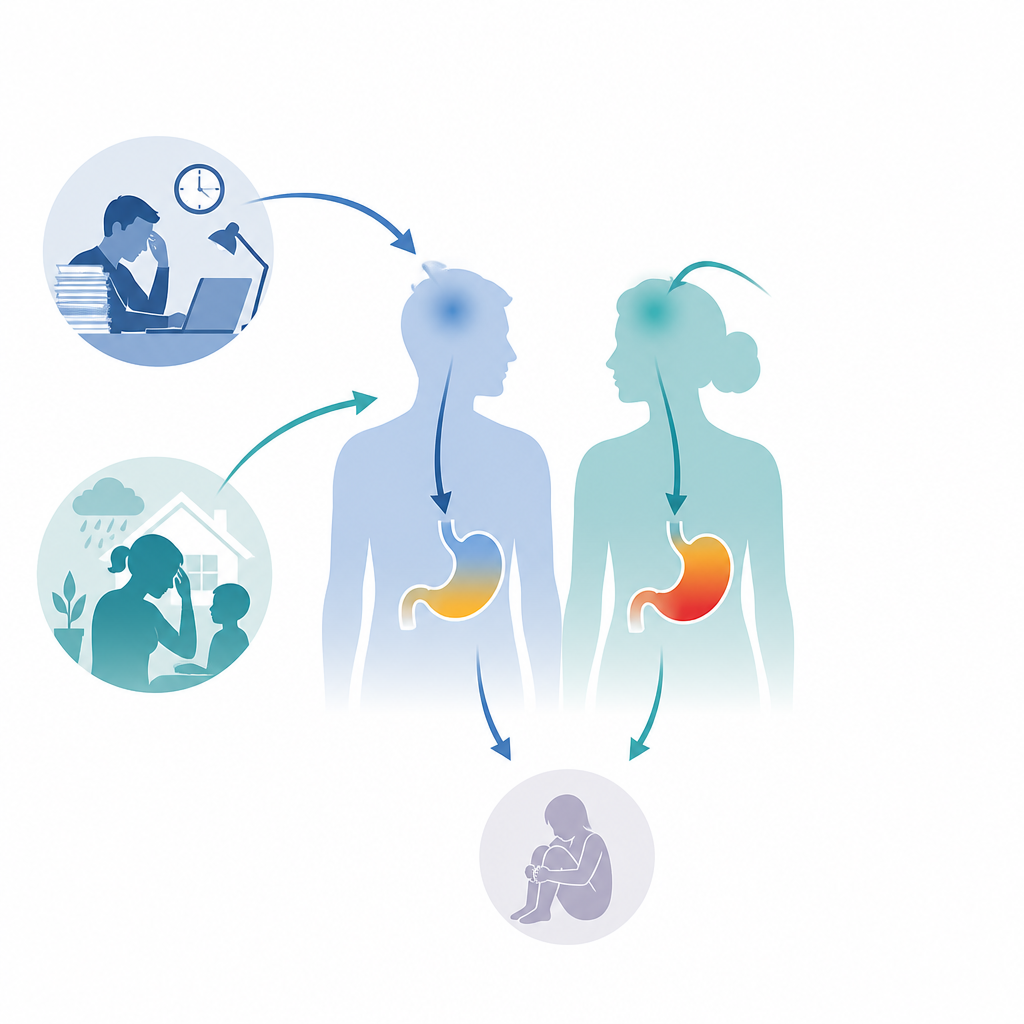
Many people live with frequent upper‑stomach discomfort, bloating, or early fullness, only to be told that their medical tests look normal. This condition, called functional dyspepsia, can be frustrating and worrying. The study behind this article looks at how everyday stress, emotional health, and the way people notice bodily sensations are linked to these gut symptoms, and whether these links differ between men and women.
A common but often hidden stomach problem
Functional dyspepsia refers to a cluster of long‑lasting upper‑digestive symptoms, such as pain or burning in the upper abdomen, feeling overly full after meals, or losing appetite quickly. In these patients, endoscopy and other tests usually show no ulcers, tumors, or other obvious damage. The authors studied 191 adults in Bosnia and Herzegovina who were referred for their first upper‑stomach camera test because of persistent symptoms. Only those whose test showed no structural disease were included. Most were working‑age adults with jobs that often involved constant contact with people, reporting a considerable load of daily stress and many having already tried diet changes and medicines to ease their symptoms.
How feelings show up as body symptoms
The research team focused on three psychological features. The first was somatization, meaning a stronger tendency to feel and report physical symptoms such as pain, tiredness, and dizziness when under emotional strain. The second was resilience to stress, or how well a person can adapt and stay balanced when life is difficult. The third was subjective well‑being, a broad measure of life satisfaction, positive and negative feelings, and a sense of thriving. All participants completed standard questionnaires on these traits, along with details about their digestive symptoms: which subtype of dyspepsia they had, how intense their symptoms were, how often they occurred, and how long they had lasted.
Different dyspepsia patterns and what shapes them
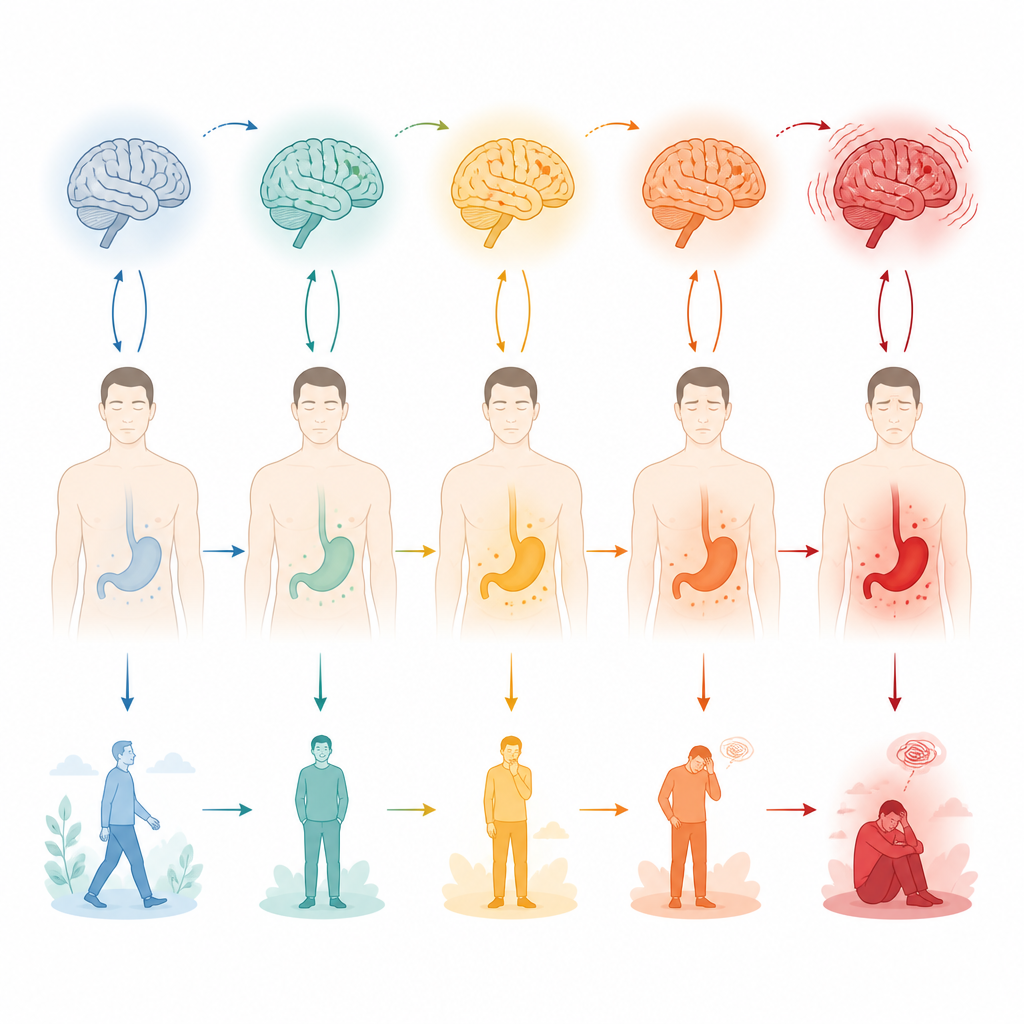
Using current medical criteria, the researchers grouped people into three dyspepsia patterns: one dominated by post‑meal discomfort, one dominated by upper‑stomach pain, and a mixed type that combined both. The mixed type was particularly important. People in this group tended to have more digestive complaints overall and showed a specific psychological profile. When the team examined the data with statistical models, they found that lower stress resilience and lower subjective well‑being, together with higher somatization, were linked to having this mixed pattern rather than the pain‑only pattern. In simpler terms, people who were less able to bounce back from stress, felt less happy in life, and more often experienced emotional strain through bodily symptoms were more likely to have a broader, more complex form of dyspepsia.
What drives symptom severity, frequency, and duration
The study also explored what influences how bad the symptoms feel, how often they show up, and how long they have been present. Here, somatization again stood out: people with higher somatization scores tended to rate their symptoms as more severe. Age mattered for how long symptoms had lasted: older participants were more likely to report symptoms that had been going on for years, and they also had more other physical illnesses. Subjective well‑being showed a weaker, borderline link with symptom frequency, suggesting that people who felt better about their lives overall tended to report symptoms less often, even when they had dyspepsia.
Men and women: more alike than expected
Because earlier work suggested that women may experience functional dyspepsia differently than men, the researchers carefully tested whether sex or gender changed the way psychological traits related to symptoms. Although men and women in this study differed in some habits and stress situations, the statistical analyses did not find that gender altered the basic links between resilience, somatization, well‑being, and the various dyspepsia patterns. In other words, the same psychological features seemed to shape symptoms in similar ways in both men and women in this clinic group.
What this means for patients and care
Overall, the study supports the idea that the “gut–brain” connection is central in functional dyspepsia. People who are more prone to experiencing distress through bodily sensations, less able to cope with stress, and less satisfied with life tend to develop more complex and heavier symptom patterns, especially the mixed form that combines pain and meal‑related discomfort. While gender did not change these relationships in this sample, age and other illnesses did matter. For patients, these findings highlight that caring for mental health, building stress‑coping skills, and addressing broader life satisfaction are not separate from treating stomach symptoms; they are part of the same picture. For clinicians, the results point toward combining digestive care with psychological support, and toward future studies that follow people of different ages and backgrounds over time to map this mind‑gut link more clearly.
Citation: Volarić, M., Babić, E., Babič, F. et al. Associations between psychological factors and functional dyspepsia symptoms with consideration of gender differences. Sci Rep 16, 15049 (2026). https://doi.org/10.1038/s41598-026-46838-7
Keywords: functional dyspepsia, gut brain axis, psychological stress, somatization, subjective well being