Clear Sky Science · en
Body mass index (BMI) versus socioeconomic factors and physical activity in early childhood
Why this study matters for families
Across the world, many parents worry about how much their children move, how often they sit in front of screens, and what this might mean for their weight and health. This study from Poland looks closely at these everyday questions in a very large group of early school‑age children, showing how parents’ education, work, and habits, along with where a family lives, are tied to how active children are and whether they are underweight, a healthy weight, overweight, or obese.
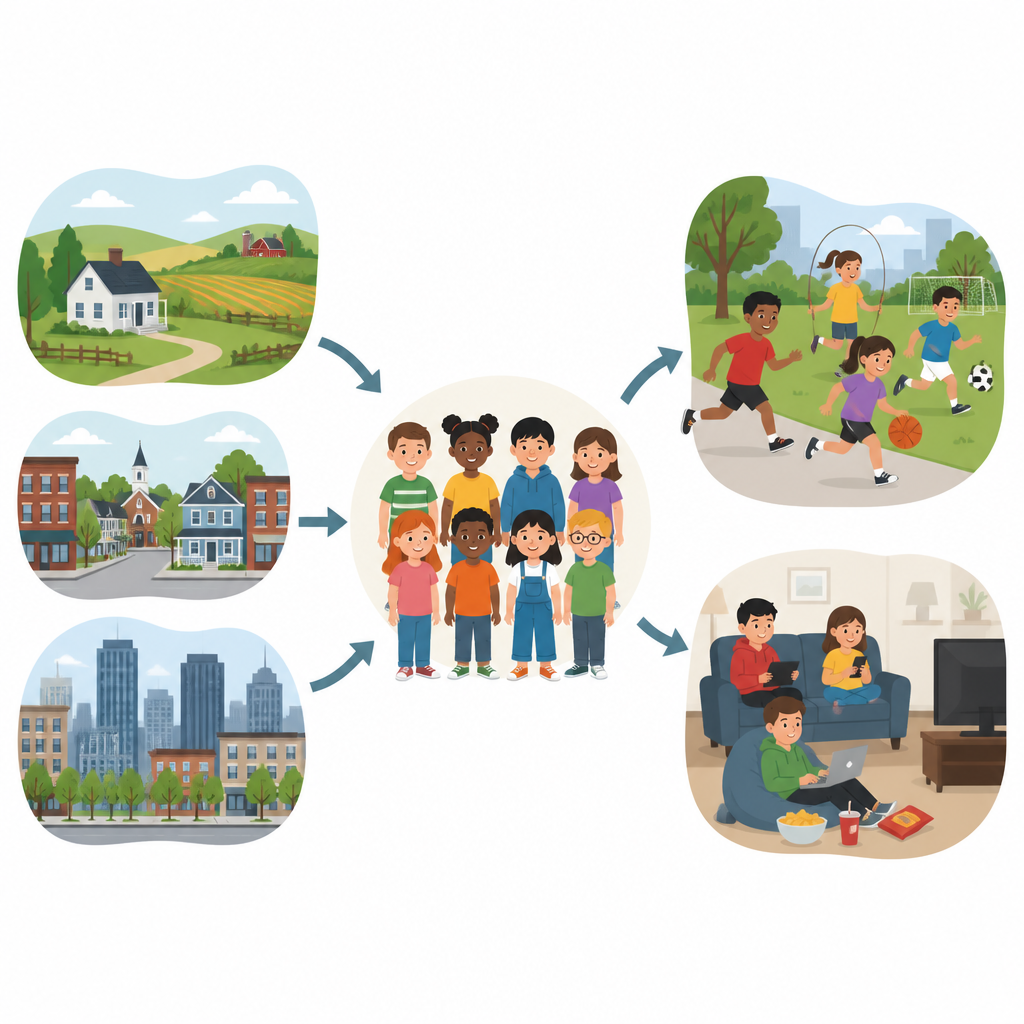
Children, movement, and daily life
The researchers focused on more than 9,300 children aged 6.5 to 9.5 years who took part in a nationwide program called “PE with AWF.” Parents filled out detailed questionnaires about their child’s height, weight, everyday physical activity, and free‑time choices, as well as their own body size, education, work status, physical activity, and place of residence. The team then grouped children by body mass index (BMI) into underweight, normal weight, overweight, and obese. By comparing these groups, they explored how family background and lifestyle went together with children’s activity levels and weight.
Family background and children’s weight
The study found clear links between parents’ circumstances and their children’s BMI. Mothers and fathers of normal‑weight children were more likely to have finished secondary school or university and to be employed. In contrast, parents of overweight and obese children more often had only basic or vocational education, and obese children were more likely to have mothers who did not work outside the home. Parents’ own body size also mattered: heavier parents, especially mothers and fathers with overweight or obesity, more often had children in the same higher‑BMI categories. Where families lived played a role too. Children with obesity were somewhat more likely to live in rural areas or small settlements than in large cities, hinting that access to facilities and local habits can shape daily movement.
Active play versus screen time
When the researchers looked at what children actually did each day, a strong pattern emerged. Normal‑weight children were the most active: they more often spent over three hours a day moving, took part in several different sports, and joined organized classes such as sports clubs, as well as unstructured play with friends. Overweight and obese children were less likely to join such activities and more likely to choose quiet pastimes. They spent more hours watching television and using computers, often more than three hours per day, while normal‑weight and underweight children were more likely either not to watch at all or to limit screen use to an hour or less. Reading habits differed too, with underweight and normal‑weight children more likely to read for longer each day.
Sleep, place, and daily rhythm
The study also showed that children’s bedtimes and surroundings connect with their weight. Overweight and obese children were more likely to go to sleep after 10 p.m., while normal‑weight and underweight children tended to go to bed before 9 p.m. Longer sleep appeared alongside healthier weight. At the same time, children from rural areas were more likely to have excess weight than those from cities, suggesting that differences in local transport, safe play spaces, and sports offers may shape how easily children can be active. Together, these findings point to a web of influences: family habits, education, work patterns, and neighborhood all combine to support or hinder healthy routines.
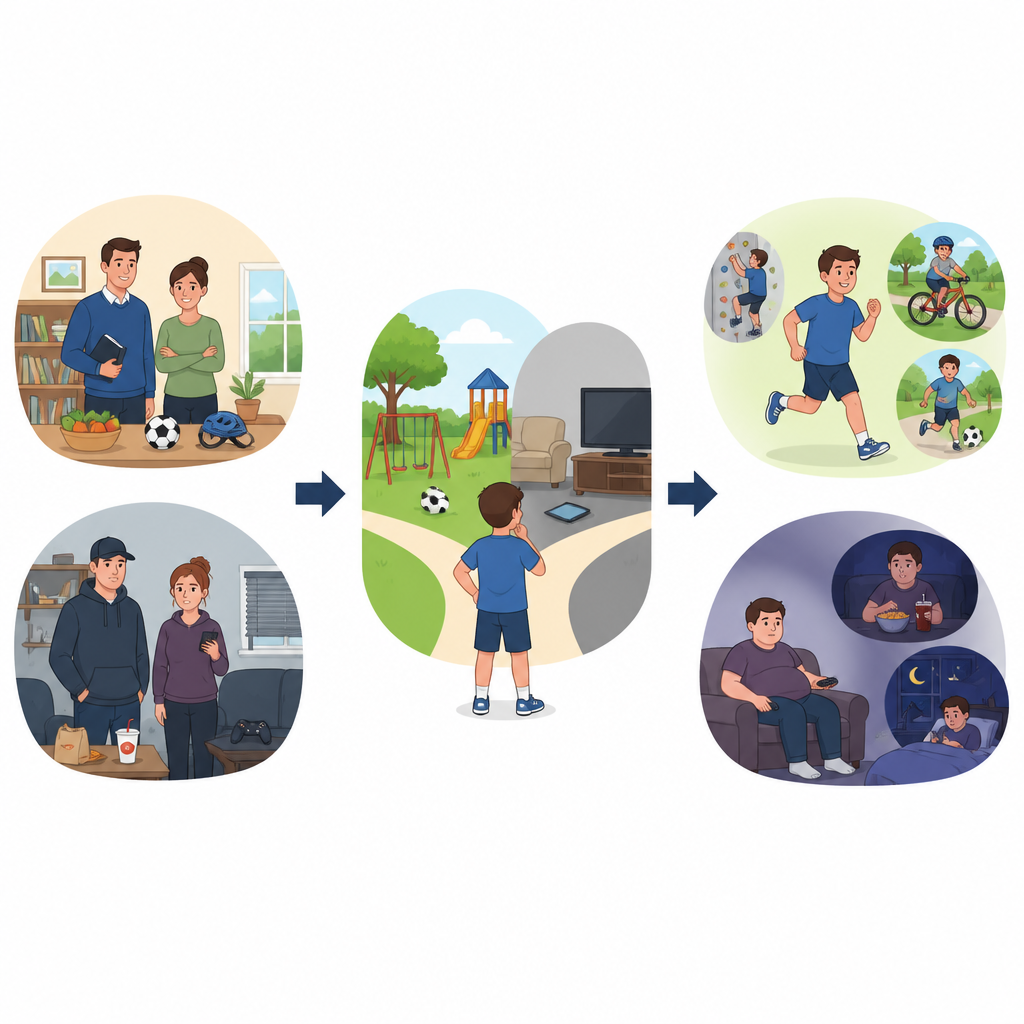
What this means for parents and communities
For a lay reader, the key message is that a child’s weight in early school years is not just about individual willpower. It reflects how much they can move, sleep, and play within the family and community they live in. Children with normal BMI in this study tended to have better‑educated, working parents, live more often in larger towns, sleep longer, move more, and sit less in front of screens. Those with excess weight were more likely to be surrounded by less active routines and fewer chances for structured sport. The authors suggest that efforts to support healthy weight should target whole families, especially in less urbanized areas and among parents with lower education, by making active play, sports opportunities, and good sleep habits easier choices in everyday life.
Citation: Widłak, P., Milde, K., Tomaszewski, P. et al. Body mass index (BMI) versus socioeconomic factors and physical activity in early childhood. Sci Rep 16, 15251 (2026). https://doi.org/10.1038/s41598-026-46645-0
Keywords: childhood obesity, physical activity, screen time, parental education, sleep duration