Clear Sky Science · en
Attribute development for a discrete choice experiment to examine preferences for long-acting HIV prevention products among pregnant and breastfeeding women
Why this research matters for mothers and babies
Pregnancy and breastfeeding are times of joy, but in parts of the world with high HIV rates they are also times of heightened risk. In Kenya and similar settings, women can now choose from several long-acting medicines that greatly reduce their chances of acquiring HIV. Yet these products will only save lives if they match what women actually want and are willing to use. This study explains, in a step-by-step way, how researchers carefully designed a survey to find out which features of new HIV prevention products matter most to pregnant and breastfeeding women.
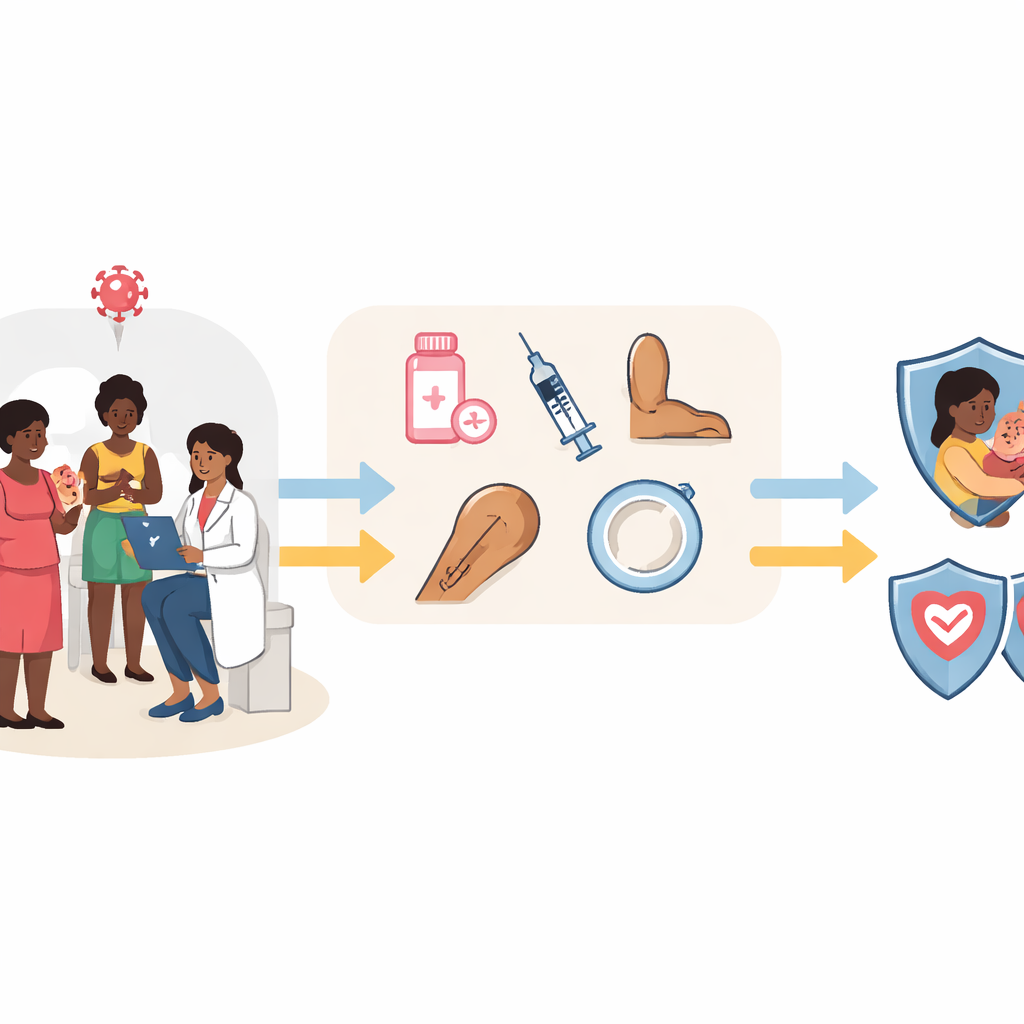
New tools to prevent HIV for mothers
Daily HIV prevention pills are highly effective when taken consistently, but many pregnant and breastfeeding women struggle to remember or manage a pill every day. Scientists are therefore developing longer-acting options, including injections given every few months, small rods placed under the skin, and flexible rings worn inside the vagina. These options can offer powerful protection with far less day-to-day effort. Before such products are widely introduced, however, policy makers need to know which ones women are most likely to choose and why. Understanding women’s preferences early can guide investment in products that are both effective in the lab and attractive in real life.
Asking women to choose between real-world options
The researchers used a method called a “discrete choice experiment,” which works much like a series of shopping comparisons. Instead of asking women directly, “What do you prefer?”, the team presented pregnant and breastfeeding women in Kenya with sets of hypothetical HIV prevention options. Each option combined different features, such as how often it needed to be used, how well it worked, whether it also prevented pregnancy or other infections, where it could be obtained, and how much it might cost. By seeing which option women chose each time, researchers could work out which features carried the most weight in their decisions.
Listening first: literature, interviews, and expert review
To build realistic choice scenarios, the team followed a structured four-step framework. They began with a review of 20 previous studies from low- and middle-income countries to map out what is already known about women’s views on long-acting HIV prevention. They then carried out in-depth interviews with 80 HIV-negative pregnant and breastfeeding women and 40 health providers in two Kenyan counties with different HIV levels. From these conversations, they collected a long list of possible product features, including form (pill, injection, implant, ring), side effects, pain, safety in pregnancy, privacy from partners, and added benefits such as pregnancy or sexually transmitted infection (STI) prevention, as well as cost and access point.
Narrowing down to the most important features
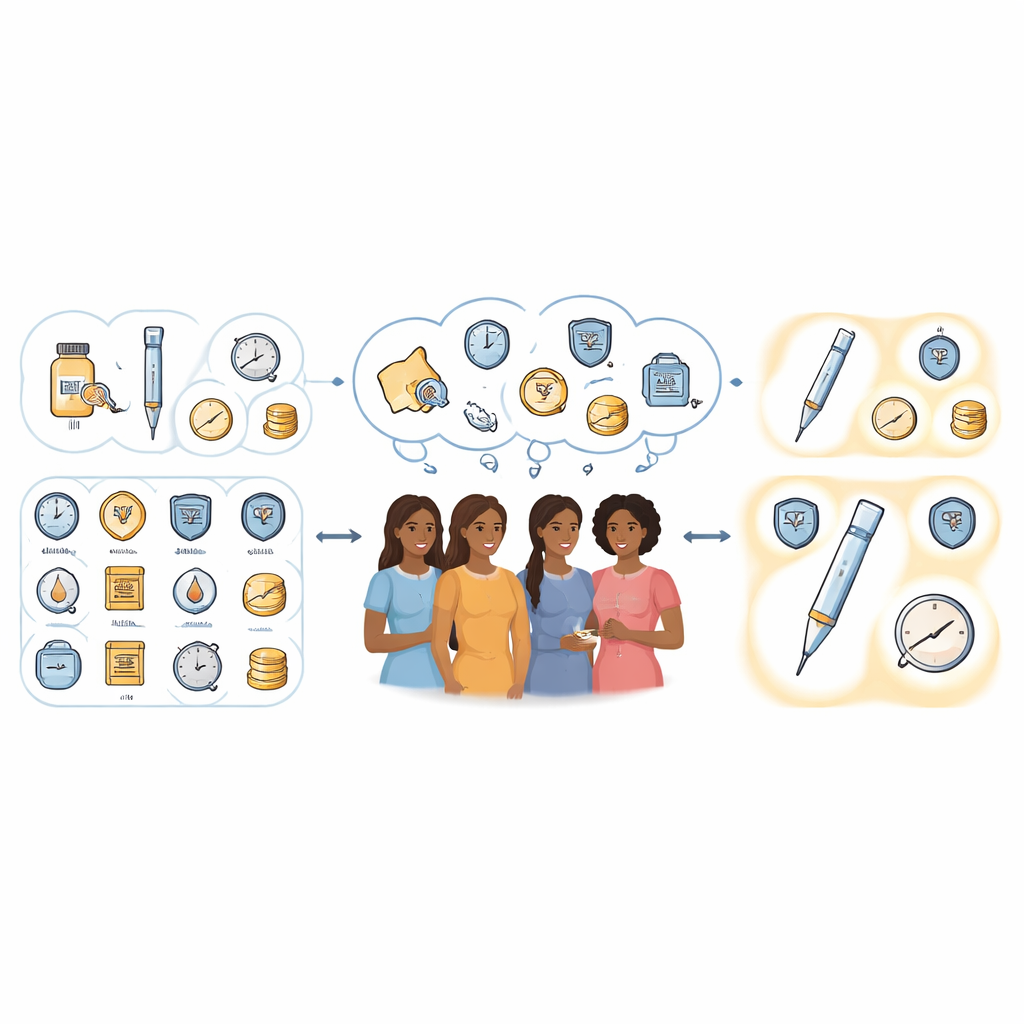
Because too many details can overwhelm participants, a panel of HIV prevention experts helped refine the list. Features that were tightly tied to the kind of product itself—such as whether it was a pill or an injection, or how discreet it was—were shifted into the product labels rather than treated as separate, adjustable features. This kept the scenarios realistic. After this reduction, six key features remained: how often the product is used (dosing frequency), how well it prevents HIV, whether it also prevents pregnancy, whether it also prevents STIs, where women can get it (public or private health facilities or pharmacies), and how much it costs. These six were judged to be both important to women and changeable in real policy and product design.
Testing the questions with real women
The refined features were then pilot-tested with 30 pregnant and breastfeeding women from clinics not involved in the earlier interviews. The goal was to ensure that the wording was clear, the number of choices manageable, and the trade-offs realistic. Women found it easier to understand protection levels when they were described with simple stories (for example, how many out of 20 women would stay HIV-negative) instead of percentages. Feedback also led to adjustments in how access locations and prices were grouped, particularly for oral products that could realistically be offered through pharmacies. Early analysis of the pilot choices suggested that women strongly favored long-acting injections and implants, especially when these also prevented pregnancy and STIs, and preferred obtaining products through health facilities rather than pharmacies.
What this means for future HIV prevention
By carefully documenting how they built and tested their choice experiment, the authors offer a transparent blueprint for other researchers who want to study people’s preferences for health products. Their work shows that pregnant and breastfeeding women value not just HIV protection, but also fewer clinic visits, added protection against pregnancy and STIs, and realistic costs and access points. These insights can help guide the design and rollout of long-acting HIV prevention tools that women are more likely to start and continue using, ultimately protecting both mothers and their babies.
Citation: Ngugi, S.M., Echoka, E., Were, V. et al. Attribute development for a discrete choice experiment to examine preferences for long-acting HIV prevention products among pregnant and breastfeeding women. Sci Rep 16, 10576 (2026). https://doi.org/10.1038/s41598-026-45900-8
Keywords: HIV prevention, pregnancy and breastfeeding, long-acting PrEP, health preferences, Kenya