Clear Sky Science · en
Medical facemask waste alters detritus decomposition and fungal communities in a freshwater pond
Why discarded masks matter underwater
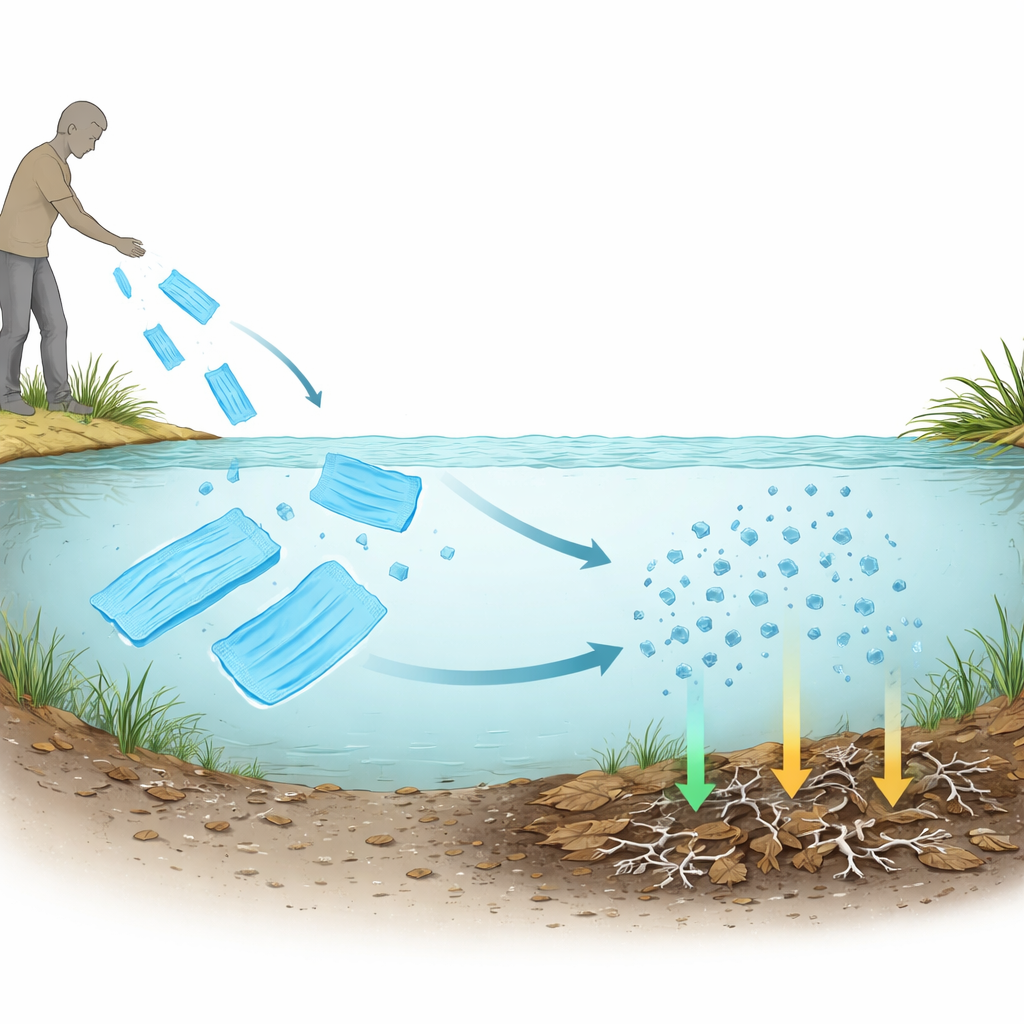
The billions of disposable medical facemasks used during and after the COVID-19 pandemic do not simply vanish once they leave our hands. Many end up in rivers and ponds, where they slowly break apart. This study asks a deceptively simple question with far-reaching implications: how does waste from these masks change the way dead leaves break down at the bottom of a freshwater pond, and what does that mean for the fungi that quietly drive this hidden recycling process?
Rotting leaves as an underwater test bed
In most ponds and streams, fallen leaves from nearby trees form soggy piles on the bottom. These leaf packs fuel entire food webs as fungi and bacteria break the leaves down, releasing nutrients and making them edible for small animals. The researchers turned this natural process into a field experiment in a Swedish pond. They filled cotton mesh bags with alder leaves and added either nothing extra, wood shavings (to mimic natural tough debris like twigs), or pieces of polypropylene cut from medical facemasks. The plastic came in two sizes—large “macroplastic” squares and much smaller “microplastic” pieces—and some plastics had been pre-soaked to wash out easily leached chemicals, while others were used unleached. Over five weeks, they tracked how quickly the leaves lost mass, how strongly the cotton bags weakened as their cellulose was decomposed, and how fungal biomass, species makeup, and key genes changed over time.
How plastic and wood shift the pace of decay
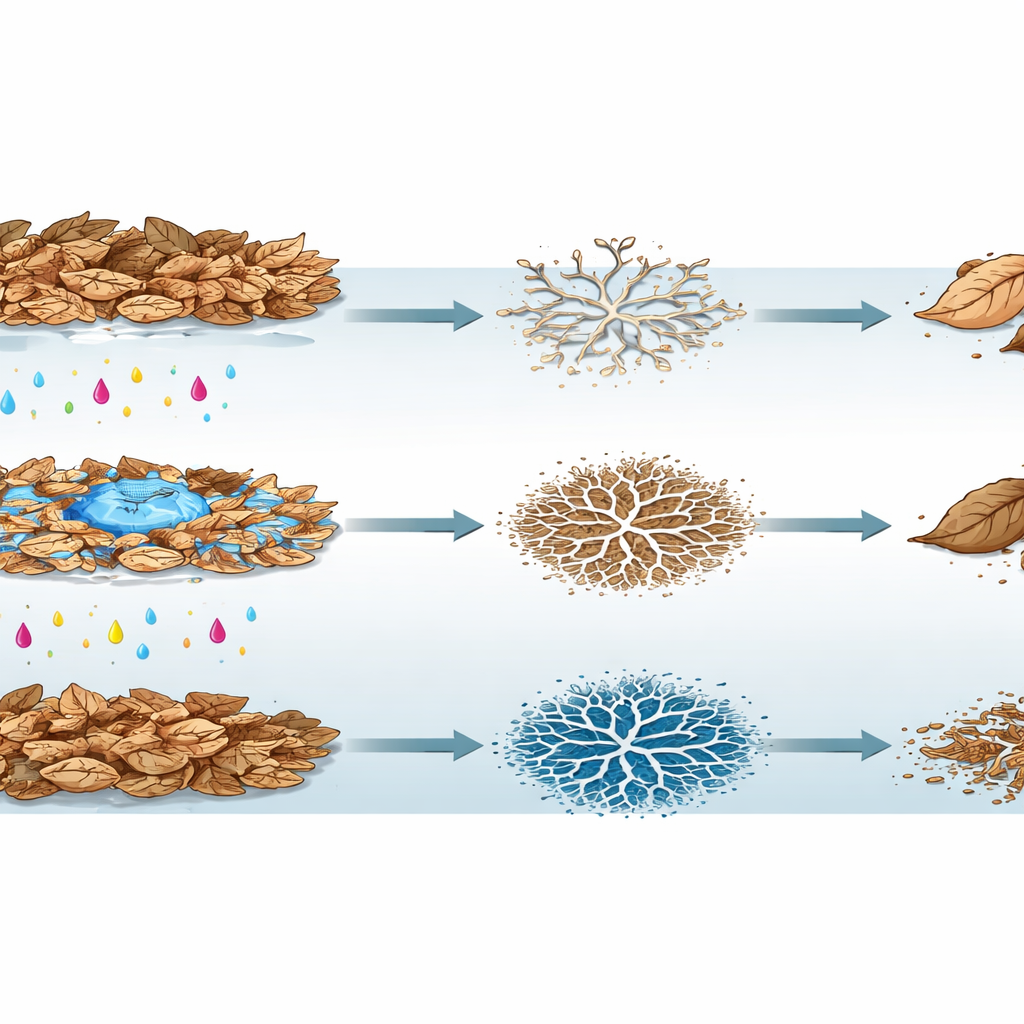
The team found that wood and mask-derived plastics affected decomposition in different ways. Wood shavings slightly slowed the breakdown of alder leaves, reducing leaf mass loss by about four percent compared to leaf-only controls. In contrast, plastics did not noticeably slow leaf decay and macroplastics showed a tiny increase in leaf mass loss. The more striking effect emerged when looking at the cotton bags, which act as a standardized, easily digestible carbon source. Here, plastics sped up decomposition: overall, cotton weakened more in the presence of plastics, and unleached microplastics boosted cotton breakdown by nearly a quarter. This suggests that fresh, small plastic fragments may initially stimulate the breakdown of simple organic matter, even as they alter the living community doing the work.
Hidden changes in fungal life
Under the microscope, the leaf packs told a subtler story. Fungal biomass on the leaves grew over the five-week study, as expected, but both wood shavings and plastics reduced that growth compared with control leaves without added material. By day 21, wood cut fungal biomass by about one fifth, and plastics by almost one tenth. Genetic analyses showed that fungal communities shifted strongly over time and differed among treatments. Leaves mixed with wood developed a distinct and fairly consistent fungal community, while leaves exposed to plastics showed much more variable communities from bag to bag, implying that plastics foster a patchier, less predictable fungal world. Yet the overall abundance of genes linked to breaking down cellulose rose sharply through time for all treatments, and was not clearly suppressed by either wood or plastic.
Chemicals leaking from waste
The researchers also examined what chemicals leach out of the materials. Mask plastics released a suite of common industrial additives, including surfactants and “slip agents” that change surface properties but are not strongly antimicrobial. Wood leachate, by contrast, was rich in lignins, tannins, and other plant-derived compounds known to inhibit microbial activity. This chemical contrast helps explain why wood had a stronger dampening effect on fungal biomass and leaf decay than plastics did. Meanwhile, some plastic additives and dissolved organic carbon in the leachate may have acted as extra nutrients, especially in the nitrogen-poor pond, giving certain microbes a short-term boost and contributing to faster cellulose breakdown near unleached microplastics.
What this means for ponds and beyond
For now, the measured effects of mask-derived plastics in this pond were modest compared with major stressors like salt pollution, wastewater, or warming. Still, even small shifts in how quickly leaves and other detritus decompose can ripple through freshwater ecosystems by changing carbon storage, nutrient release, and food availability for invertebrates and fish. This study shows that facemask plastics do not behave like natural wood: they slightly suppress fungal biomass, can speed up the decay of simple organic matter, and create more variable fungal communities. As disposable masks and other plastics continue to accumulate in waterways, understanding these quiet but fundamental changes in the planet’s “leaf recycling” systems will be essential for predicting the long-term health of freshwater habitats.
Citation: Kong, Z.H., Stangl, M., Oester, R. et al. Medical facemask waste alters detritus decomposition and fungal communities in a freshwater pond. Sci Rep 16, 10597 (2026). https://doi.org/10.1038/s41598-026-45795-5
Keywords: microplastics, freshwater ponds, leaf litter decomposition, aquatic fungi, facemask pollution