Clear Sky Science · en
A cross sectional study of the autonomic function at different recovery phases in SARS-CoV-2 patients without orthostatic symptoms
Why your body’s automatic controls matter after COVID
Many people know that COVID can leave lingering fatigue or breathlessness, but fewer realise that the infection may also quietly affect the body’s automatic control system, which keeps heart rate and blood pressure in balance without us thinking about it. This study looked at how that system behaves in older adults who recovered from COVID but did not feel dizzy on standing or report classic “long COVID” heart symptoms. The findings suggest that even when people feel mostly well, their internal wiring between the brain and heart may still be recovering, especially in the months right after infection. 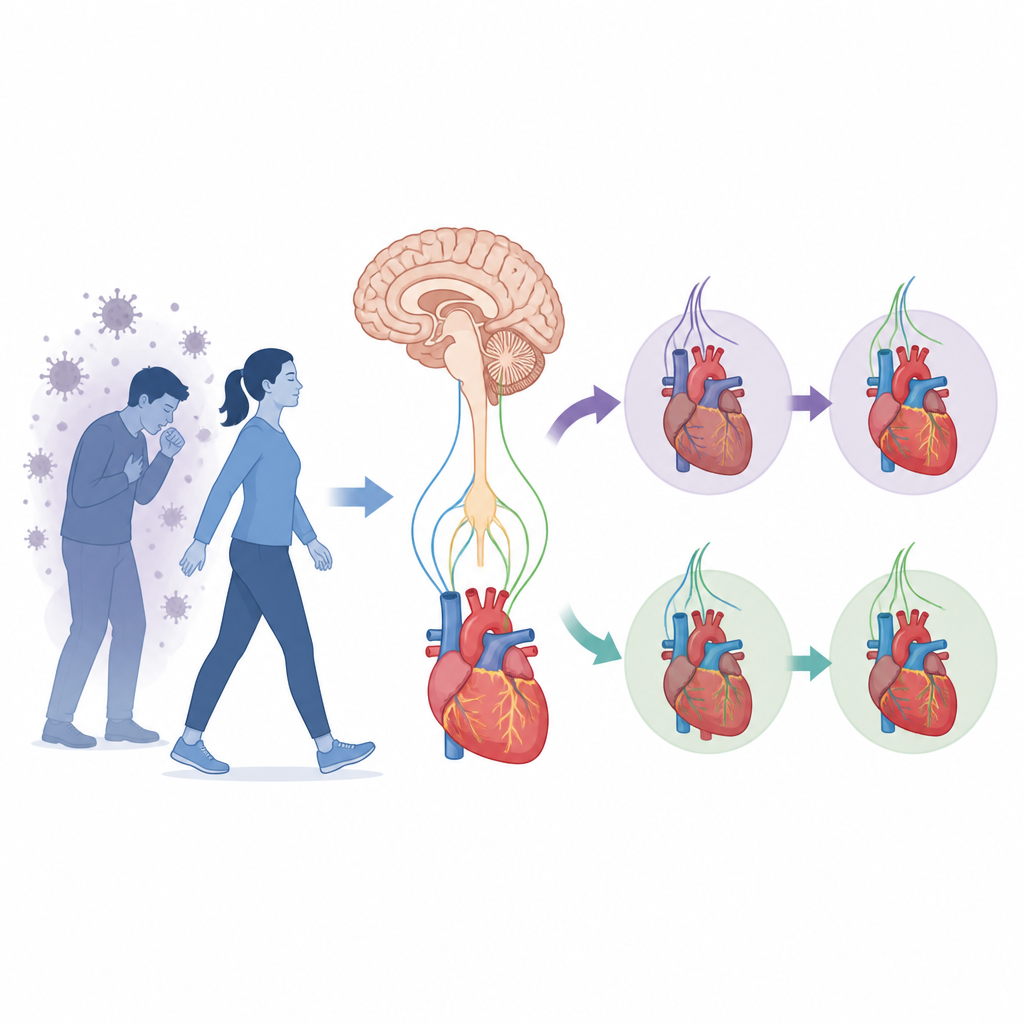
What the researchers wanted to find out
The team focused on the autonomic nervous system, the network that automatically speeds or slows the heart and adjusts blood pressure. They asked whether this system works differently in people who had COVID compared with healthy peers, and whether any changes ease with time. To do this, they studied adults aged 50 to 85 who had confirmed SARS-CoV-2 infection and came for routine follow up between about 2 months and 1 year after recovery. None had previous heart or brain disease known to disturb automatic heart control, and none had typical signs of autonomic disorders, such as a racing heart or a big blood pressure drop when standing up.
How the study was carried out
Researchers divided 73 COVID survivors into two groups based on time since infection: a post acute group seen within 120 days and a long term group seen after at least 120 days. They compared both with 50 healthy people of similar age and sex, drawn from a pre pandemic database. While seated in a quiet lab, participants had their heart rhythm and blood pressure recorded for several minutes. From these recordings the team calculated well established measures of how much the heartbeat varies from beat to beat and how strongly blood pressure changes trigger reflex adjustments in heart rate. These measures act as window into the balance between the “fight or flight” branch of the autonomic system and the “rest and digest” branch that slows the heart. 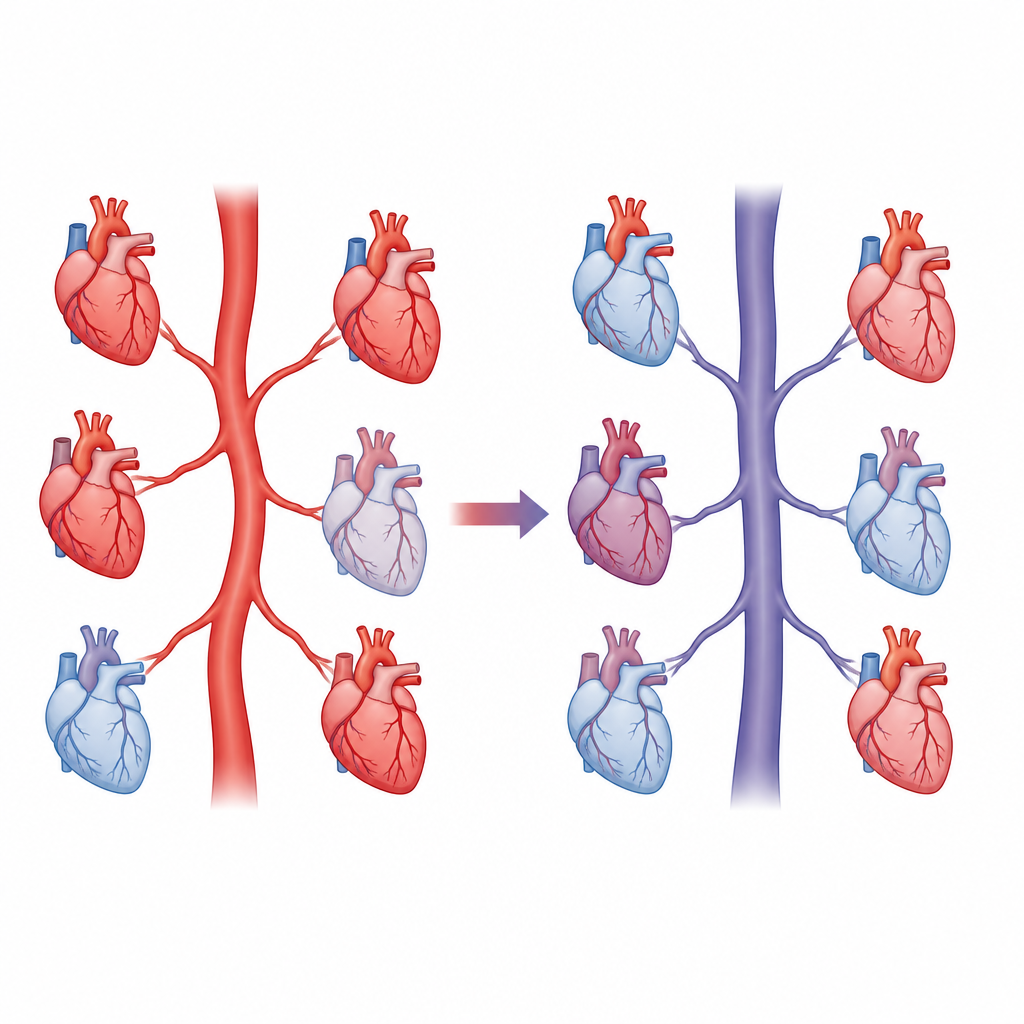
What they discovered about the heart’s signals
Compared with healthy controls, both COVID groups showed less natural variation in their heartbeats and weaker reflex responses that normally help stabilise blood pressure. Together, these patterns point to reduced calming (“parasympathetic”) input to the heart and a relative tilt toward stress related (“sympathetic”) signals. The post acute group, tested only a few months after infection, stood out as having faster average heart rates, a stronger stress tilt and lower measures of calming activity than the long term group. Statistical analyses that accounted for differences such as body weight, lung infection and oxygen use suggested that several of these changes were linked mainly to time since infection rather than to other illnesses or treatments.
Why time since infection and lung illness may matter
Although the study captured different people at single time points rather than following the same individuals, the pattern across groups hinted at gradual improvement: on most measures, values were worst in the post acute group, better in the long term group and best in healthy controls. The researchers also noted that participants who had pneumonia during their acute illness tended to have more impaired reflex control of heart rate, possibly because lung inflammation can stiffen major arteries and blunt the sensors that help fine tune blood pressure. Even so, the study did not find simple straight line links between the exact number of days since infection or the number of lingering symptoms and the autonomic measurements.
What this could mean for long term heart health
The results suggest that COVID may leave behind a quieter form of disturbance in the body’s automatic heart control, even in people who do not notice dizziness or obvious racing heart episodes. Such shifts toward higher stress signalling and weaker calming reflexes have been associated in other research with higher risk of heart rhythm problems and heart failure, although this study cannot show that COVID causes these outcomes. The authors argue that keeping an eye on heart health in COVID survivors and exploring gentle, non invasive ways to support a healthier autonomic balance could be worthwhile. Larger, long term studies following the same people over time will be needed to confirm whether these early changes fade, persist or translate into future heart disease.
Citation: La Rovere, M.T., Maestri, R., Robbi, E. et al. A cross sectional study of the autonomic function at different recovery phases in SARS-CoV-2 patients without orthostatic symptoms. Sci Rep 16, 14950 (2026). https://doi.org/10.1038/s41598-026-45471-8
Keywords: COVID-19 recovery, autonomic nervous system, heart rate variability, baroreflex sensitivity, long COVID