Clear Sky Science · en
Ramulus Mori (Sangzhi) alkaloids attenuate diet-induced obesity by modulating adipose tissue metabolic programs
Why this research matters for everyday health
Obesity is more than just extra body weight; it reshapes our organs and raises the risk of diabetes, heart disease, and fatty liver. This study explores whether a natural extract from mulberry twigs, already used in China to treat type 2 diabetes, can also help the body burn more fat by changing how different types of fat tissue behave. If this approach works, it could open the door to safer treatments that nudge our own fat cells to waste energy instead of hoarding it.
Turning "storage" fat into "burning" fat
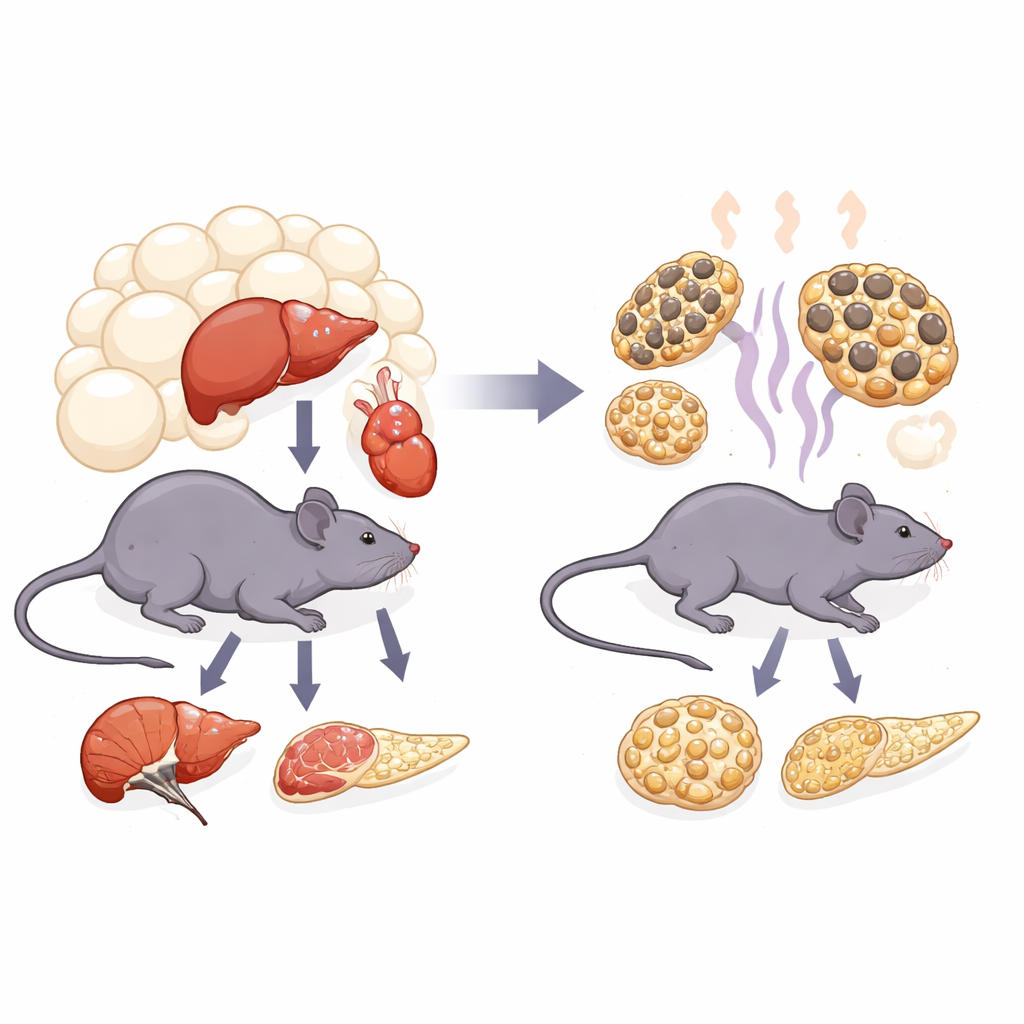
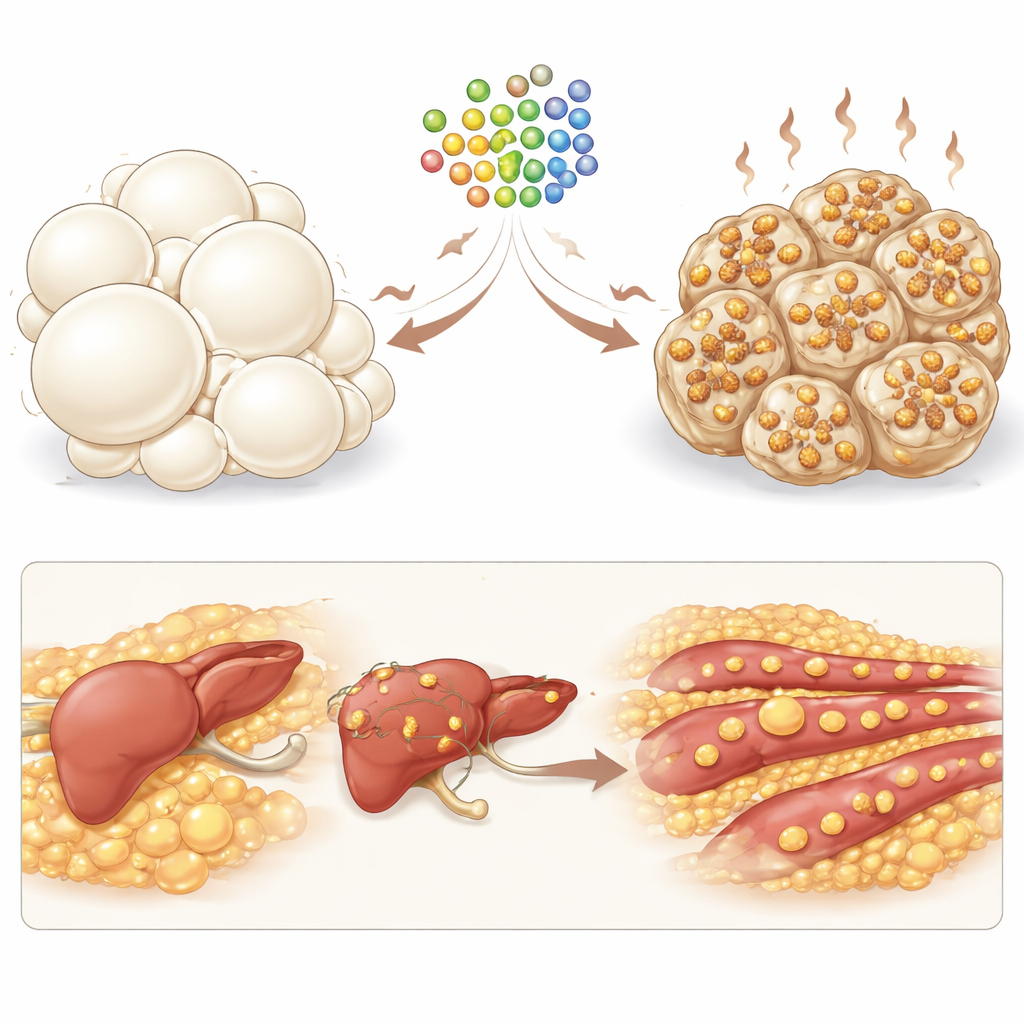
Our bodies contain several kinds of fat. White fat is the main storage depot, packing energy into big, single droplets inside each cell. Brown fat, in contrast, is full of tiny droplets and energy powerhouses called mitochondria that release energy as heat. Under certain conditions, white fat can adopt brown-like features in a process called "browning," creating so-called beige fat. In obesity, this system falters: brown fat becomes sluggish and more white-like, while white fat cells swell and stop working properly. The researchers wanted to know whether Ramulus Mori (Sangzhi) alkaloids (SZ-A), a mix of natural compounds from mulberry twigs, could push fat back toward a more active, calorie-burning state.
Testing a mulberry extract in obese mice
The team fed male mice a high-fat diet for 14 weeks to mimic diet-induced obesity, then treated them with either a low or high dose of SZ-A for six weeks. Despite eating similar amounts of food, treated mice gained much less weight than untreated obese mice. They carried less fat in several key depots under the skin and around organs, and their livers contained fewer fat droplets, indicating protection against fatty liver. At the whole-body level, SZ-A improved blood sugar control, made the animals respond better to insulin, and reduced unhealthy blood lipids such as cholesterol and triglycerides, pointing to a broad improvement in metabolic health.
Rejuvenating the body's fat-burning engines
Looking closely at fat tissues, the scientists found that SZ-A reshaped both the size and behavior of fat cells. In white fat under the skin, enlarged cells shrank and began to resemble beige fat, showing molecular signs associated with heat production and increased mitochondrial activity. Around the internal organs, where fat is usually more harmful and less flexible, SZ-A did not produce a dramatic shift to classic brown fat. Instead, gene activity patterns shifted toward better fat breakdown and more efficient burning of fatty acids, changes that can ease strain on the liver and improve insulin sensitivity. In brown fat, which had become "whitened" and laden with big droplets in obese mice, SZ-A reduced the accumulated fat and restored markers linked to heat production, suggesting a partial rescue of this natural calorie-burning tissue.
Probing fat cells and gene programs in the lab
To see whether these effects depended on the whole animal or could arise within fat cells themselves, the team exposed cultured mouse fat cells to SZ-A. At doses that did not harm the cells, the extract nudged them to switch on many of the same browning- and thermogenesis-related genes observed in the treated mice, even without external nerve or hormone signals. In parallel, a broad survey of gene activity in visceral fat from treated animals revealed large-scale rewiring of metabolic pathways: genes involved in fatty acid breakdown, oxidation, and mitochondrial function were strongly enriched. This pattern supports the idea that SZ-A pushes fat toward a more oxidative, energy-using state rather than pure storage, although the authors note that direct measurements of heat output and energy expenditure will be needed to confirm this.
What this could mean for future treatments
Overall, the study suggests that Ramulus Mori (Sangzhi) alkaloids can counter diet-induced obesity in mice by coordinating changes across several fat depots: slimming and "retraining" white fat under the skin, reviving brown fat's heat-making role, and remodeling deep belly fat to burn rather than stockpile lipids. Because SZ-A is already approved and considered safe for people with type 2 diabetes in China, it stands out among natural compounds as a realistic candidate for further testing. While more work is required—especially direct measurements of energy burning and trials in diverse animal models and humans—these findings hint that gently reprogramming fat tissue metabolism may become a powerful, multi-target way to tackle obesity and its related diseases.
Citation: Zhang, R., Peng, G., Pan, X. et al. Ramulus Mori (Sangzhi) alkaloids attenuate diet-induced obesity by modulating adipose tissue metabolic programs. Sci Rep 16, 10846 (2026). https://doi.org/10.1038/s41598-026-45462-9
Keywords: obesity, brown fat, mulberry alkaloids, fat browning, metabolic health