Clear Sky Science · en
Heterologous RBMRNA-405 mRNA booster enhances humoral immunity post-inactivated COVID-19 vaccination: a randomized clinical trial in adults and older through 12 months
Why this study matters for everyday life
Many people around the world first received traditional COVID-19 shots made from inactivated virus, especially in low and middle income countries. As the virus changed and immunity faded, a key question emerged: should their next dose be the same kind of vaccine, or would switching to a newer mRNA booster give better protection, particularly for older adults at higher risk of severe illness?
Who took part in the trial
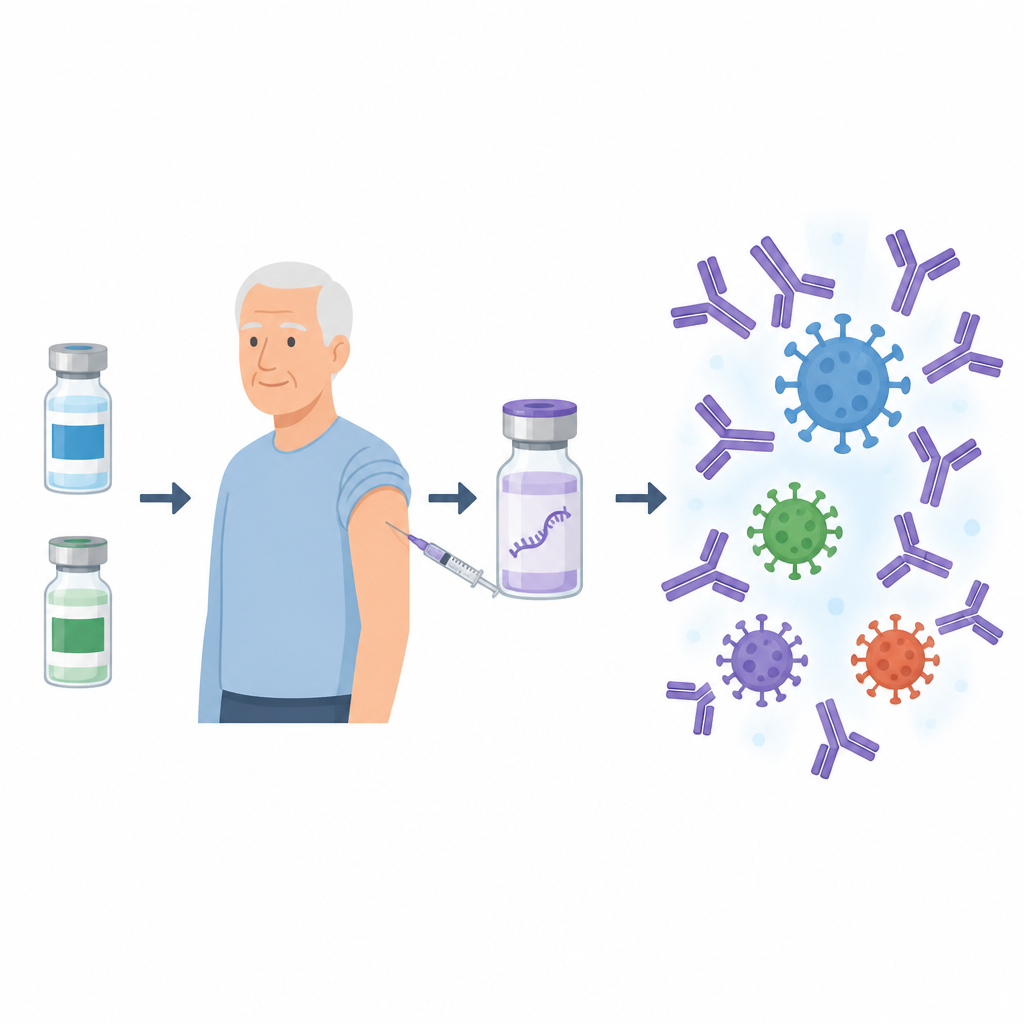
This study followed 60 healthy adults in China who had already received two doses of an inactivated COVID-19 vaccine called CoronaVac at least six months earlier. Half of them were 18 to 59 years old, and half were 60 years or older. Participants were randomly assigned to receive either a third dose of CoronaVac or a different booster, an mRNA vaccine called RBMRNA-405 that targets both Delta and Omicron versions of the virus. Researchers then tracked side effects and levels of protective antibodies over a full year.
How safe were the booster shots
Both boosters were generally safe over the 12 month follow up. The most common complaint in both groups was pain at the injection site, which was more frequent after the mRNA booster and mostly mild to moderate. Short lived symptoms such as fever, fatigue, headache, and muscle aches occurred at similar rates in the two groups, and only a few people had higher fevers. No serious problems linked to either vaccine were reported, and no one had to leave the study because of side effects. Adults under 60 tended to report more reactions than older adults, a pattern seen with other vaccines as well.
How strongly the immune system responded
Before the booster dose, levels of antibodies that can block the Omicron BA.1 variant were very low or undetectable in almost everyone. Fourteen days after boosting, people who received the mRNA shot had about three times higher neutralizing antibody levels against Omicron than those who received a third CoronaVac dose, and this advantage remained clear at day 28, even though levels dropped in both groups. The mRNA booster also triggered much larger rises in spike specific IgG antibodies, a common measure of antibody strength, with more than 17 times higher levels than the CoronaVac booster at day 14. These strong responses were seen in both younger and older adults, although younger adults tended to reach the highest peaks.
What happened over the long term
The study did not stop after the first month. Antibody levels were checked up to 360 days after the booster. For the mRNA group, spike IgG levels peaked around day 14 and then gradually declined, but they stayed clearly higher at one year than in the CoronaVac group at earlier time points. In contrast, people boosted with CoronaVac showed a late rise in antibodies between six months and one year, likely reflecting natural infections during a later wave of COVID-19 after China eased strict control measures. This pattern suggests that the mRNA booster may have offered stronger and more lasting shield against infection, reducing the chances of silent breakthrough cases that would otherwise boost antibody levels.
What this means for older adults and policy
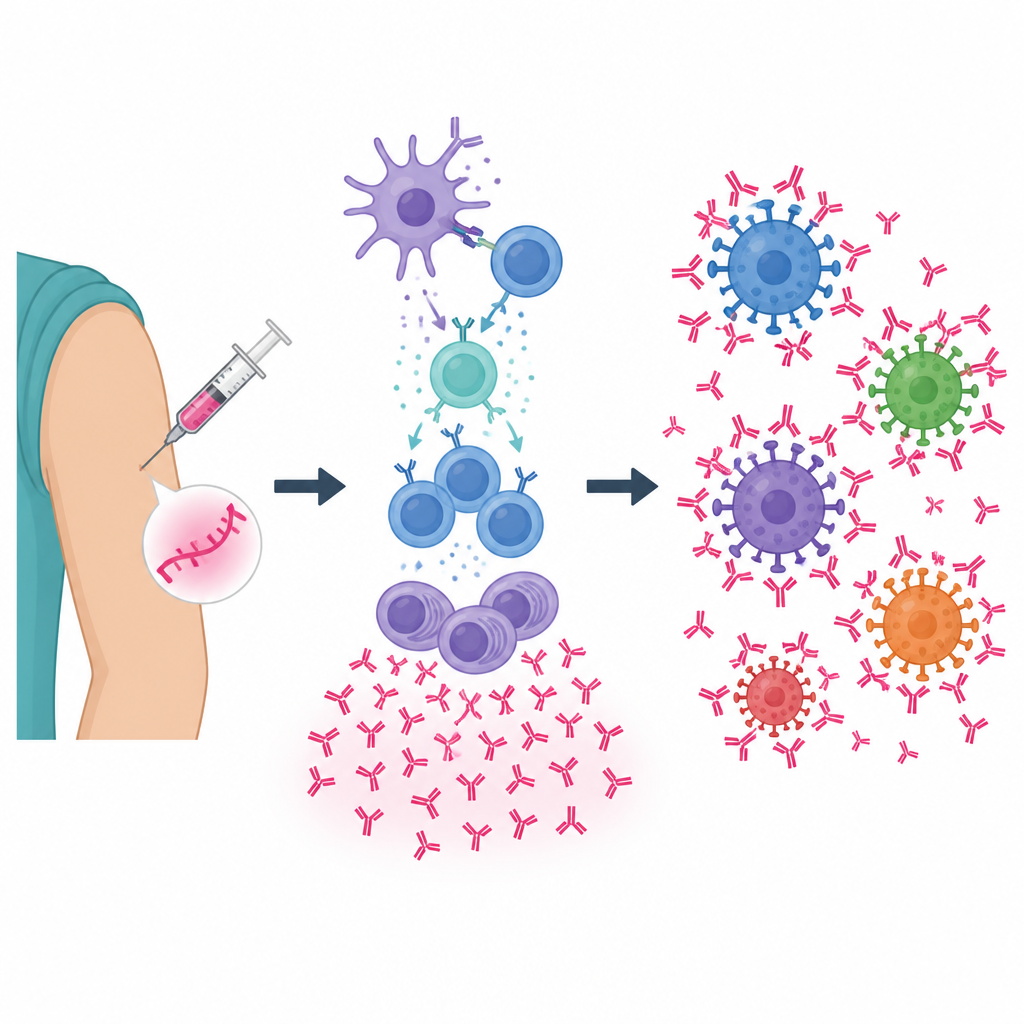
The findings support the idea that mixing vaccine types can give better protection than repeating the same inactivated vaccine, especially when facing new variants. By combining earlier priming with an inactivated vaccine and a later mRNA booster, the immune system appears to produce more powerful and longer lasting antibodies. For older adults, who often respond less strongly to vaccines, the mRNA booster still generated impressive antibody levels and maintained a good safety profile, with side effects mainly limited to temporary soreness at the injection site.
Take home message
In people who started with two doses of an inactivated COVID-19 vaccine, switching to a bivalent mRNA booster produced stronger and more durable antibody responses than taking a third inactivated dose, without raising serious safety concerns. For countries that rely heavily on inactivated vaccines, especially where many citizens are older, these results suggest that adding an mRNA booster could be a practical way to improve protection against changing coronavirus variants over the long term.
Citation: Yong, X., He, J., Zhang, C. et al. Heterologous RBMRNA-405 mRNA booster enhances humoral immunity post-inactivated COVID-19 vaccination: a randomized clinical trial in adults and older through 12 months. Sci Rep 16, 14928 (2026). https://doi.org/10.1038/s41598-026-45429-w
Keywords: COVID-19 boosters, mRNA vaccines, CoronaVac, older adults, heterologous vaccination