Clear Sky Science · en
Addressing gaps in cancer cachexia care among healthcare professionals at Uganda Cancer Institute
Why this matters for patients and families
Cancer is often thought of in terms of tumors, scans, and drugs. Yet for many people, one of the most devastating parts of the disease is a steady loss of weight, strength, and appetite that leaves them too weak to fight, eat, or enjoy time with loved ones. This wasting syndrome, called cancer cachexia, is especially common in low-income countries but is rarely treated as a priority. This study from the Uganda Cancer Institute looks closely at how health workers there understand and manage cachexia—and shows that even simple training can change care, while also revealing why education alone is not enough.
Hidden weight loss in a busy cancer hospital
At the Uganda Cancer Institute in Kampala, about eight in ten oncology patients arrive already showing signs of cachexia. They are losing weight and muscle, have little appetite, and often feel exhausted and unwell. Yet staff are under intense pressure, with long lines of patients and limited equipment. In this setting, weight loss is often lumped together with general malnutrition or simply seen as an inevitable part of cancer. The researchers wanted to know: how much do nurses, doctors, and other professionals actually know about cachexia, how do they feel about treating it, and what do they do in everyday practice?
Training the people on the front line
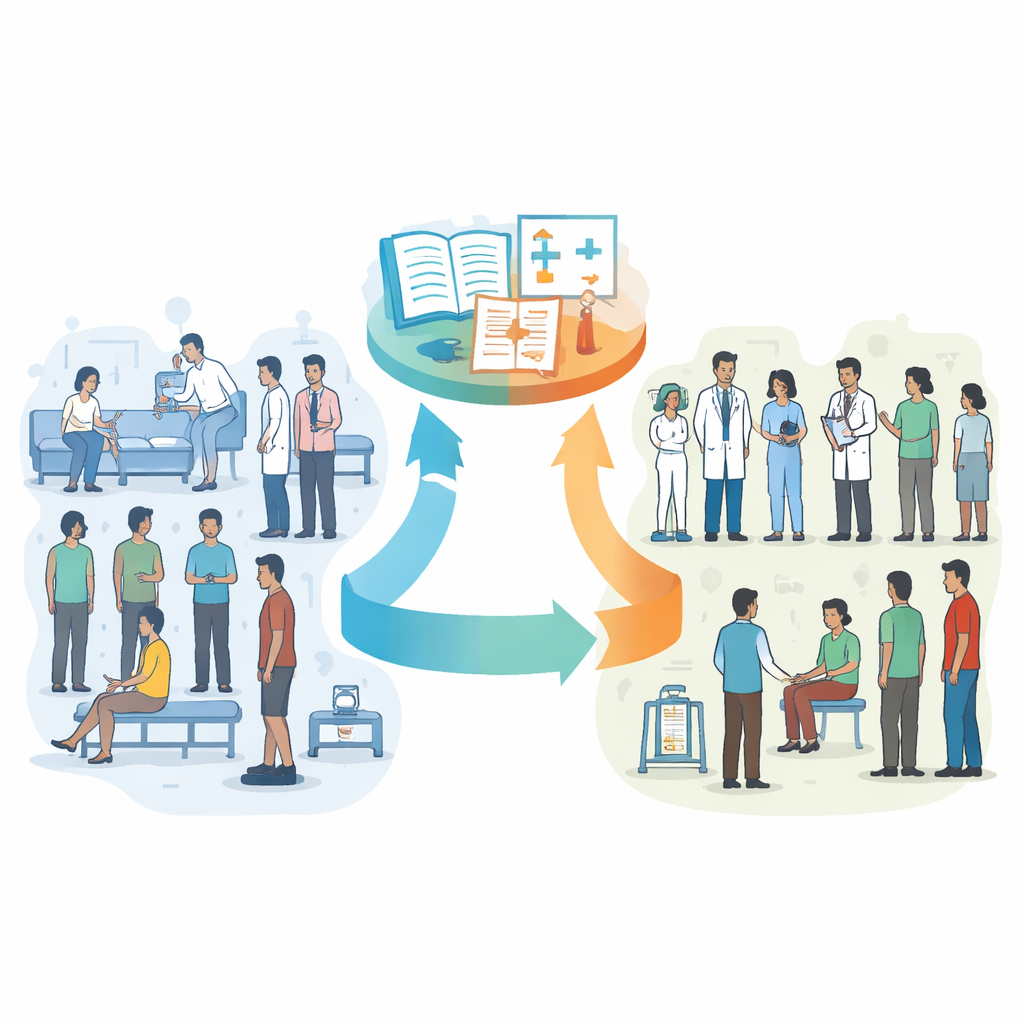
The team followed 50 health workers—mostly nurses, but also doctors, nutritionists, pharmacists, and counselors—over six months. First, they measured existing knowledge and habits through a structured questionnaire and in-depth interviews. Nearly half of participants had never received formal training on cachexia. Many relied on rough visual impressions or a simple weight check. They rarely used clear definitions or international guidance, and often confused cachexia with ordinary malnutrition that can be turned around by extra food alone. After this baseline snapshot, the researchers delivered a three-month education program, including interactive talks and printed materials, based on major international guidelines.
What changed after learning more
Following the training, health workers showed marked shifts in understanding and attitudes. Awareness of a major guideline from the American Society of Clinical Oncology rose to almost nine in ten participants, and fewer believed that cachexia could be reversed by nutrition alone. They better recognized that this syndrome stems from a mix of tumor-driven inflammation, metabolism changes, symptoms like nausea, and emotional distress. Many also expressed greater empathy for both patients and caregivers, acknowledging how arguments over food can deepen guilt and strain within families. Confidence in managing cachexia more than doubled, and more staff reported actively caring for patients with these problems rather than seeing them as beyond help.
From knowledge to everyday care
Importantly, the study also tested whether new knowledge translated into action. There were encouraging signs: more staff favored starting with oral feeding, using short courses of appetite-boosting medicines when appropriate, and avoiding forcing patients to eat. Referrals to nutritionists grew, and more participants agreed that counselors, social workers, and palliative care providers should share responsibility. Some began to call for routine screening at triage and repeated checks of weight and function. But deep system gaps still held them back. Many wards had only one working scale. Advanced tools to measure muscle mass were absent. There were too few nutritionists, counselors, and psychologists for the huge patient load, and no local, step-by-step guidelines woven into clinic routines.

What this means for cancer care in low-resource settings
For patients and families, the study’s message is both hopeful and sobering. On the hopeful side, it shows that when health workers are given time and targeted teaching, they quickly become more willing and better prepared to address weight and strength loss, not just the tumor. They are more likely to listen, to support caregivers, and to use practical, evidence-based steps that can ease symptoms and improve quality of life. On the sobering side, the work reveals that goodwill and knowledge are not enough without proper staffing, tools, and clear routines. The authors argue that to truly change lives, hospitals must treat cachexia care as a built-in part of cancer services, backed by local guidelines, leadership, and investment. In short, the challenge is no longer convincing professionals that cachexia matters, but giving them the means to act on what they know.
Citation: Darshit, D., Srikant, S., Komukama, C. et al. Addressing gaps in cancer cachexia care among healthcare professionals at Uganda Cancer Institute. Sci Rep 16, 10871 (2026). https://doi.org/10.1038/s41598-026-45419-y
Keywords: cancer cachexia, supportive oncology, Uganda, nutrition in cancer, palliative care