Clear Sky Science · en
Physical activity coaching programme for people with Long COVID: a pilot randomised clinical trial
Why moving again after COVID matters
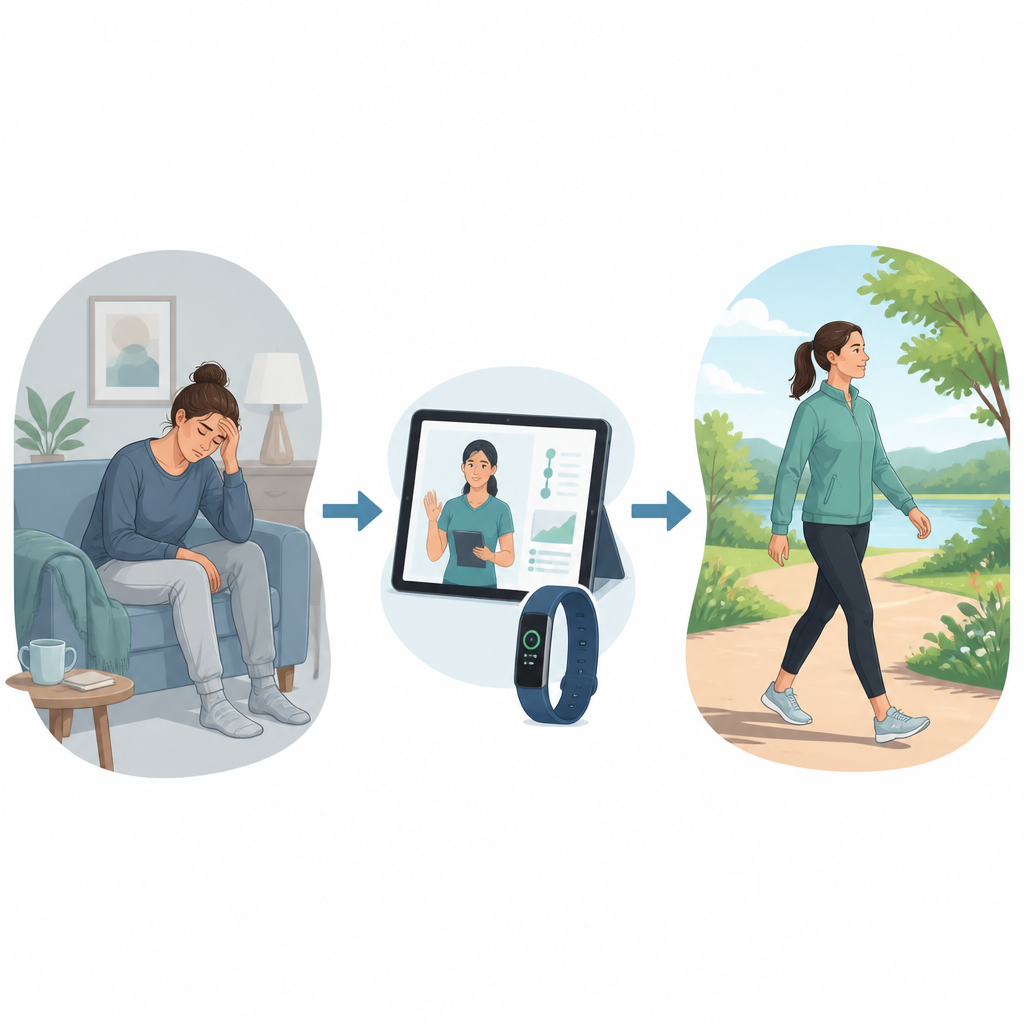
Many people living with Long COVID feel trapped by fatigue, breathlessness and brain fog that make even simple daily tasks exhausting. This study tested whether gentle, personalised support delivered at home could help people safely move more, sit less and feel better in their everyday lives. The researchers wanted to know if this type of coaching was practical and safe, and whether it might improve walking ability, symptoms and quality of life over several months.
Two different paths to recovery
Fifty adults with Long COVID in Spain took part and were randomly placed into one of two groups. One group received usual care, meaning they managed their own activity and were simply encouraged to follow general health guidelines. The other group joined a twelve week coaching program built around weekly one to one phone or video sessions with a physiotherapist. Both groups wore activity bands that tracked steps, time spent walking at different intensities and time spent sitting, so changes in daily movement could be measured objectively.
How the coaching support worked
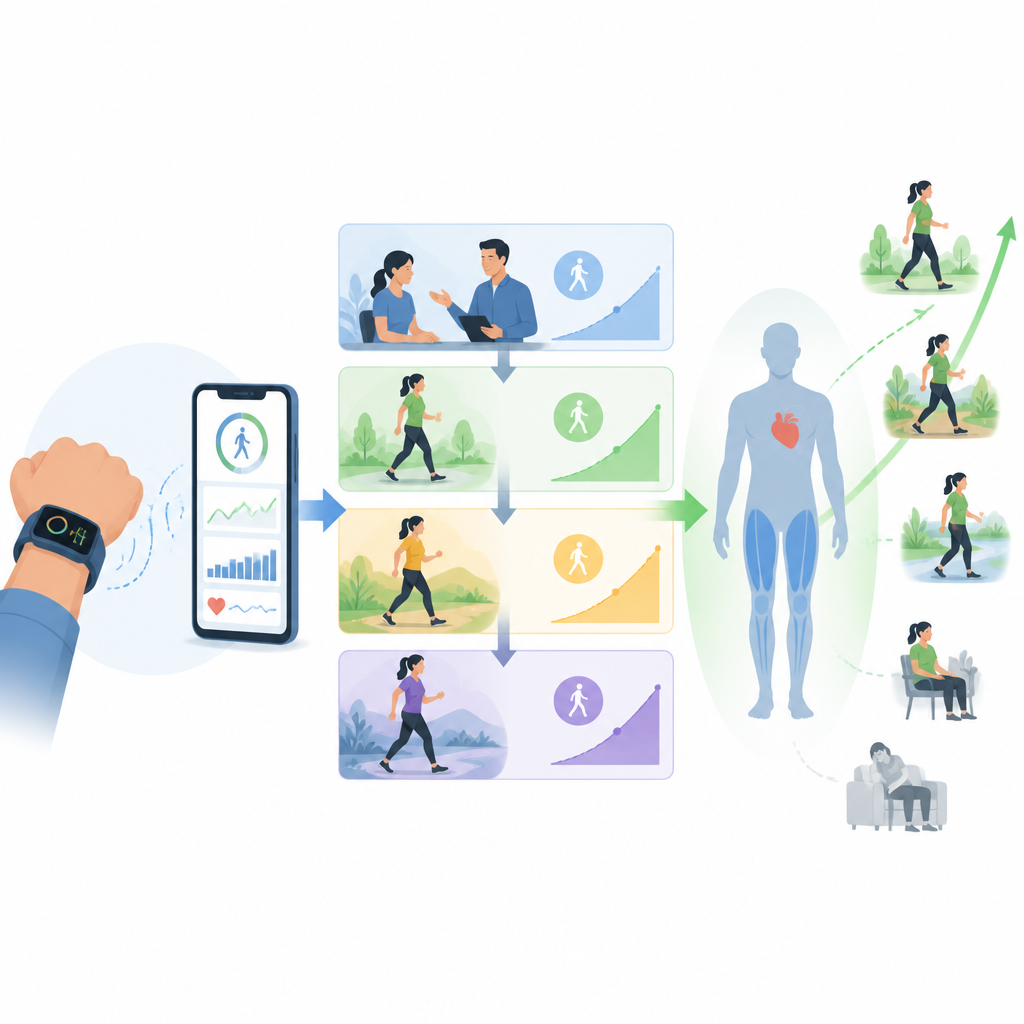
The coaching sessions combined several simple elements designed to fit around fluctuating symptoms. Participants monitored their steps and walking time using the activity band and app. Each week the physiotherapist reviewed these data, offered tailored feedback and talked through the person’s experience, including any days when symptoms flared. Together they set small, realistic activity goals for the coming week, adjusting them up or down in small steps depending on how the person was feeling. Sessions also covered practical topics such as recognising warning signs, pacing tasks through the day, breaking up long periods of sitting and planning safe, manageable walks.
Changes in movement and daily function
By the end of the three month program, people in the coaching group were walking more, sitting less and managing longer walking tests than those receiving usual care. On average they added thousands of extra steps per day and spent close to an extra hour per day in light activity, while cutting their sedentary time by more than an hour. These gains were not short lived. Three months after the program ended, the coaching group had kept or further improved their activity levels, and fewer of them fell into the very low step count range associated with poor health. In contrast, the usual care group tended to become less active over time, with more light movement disappearing from their day.
How symptoms and quality of life shifted
The ripple effects of moving more showed up in other measures. People in the coaching group walked farther in a six minute corridor test and completed more sit to stand repetitions, both signs of better functional capacity. Many reported less breathlessness and fatigue in daily life, and scores on a standard quality of life scale improved meaningfully. The number of participants who met criteria for severe fatigue, post exertional symptom flare ups or marked loss of quality of life fell over the six months. Those in the usual care group were more likely to remain limited by symptoms and low function, even though they also wore trackers.
What this means for people living with Long COVID
This pilot study suggests that a carefully tailored, remote coaching program can be delivered safely to people with Long COVID and may help them ease out of a spiral of inactivity. By combining simple wearable technology with regular, personalised guidance that respects day to day symptom changes, many participants were able to walk more, sit less and feel better without triggering serious setbacks. The results need to be confirmed in a larger trial, but they point toward an accessible way to support people with Long COVID in rebuilding movement and confidence at their own pace.
Citation: Diciolla, N.S., Marques, A., Jiménez-Martín, A. et al. Physical activity coaching programme for people with Long COVID: a pilot randomised clinical trial. Sci Rep 16, 14820 (2026). https://doi.org/10.1038/s41598-026-44806-9
Keywords: Long COVID, physical activity, remote coaching, fatigue, quality of life