Clear Sky Science · en
Psychological effects of disaster response on emergency medical services workers
Why the hidden toll on rescuers matters
When disasters strike—whether a pileup on a highway, a stadium crush, or a crisis during the Hajj pilgrimage—emergency medical workers rush in. We rely on them to stay calm and focused amid chaos. But this study shows that the experience leaves a lasting mark on many of these responders themselves. Understanding what they go through, and how to better support them, matters not only for their well-being but also for the safety and quality of care the public receives.
Life on the front lines of disaster
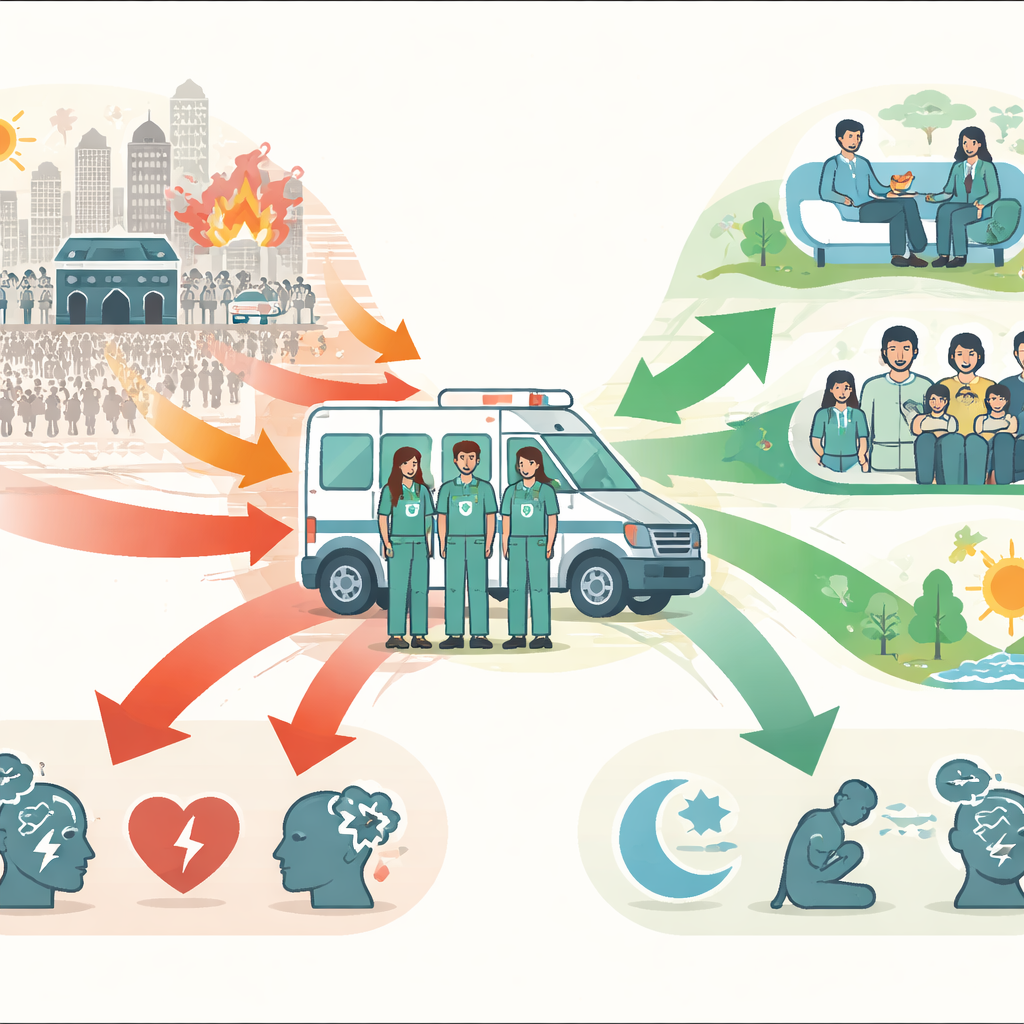
Emergency Medical Services (EMS) staff already work in demanding conditions, but disaster deployments add another layer of strain. In the Makkah region of Saudi Arabia, these can include huge religious gatherings, heat emergencies, large traffic collisions, and fires that stretch teams to their limits. To capture what this pressure does to the people behind the uniforms, researchers surveyed 294 EMS workers who had taken part in at least one major incident. The team focused on emotional symptoms such as anxiety and low mood, physical signs like sleep and appetite changes, and the workers’ own ways of coping and seeking help.
What the workers reported feeling
The responses paint a worrying picture. Around one in four participants said they experienced anxiety, depression, emotional exhaustion, or sleep problems after disaster work, and a similar share noticed changes in appetite. Many also felt their overall mental health had declined since starting this kind of duty. These are not just fleeting bad days: they reflect ongoing strain that can spill over into physical health problems and relationships at home. Yet, despite the intensity of their experiences, these EMS workers did not show big differences in distress based on age, gender, years of experience, or shift patterns—suggesting that the psychological load is widely shared across the workforce.
Support that helps—and support that is missing
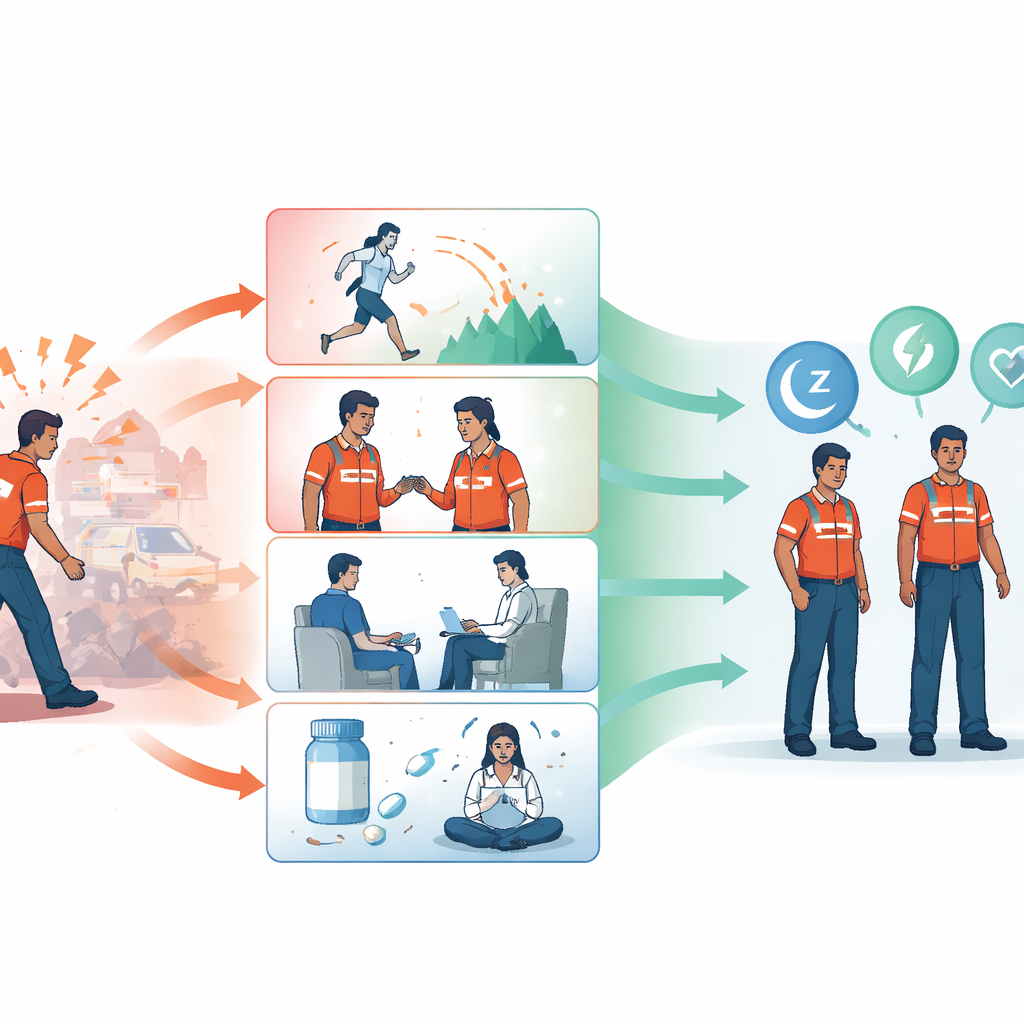
When the researchers looked at what seemed to ease symptoms, two kinds of help stood out. Workers who had access to counseling or mental health medication tended to report fewer problems. General wellness offerings—broad programs that aim to boost overall well-being—were linked to a smaller reduction in symptoms. At the same time, many respondents said they rarely used coping methods that are known to help, such as regular physical activity, relaxation techniques, or leaning on peers who understand what they have been through. Awareness of organizational support, such as debriefing after an incident or formal counseling, was strikingly low, and many felt that services were difficult to reach when needed.
Barriers beyond individual strength
The study suggests that the main challenge is not a lack of personal resilience, but a system that does too little to make psychological care part of everyday EMS operations. Workers often do not know what is available, worry about stigma, or face practical obstacles in accessing help. Unlike some wealthier systems where support exists but is underused by choice, the picture in this Middle Eastern setting points to deeper structural gaps. The authors argue that mental health support should be built into routine procedures—through automatic debriefings after major incidents, easy access to confidential counseling, and training that treats emotional readiness as seriously as clinical skills.
What this means for rescuers and the public
For a general reader, the takeaway is clear: the people who rescue others in disasters are themselves at real risk of psychological harm, and this risk is not inevitable. The study shows that better-organized support—delivered early, made easy to use, and openly backed by management—can help reduce distress. By treating mental health care as a standard part of disaster response, EMS systems can protect their staff, keep experienced workers on the job, and ultimately provide safer, more reliable care to the communities that depend on them.
Citation: Almukhlifi, Y., Alsulami, M., Alharbi, A. et al. Psychological effects of disaster response on emergency medical services workers. Sci Rep 16, 13969 (2026). https://doi.org/10.1038/s41598-026-44753-5
Keywords: emergency medical services, disaster response, mental health, occupational stress, coping strategies