Clear Sky Science · en
Heterologous saRNA prime – multivalent protein boost strategy induces broad and durable immunity against SARS-CoV-2 and MERS-CoV
Why Future-Proof Vaccines Matter
The world has now seen three dangerous coronavirus outbreaks in just two decades: SARS, MERS, and COVID‑19. Each time, vaccines had to be built in a rush against a single new threat. This study asks a bigger question: can we design a vaccination strategy that prepares the immune system for a whole family of coronaviruses at once, including future variants we cannot yet name? Using a combination of cutting‑edge RNA technology and classic protein vaccines in animals, the researchers outline a practical path toward more universal protection.
Two Different Shots Working Together
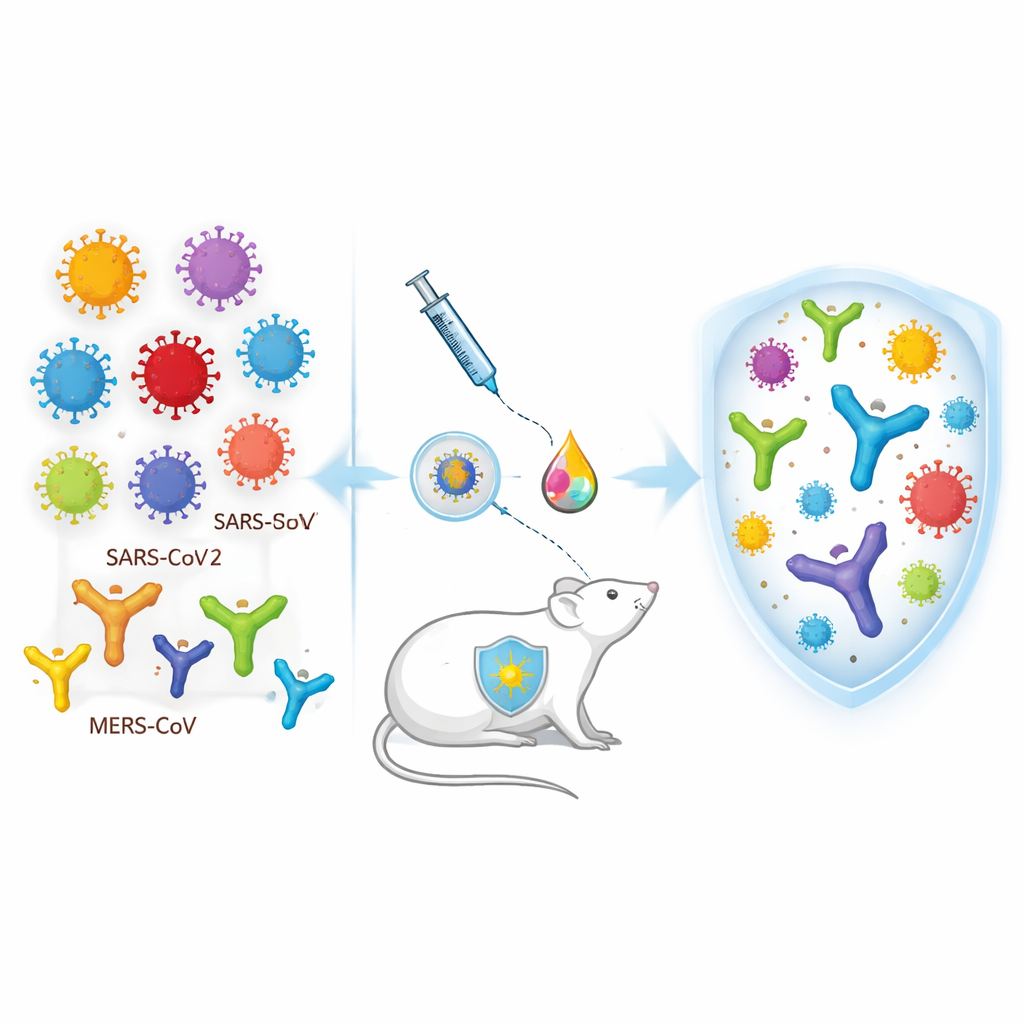
The team focused on a “heterologous” prime‑boost approach, meaning the first and second shots use different types of vaccines. The prime is a self‑amplifying RNA (saRNA) packaged in dendrimer nanoparticles. Once injected, this RNA instructs cells to briefly make coronavirus spike proteins, powerfully alerting the immune system. The boost is a protein shot containing three versions of the spike’s receptor‑binding domain (RBD): one from the original Wuhan SARS‑CoV‑2 strain, one from the Beta variant, and one from MERS‑CoV, all mixed with the long‑used alum adjuvant. The idea is to let the RNA shot quickly build strong immune memory, then use the multivalent protein shot to broaden and stabilize that memory across multiple viral cousins.
Stronger and Broader Antibodies in Mice
In mice, the RNA prime alone produced solid antibody responses to whatever version of spike or RBD it encoded, while protein‑only shots did the same but required higher doses. When the researchers mixed platforms—RNA first, protein later—the effect was dramatic. Even very low doses of the protein booster, which on their own barely raised a response, triggered huge jumps in antibody levels once an RNA prime had laid the groundwork. Importantly, boosters that included MERS‑CoV components expanded the range of viruses recognized without weakening the response to SARS‑CoV‑2 variants. Antibodies also declined more slowly after the alum‑based protein boost than after a second RNA shot, hinting at more durable protection.
Lasting Immunity and Flexibility in Hamsters
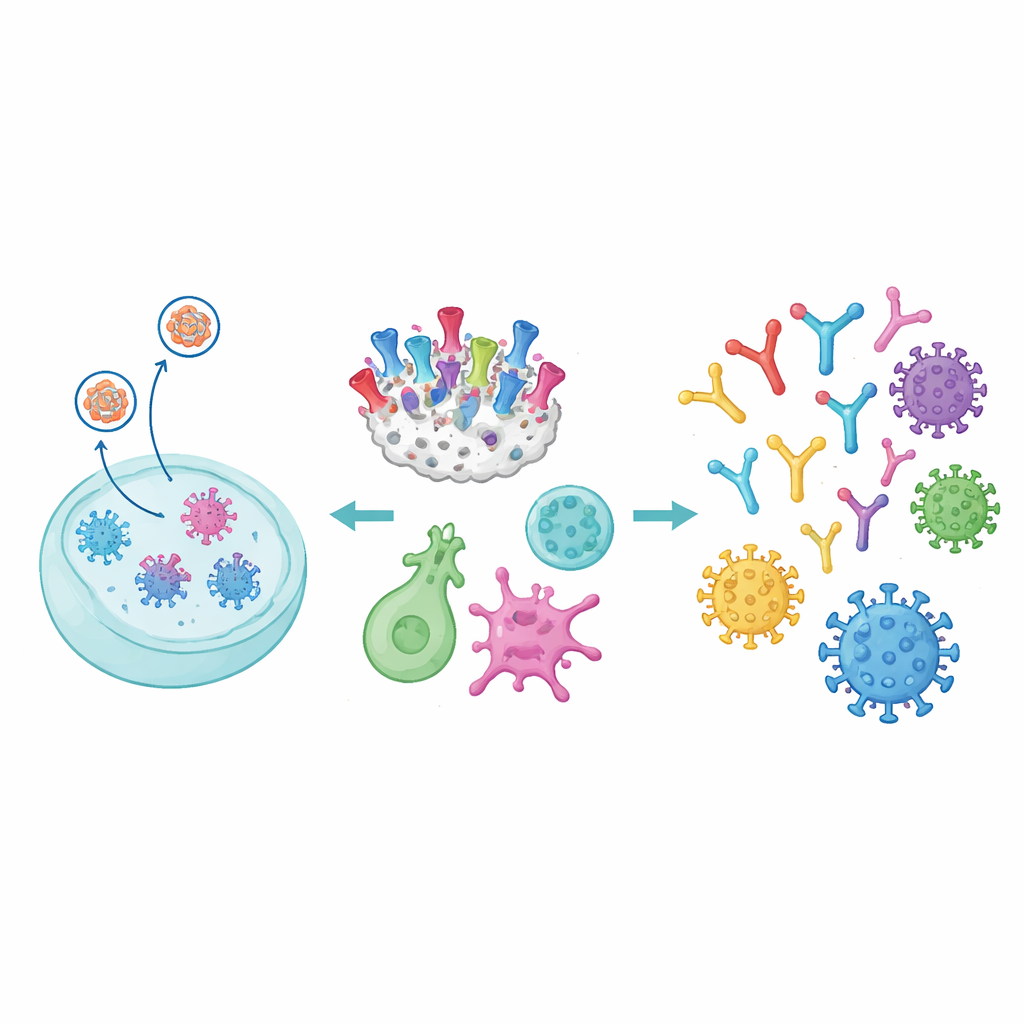
To see whether this strategy holds up over time and in another species, the team ran longer studies in Syrian golden hamsters. Animals received either the same type of shot twice (RNA/RNA or protein/protein) or the mixed RNA‑prime/protein‑boost schedule. After the first booster, all groups developed antibodies, but only the heterologous group maintained or even increased its levels during a long, 78‑day pause, while responses in same‑platform groups faded. When all animals later received a single updated booster containing Beta and Omicron proteins, the mixed‑platform animals showed the biggest jump in antibodies, including against Omicron, despite its known ability to dodge immunity. Throughout, the animals tolerated the repeated vaccinations well.
Balancing Power and Side Effects
Modern RNA vaccines are famously potent but can cause transient flu‑like side effects as they stir up innate immune signals. The researchers compared these early inflammatory markers between RNA and protein shots. Conventional lipid‑based RNA formulations produced stronger, longer‑lasting cytokine surges, while the dendrimer‑based RNA particles dialed this down. The alum‑adjuvanted protein boosters triggered only short‑lived spikes that resolved within a day. This pattern suggests a schedule in which the initial RNA shot provides the powerful jolt needed to train the immune system, while later protein boosters safely refresh and broaden protection with less systemic inflammation.
What This Could Mean for Future Pandemics
For non‑specialists, the takeaway is that mixing vaccine types in a thoughtful way can make immunity both stronger and more adaptable. In this study, an RNA prime followed by a multivalent protein boost in animals delivered high antibody levels, wide coverage of multiple coronavirus strains (including MERS‑CoV and Omicron‑like variants), and responses that stayed ready to be “woken up” months later. Because both RNA and alum‑based protein vaccines can be manufactured at scale and updated as new variants emerge, this heterologous approach offers a realistic framework for building future‑ready coronavirus vaccines that protect not just against the last pandemic, but against the next one.
Citation: Renn, D., McPartlan, J.S., Banala, S. et al. Heterologous saRNA prime – multivalent protein boost strategy induces broad and durable immunity against SARS-CoV-2 and MERS-CoV. Sci Rep 16, 14565 (2026). https://doi.org/10.1038/s41598-026-44645-8
Keywords: pan-coronavirus vaccines, heterologous prime-boost, self-amplifying RNA, multivalent protein booster, SARS-CoV-2 and MERS-CoV immunity