Clear Sky Science · en
VR-guided deep breathing during needle procedures in children
Helping Kids Stay Calm During Needle Visits
For many children, a simple blood test or IV line can be a moment of real dread. Needles, strange equipment, and a busy clinic can all spark stress and fear. This study explores whether a short virtual reality (VR) “trip” into a peaceful natural scene, combined with slow deep breathing, can help children feel and physically become calmer during needle procedures—offering parents and clinicians a drug‑free way to ease those difficult moments. 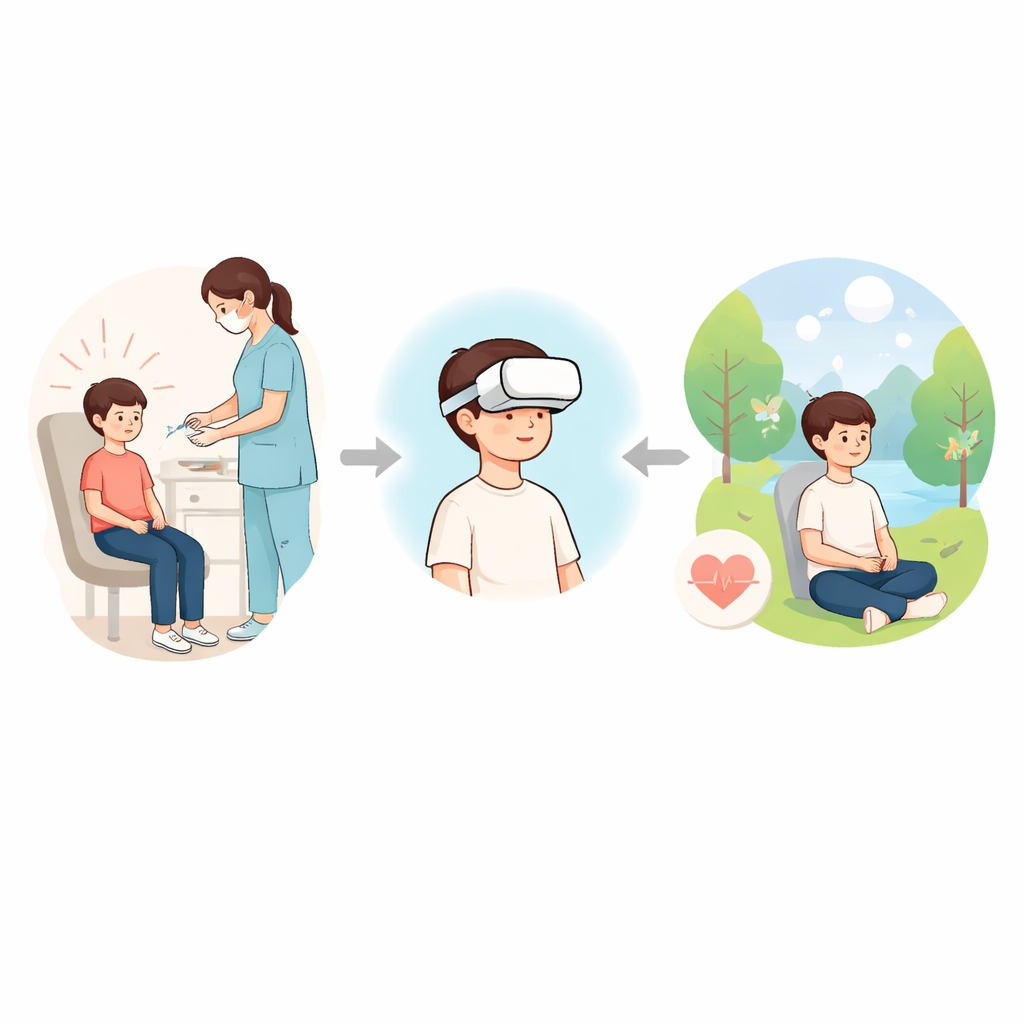
A Walk in the Virtual Woods
The researchers worked with 45 children between 8 and 12 years old who were already scheduled for a routine blood draw or insertion of a small IV line in the arm or hand. Half of the children received usual care: a nurse explained what would happen, offered comfort, and used numbing cream if the family chose it. The other half put on a VR headset and were transported into a gentle Finnish natural scene—a forest, a lake, or the sea—while the real‑world needle procedure took place. Inside this virtual landscape, a floating ball expanded and shrank in a steady rhythm, guiding the children to breathe in and out slowly and deeply for six minutes.
Listening to the Body’s Hidden Signals
To move beyond simple “How scared were you?” questions, the team focused on the body’s automatic stress system, the autonomic nervous system. They measured heart rate variability, tiny fluctuations in the time between heartbeats that can be picked up with a chest strap sensor. When people are tense and on edge, these variations tend to shrink, and breathing gets faster and shallower. When the “rest and digest” branch of the nervous system is active, breathing slows and heart rate variability tends to rise—signs that the body is settling down. The children wore the sensor before, during, and after the needle procedure so the researchers could see how their bodies reacted over time.
Slower Breaths, Calmer Hearts
The children using VR followed the breathing cues well. During the needle procedure, they took fewer breaths per minute than those in the usual‑care group, showing that they were actually doing the slow, deep breathing even while the needle was inserted. Their heart data told the same story. Measures linked to the body’s calming, parasympathetic response were higher in the VR group than in the control group, both during the six‑minute session and in the most stressful minute just before the needle. In other words, the combination of an immersive natural scene and guided breathing seemed to shift their bodies into a more relaxed state, even as they faced something many children fear.
A Positive Experience Without Side Effects
Children described the virtual landscapes as exciting and engaging, noticing details such as birds and trees as they looked around. Importantly, none of the participants reported unpleasant effects sometimes associated with VR, such as nausea or dizziness. The exercise was brief, easy to deliver with commercially available equipment, and well tolerated in a busy hospital setting. These features suggest that similar VR tools could be rolled out widely without major disruption to routine care. 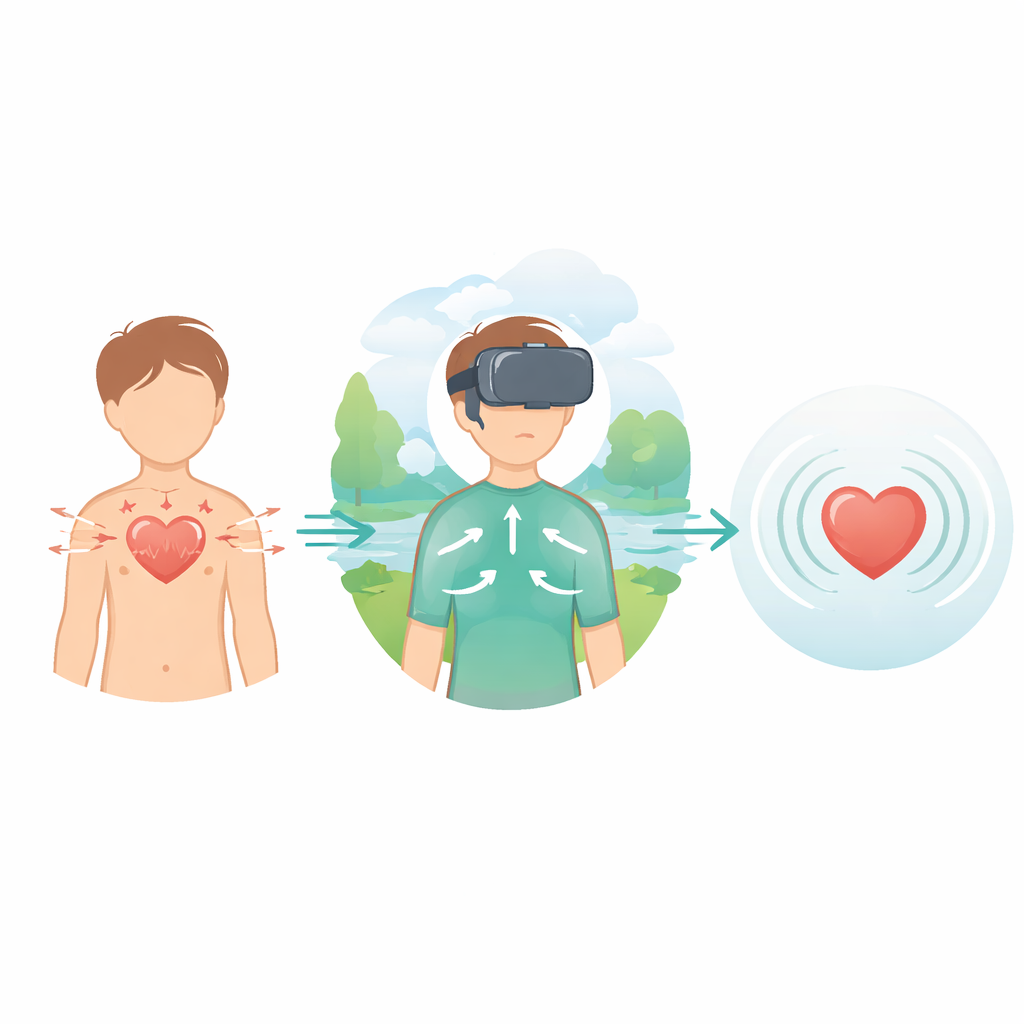
What This Means for Everyday Care
This study was small and not randomized, so larger, more rigorous trials are still needed. Even so, the results point toward a simple, non‑drug tool that helps children learn to calm their own bodies in stressful situations. By pairing a peaceful virtual environment with slow, guided breathing, clinicians may not only make individual needle visits easier but also help prevent long‑lasting needle phobia from developing. In the long run, such techniques could be adapted for other anxiety‑provoking experiences—from dental visits to fear of flying—giving children practical, self‑directed skills to manage stress throughout their lives.
Citation: Karppa, E., Puura, K., Jyskä, I. et al. VR-guided deep breathing during needle procedures in children. Sci Rep 16, 14375 (2026). https://doi.org/10.1038/s41598-026-44390-y
Keywords: virtual reality, deep breathing, children, needle fear, stress reduction