Clear Sky Science · en
The FOXE1 rs965513 polymorphism: a pleiotropic risk locus associated with thyroid function, BRAFV600E mutation, and susceptibility to papillary thyroid cancer
Why your thyroid and your genes matter
Papillary thyroid cancer is the most common type of thyroid cancer, and diagnoses have risen sharply in recent years, especially as more people undergo routine neck ultrasounds. Most thyroid nodules are harmless, but some are malignant, and current tests often require needles or surgery to be sure. This study asks a simple but important question: can a tiny change in our DNA help explain who is more likely to develop papillary thyroid cancer, and might that same change also shape how the thyroid works and how aggressive a tumor becomes?
A small DNA change with a big impact
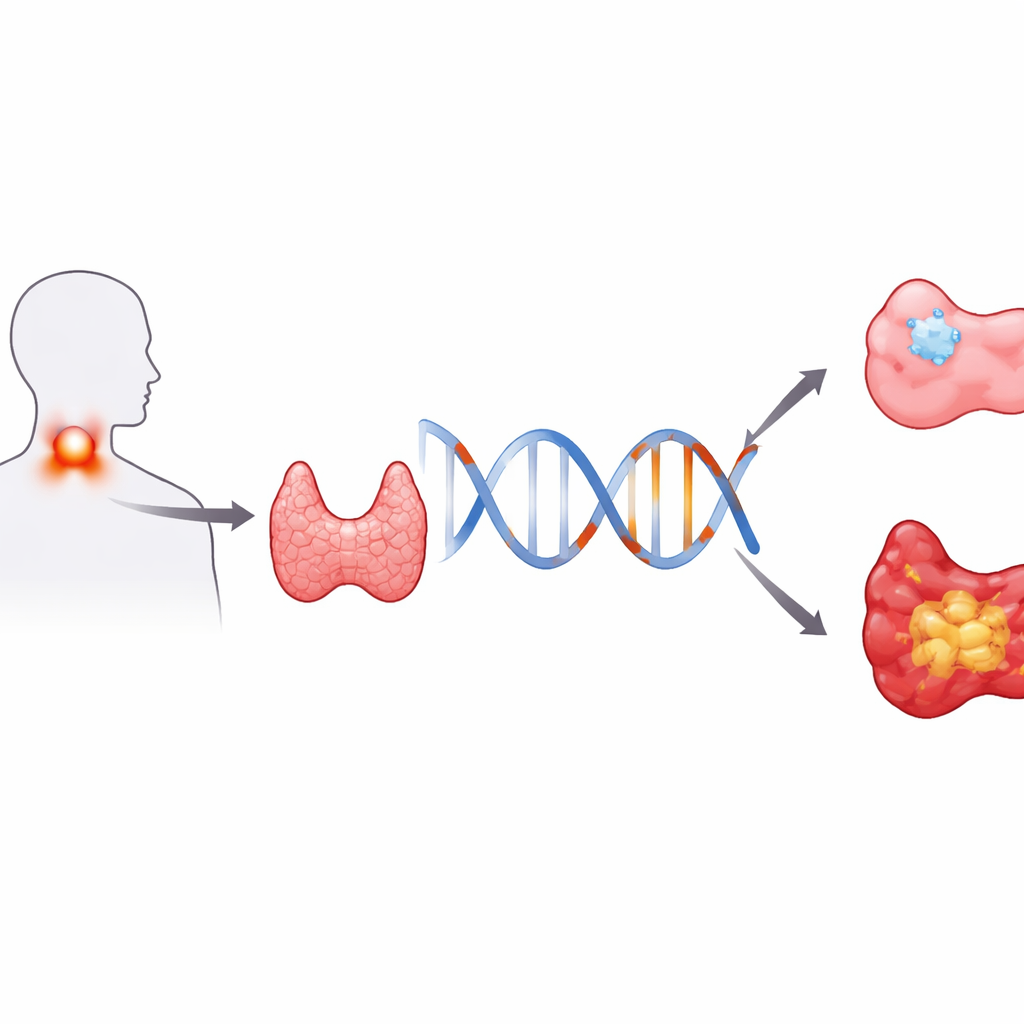
The research focuses on a single "letter" change in our genetic code, known as rs965513, located near a gene called FOXE1. FOXE1 helps guide how the thyroid gland forms and functions. At this spot in the DNA, people can carry either a G version, an A version, or one of each. The scientists studied 346 adults in China who had thyroid nodules: 75 had papillary thyroid cancer and 271 had benign, noncancerous nodules. By comparing how common each genetic version was in these two groups, they could see whether the A or G version tilted the balance toward cancer.
Who carries extra risk and who is protected
The team tested several ways of grouping the genetic patterns and found a consistent story. People carrying at least one A version of rs965513 were more than twice as likely to have papillary thyroid cancer as those with two G versions, even after accounting for age, sex, body weight, and blood pressure. The G version appeared to act as a shield, being more common in people whose nodules were benign. Each extra copy of the A version pushed risk higher, suggesting a dose–response relationship rather than a simple on–off switch. These effects were especially clear in younger patients and in some clinical subgroups, hinting that this DNA change may matter most early in life or under particular biological conditions.
Links to a key tumor mutation and hormone levels
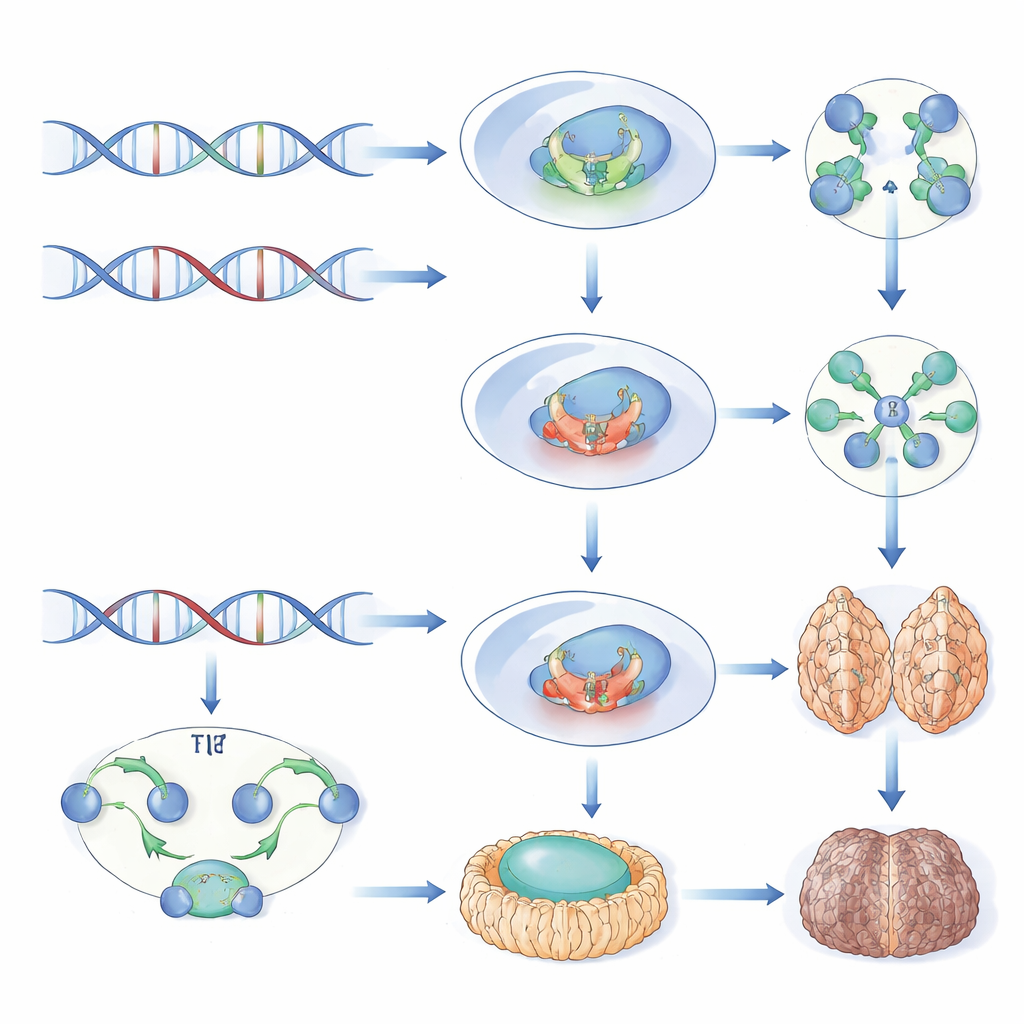
The study also looked at a famous cancer-driving glitch in another gene, BRAF. When this mutation, called BRAFV600E, is present in papillary thyroid tumors, cancers often grow and spread more aggressively. Among all patients with thyroid nodules, those carrying the A version of rs965513 were about two and a half times more likely to harbor the BRAFV600E mutation than people with two G versions. In other words, the same inherited DNA change that raised overall cancer risk also made it more likely that tumors would carry this powerful driver mutation. The researchers further examined blood tests and found that people with two G versions tended to have higher levels of thyroid-stimulating hormone (TSH), while carriers of the A version tended to have lower TSH. Large genetic studies have previously linked lower TSH to higher thyroid cancer risk, so this pattern fits into a broader picture in which thyroid hormones and inherited variants interact to shape cancer susceptibility.
What this could mean for screening and care
Because this genetic change is present from birth, it cannot by itself diagnose cancer in a specific nodule, and it does not replace imaging or biopsy. However, knowing whether someone carries the A or G version could, in the future, become part of a more personalized risk profile. For example, people with the A version, especially if they are younger or have other concerning features, might benefit from closer monitoring of thyroid nodules or earlier molecular testing such as BRAFV600E. Conversely, those with the G–G pattern may have a somewhat lower baseline risk. Combining this simple inherited marker with tumor mutation status and routine hormone measurements could sharpen doctors’ ability to judge which nodules are dangerous and which can safely be observed.
How the findings fit into the bigger picture
To a lay reader, the takeaway is that a single inherited DNA letter near the FOXE1 gene seems to nudge the thyroid toward cancer in several ways at once: it increases the chance of papillary thyroid cancer, makes the aggressive BRAFV600E mutation more likely, and is tied to slightly lower TSH levels that may favor malignant change. The study, done in a Chinese population, supports and extends earlier work in European and other groups, suggesting this genetic marker has global relevance. While more and larger studies are needed before such testing becomes routine, this work adds an important piece to the puzzle of why some people with thyroid nodules develop cancer and others do not, and it points toward a future in which thyroid cancer screening and treatment are better tailored to each person’s genetic makeup.
Citation: Zhang, W., Gao, Y., Zeng, S. et al. The FOXE1 rs965513 polymorphism: a pleiotropic risk locus associated with thyroid function, BRAFV600E mutation, and susceptibility to papillary thyroid cancer. Sci Rep 16, 13945 (2026). https://doi.org/10.1038/s41598-026-44229-6
Keywords: papillary thyroid cancer, FOXE1 gene, genetic risk, BRAFV600E mutation, thyroid hormones