Clear Sky Science · en
Association of cardiometabolic index with incident cardiovascular disease in middle-aged and older adults with cardiovascular-kidney-metabolic syndrome stages 0–3: evidence from CHARLS (2011–2020)
Why this matters for everyday health
Heart attacks and strokes are leading causes of death worldwide, especially as people get older. Doctors know that weight, blood fats, blood sugar, and kidney health all play a role, but it is hard to track all of these at once in busy clinics. This study looked at a simple number called the cardiometabolic index, which combines waist size and common blood tests, to see whether it can flag middle-aged and older adults who are more likely to develop serious heart and brain problems over time.
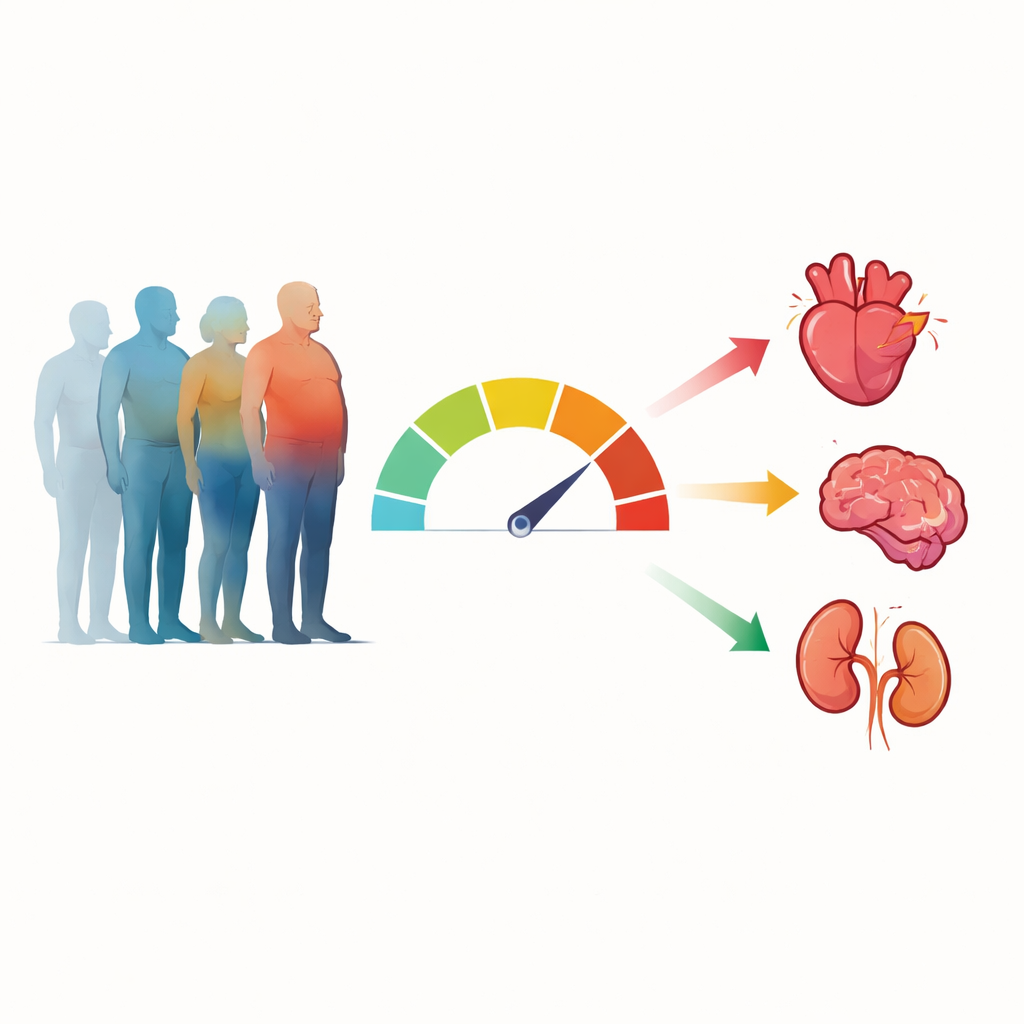
A simple score that blends waist size and blood fats
The cardiometabolic index (CMI) is calculated from two pieces of information: the ratio of triglycerides to “good” HDL cholesterol in the blood, and the ratio of waist circumference to height. Together, these capture both hidden belly fat and unhealthy blood fat patterns, which are closely tied to insulin resistance and clogged arteries. The researchers focused on people with what doctors now call cardiovascular–kidney–metabolic (CKM) syndrome, a broad condition that includes obesity, diabetes, high blood pressure, kidney problems, and early signs of heart and vessel damage. These overlapping problems are extremely common among Chinese adults over 45 and greatly increase the risk of heart disease and stroke.
Following thousands of older adults over a decade
The team used data from the China Health and Retirement Longitudinal Study, which has followed tens of thousands of adults aged 45 and older since 2011. From this national survey, they selected 6,991 people who were in CKM stages 0 to 3, meaning they ranged from having risk factors only to having early, mostly silent, damage but no diagnosed heart attack or stroke yet. Blood samples and body measurements were collected at two time points, and participants were then tracked for 10 years to see who reported a new diagnosis of heart disease or stroke. The researchers calculated each person’s CMI at the start and also averaged their CMI across the two blood draws to capture long-term exposure.
Higher scores, higher risk—especially over time
Over the decade of follow-up, nearly one in four participants developed cardiovascular disease. When the researchers grouped people into four levels of CMI, those in the highest group were much more likely to experience a heart or brain event than those in the lowest group, even after accounting for age, sex, smoking, drinking, blood pressure, diabetes, kidney disease, and other lab results. A similar pattern appeared when they looked at the average CMI over several years: people whose CMI stayed high across time had an even stronger increase in risk than those judged on a single reading alone. The index was particularly informative for predicting stroke, while its link to heart disease was weaker, possibly because heart problems were recorded only in broad categories.
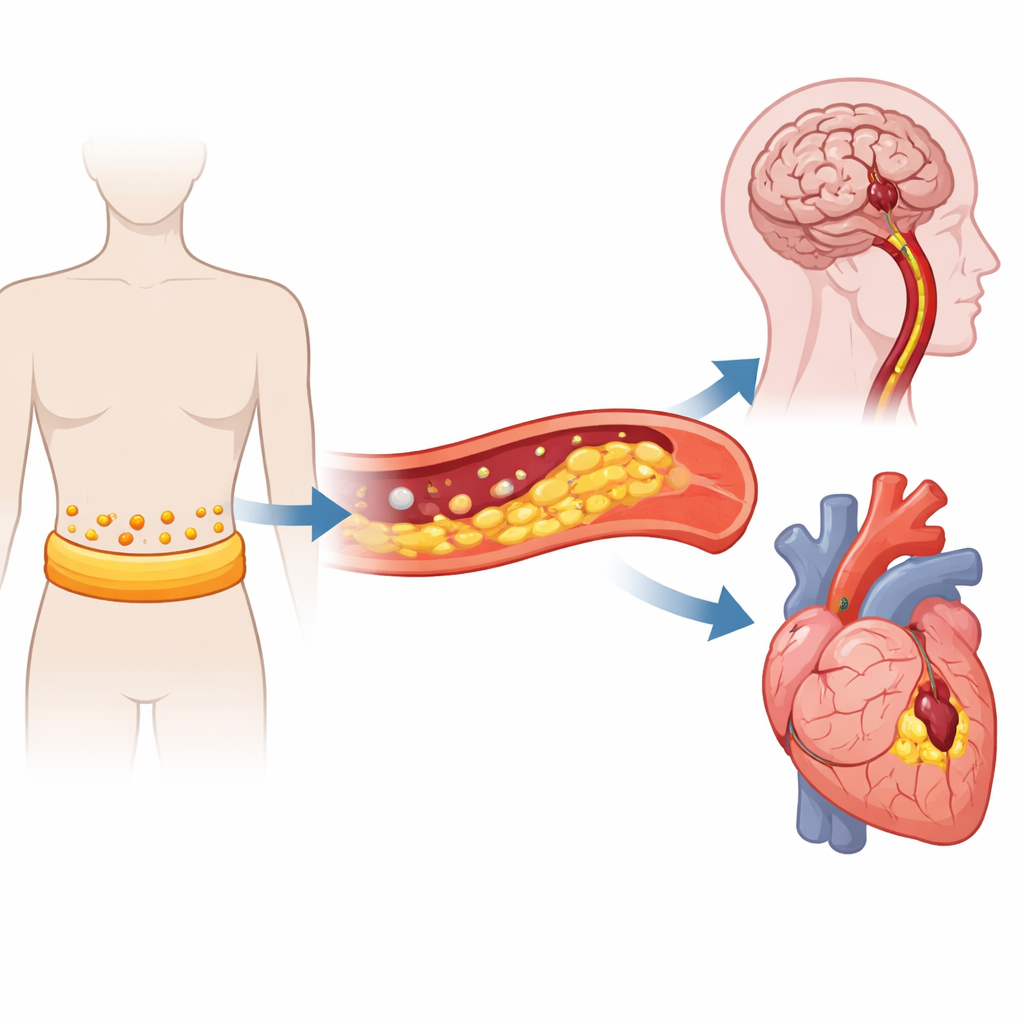
A warning threshold rather than a straight line
Interestingly, the relationship between CMI and cardiovascular risk was not a simple straight line. Using flexible statistical methods, the authors found a threshold value: below a CMI of about 0.46, each small rise in the score was linked to a sharp jump in risk; above that point, risk kept climbing but more slowly. This suggests that once a person’s waist size and blood fats reach a certain combined level, the body may already have entered a high-risk state, and further deterioration adds danger more gradually. The study also compared CMI with another popular measure that blends triglycerides and blood sugar and found that CMI held up better after adjusting for many other factors, hinting that the mix of waist size and blood fats may be a more direct signal of vessel damage in this group.
What this means for prevention and care
For patients and clinicians, this work points to a practical tool that uses tests and measurements already common in routine checkups. Because CMI can be tracked over years, it may help identify middle-aged and older adults with CKM syndrome who are quietly drifting into a danger zone for stroke and other cardiovascular events, even before obvious symptoms appear. While this research was done in Chinese adults and relied on self-reported diagnoses, it supports the idea that carefully watching a simple combined score—rather than single numbers like weight or cholesterol alone—could guide earlier lifestyle changes and treatment to keep hearts, brains, and kidneys healthier for longer.
Citation: Ren, P., Guo, Y. & Zhao, L. Association of cardiometabolic index with incident cardiovascular disease in middle-aged and older adults with cardiovascular-kidney-metabolic syndrome stages 0–3: evidence from CHARLS (2011–2020). Sci Rep 16, 13953 (2026). https://doi.org/10.1038/s41598-026-44165-5
Keywords: cardiometabolic index, cardiovascular disease risk, stroke prevention, metabolic syndrome, older adults health