Clear Sky Science · en
Fermentation quality and nutritional value of silage from sweet sorghum and mung bean grown under different planting patterns
Feeding Animals When Grass Runs Short
Livestock farmers around the world face a simple but stubborn problem: animals need good-quality feed every day, but fresh green plants are often scarce in the hottest months or in dry years. One of the main ways farmers cope is by turning surplus green plants into silage—pickled fodder stored in airtight conditions. This study asks a down-to-earth question with big practical stakes: can growing two different crops together, sweet sorghum and mung bean, make silage that is both more nutritious and better preserved than when each crop is grown alone?
Two Crops Working as a Team
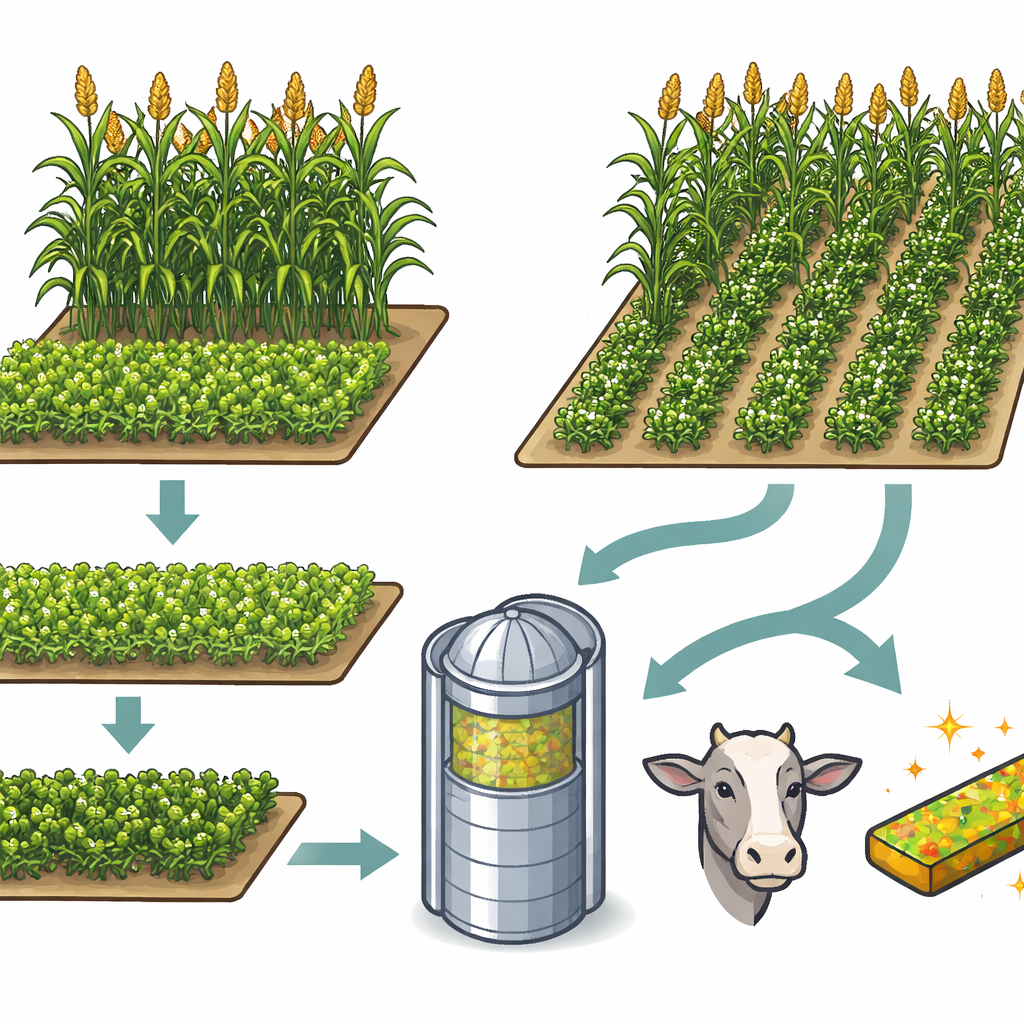
Sweet sorghum is a tall, cane-like grass packed with natural sugars, which fuel the fermentation that preserves silage. But it is relatively low in protein, the building block animals need for muscle, milk, and growth. Mung bean, a short legume, is rich in protein and can fix nitrogen from the air, helping to enrich the soil—but it does not ferment easily on its own because it contains fewer natural sugars and resists rapid acidification. The researchers in southern Turkey tested whether combining these two crops in the same field, at different planting densities and row arrangements, could blend sorghum’s sugar with mung bean’s protein to produce a more balanced feed.
Designing the Field Experiment
Over two growing seasons, the team planted sweet sorghum and mung bean under three row layouts: a conventional wide spacing, a narrower spacing, and a “twin row” pattern with pairs of close rows separated by a wider gap. Within each, they either planted each crop alone or mixed them in several fixed plant densities so that sorghum and mung bean grew side by side. At harvest, the plants were chopped, sealed in small vacuum-packed silos, and stored for 90 days. Afterwards, the scientists measured standard feed traits—such as dry matter, fiber, and protein—as well as fermentation markers like acidity, lactic acid, ammonia, and the numbers of useful and harmful microbes.
What Happened Inside the Silos
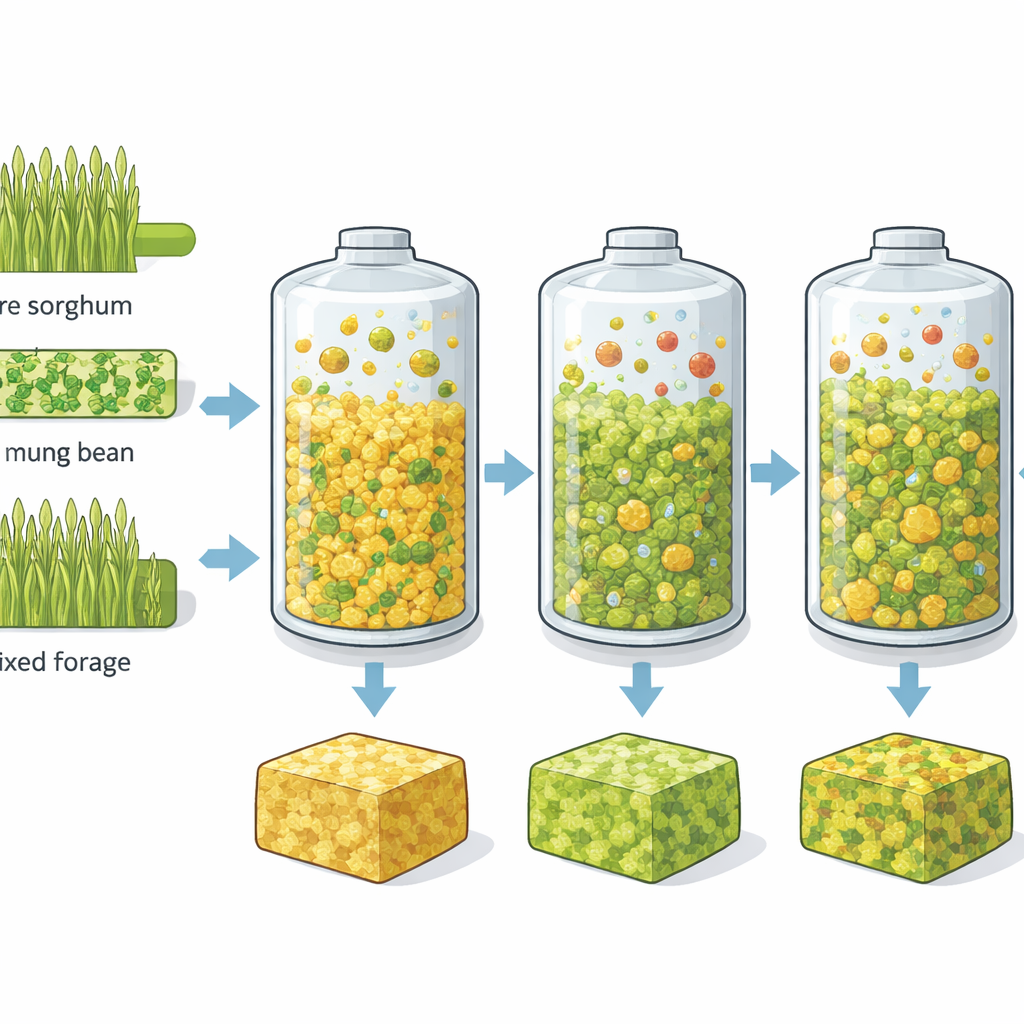
The mixed silages clearly behaved differently from those made from mung bean alone. Thanks to sorghum’s high sugar content, mixtures had more water-soluble carbohydrates, which fueled lactic acid bacteria. These bacteria produced more lactic acid, lowering the silage pH (making it more acidic) and creating a stable environment that slows spoilage. Pure mung bean silages stayed less acidic and produced less lactic acid, a sign of weaker preservation. In contrast, the mixtures generated pH values and lactic acid levels similar to or better than pure sorghum, pointing to strong, clean fermentation. At the same time, the presence of mung bean boosted crude protein and slightly improved indicators of overall feed value compared with pure sorghum.
Finding the Best Planting Mix
Not all combinations worked equally well. The arrangement that balanced benefits most effectively was the “Mix 14+14” treatment—equal planting densities of sorghum and mung bean—particularly when sown in conventional or narrow rows. In these setups, the silage showed an appealing combination of traits: adequate dry matter, higher protein, moderate fiber, strong lactic acid production, and favorable ratios of lactic to acetic acid, which signal efficient and stable fermentation. Important antinutritional compounds such as condensed tannins remained low across all treatments, so they were unlikely to interfere with digestion. While pure sorghum sometimes produced more alcohols like ethanol due to its very high sugar content, mixtures tempered this effect while still delivering strong preservation.
Why This Matters for Farmers and Food Supply
For farmers, these findings translate into a practical recipe: growing sweet sorghum and mung bean together, in roughly equal proportions and in standard or slightly narrowed rows, can yield silage that is easier to preserve and richer in protein than either crop grown alone. Better silage means more consistent, nutritious feed for cattle and other ruminants, supporting milk and meat production even when pastures are poor. At the same time, the mung bean component can improve soil fertility through natural nitrogen fixation, reducing the need for synthetic fertilizer. In short, the study shows that a simple change in how two familiar crops are planted can help make livestock feeding more reliable, sustainable, and resilient.
Citation: Ertekin, I., Yilmaz, S. Fermentation quality and nutritional value of silage from sweet sorghum and mung bean grown under different planting patterns. Sci Rep 16, 13301 (2026). https://doi.org/10.1038/s41598-026-44149-5
Keywords: intercropping, silage, sweet sorghum, mung bean, ruminant nutrition