Clear Sky Science · en
Multicriteria site suitability for solar-powered green hydrogen production plants along the Northwestern coast of Egypt
Why this coastal study matters
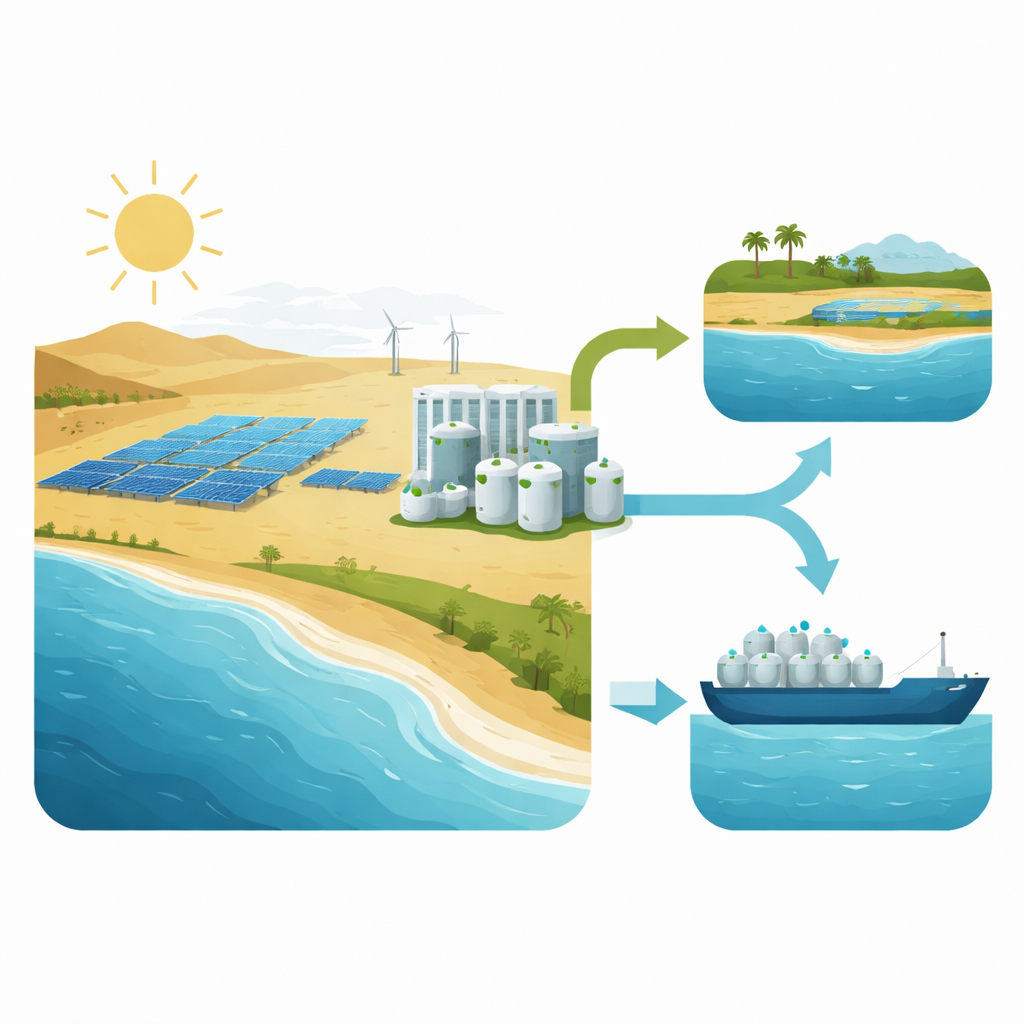
As the world looks for cleaner fuels, green hydrogen—made by splitting water with renewable electricity—has become a leading candidate. But these plants need land, sunshine, and, crucially, water, all without damaging fragile environments. This study focuses on Egypt’s northwestern Mediterranean coast, asking a deceptively simple question: where can we build solar-powered hydrogen plants so they are efficient, affordable, and gentle on scarce groundwater?
A sunny coast with hidden challenges
Egypt’s northwest coast is blessed with intense sunshine, large stretches of undeveloped land, and access to key Mediterranean shipping routes. These qualities make it an attractive hub for producing hydrogen for both domestic use and export to Europe and beyond. Yet the same region faces serious environmental pressures. Groundwater is limited and often salty, coastal ecosystems are fragile, and building massive industrial facilities risks upsetting the balance. The authors argue that it is no longer enough to chase the best sun; planners must also understand what is happening underground.
Peering underground with water fingerprints
To do this, the team combined satellite-based mapping with detailed chemical and isotopic analyses of groundwater from three main aquifers. They measured dissolved salts and used “environmental isotopes,” natural variants of hydrogen and oxygen in water, to trace where that water came from and how it has changed. These isotopic “fingerprints” reveal whether water is modern rain, ancient deep groundwater, or seawater that has crept inland. The results show that many wells along the coast are strongly influenced by seawater intrusion and evaporation, leading to very salty, very hard water that is unsuitable for drinking without treatment and risky to depend on for large hydrogen projects.
Layering maps to find the right spots
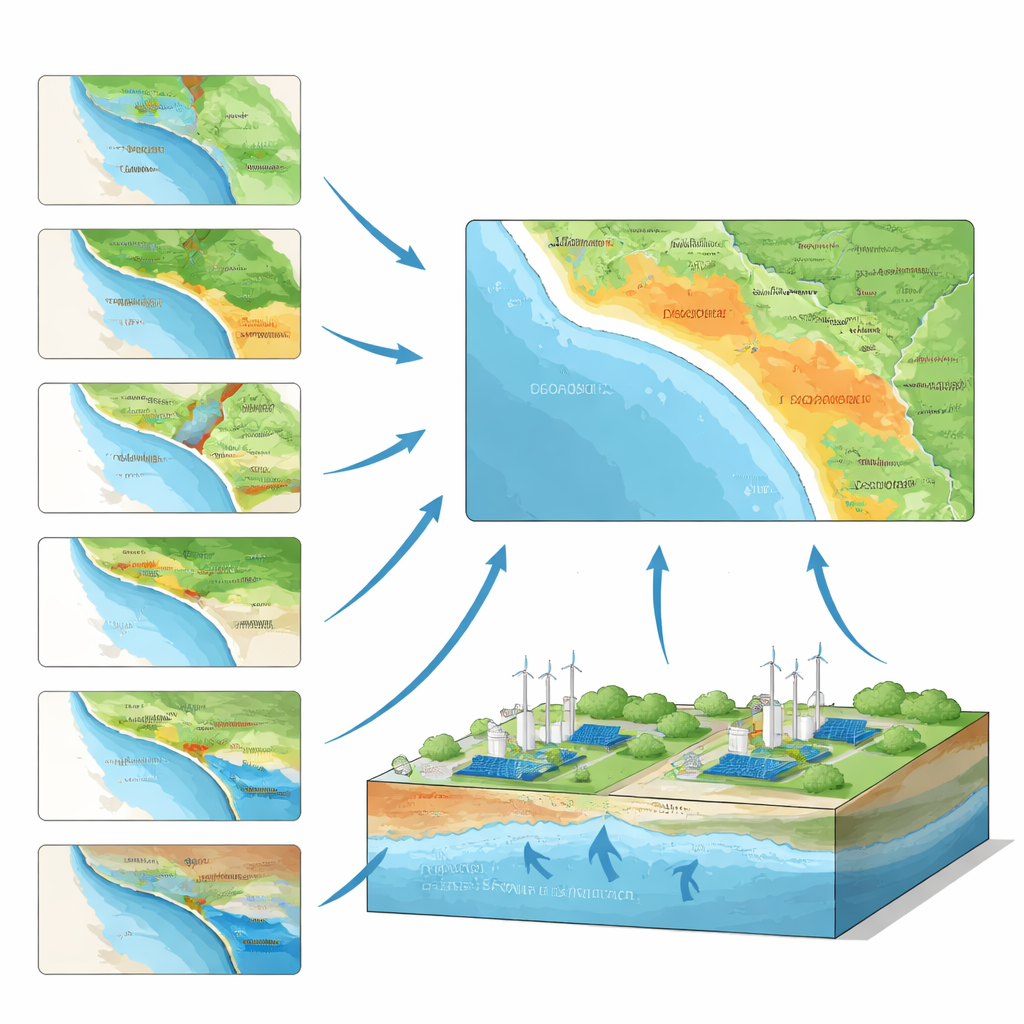
On top of this hydrogeological picture, the authors built a geographic information system (GIS) model that weighs eight key criteria: elevation, slope, direction of the land’s tilt, land use and land cover, distance to roads, distance to the shoreline, groundwater level (hydraulic head), and a seawater intrusion index derived from their water analyses. Using a decision-making approach called fuzzy analytic hierarchy process, a group of experts compared how important each factor is. Coastal access and seawater intrusion risk emerged as the top drivers, followed by groundwater level and road access, while pure topography mattered less in this relatively gentle landscape. Each factor was converted into a continuous “suitability” scale and blended into a single map.
Where hydrogen fits and where it does not
The resulting suitability map divides the coast into five classes from very low to very high potential. The most promising zones are mainly in central and northeastern sectors: they have excellent sun, gentle terrain, reasonable access to roads, and, crucially, groundwater that is less threatened by seawater. Areas close to the shore with low groundwater levels and strong marine intrusion are flagged as environmentally constrained, even if they would be cheaper to build upon. A sensitivity analysis, in which criteria are removed one by one, confirms that shoreline distance and seawater intrusion risk have the strongest influence on which areas are judged suitable.
What this means for clean energy plans
For non-specialists, the main message is that siting green hydrogen plants is not just a matter of putting solar panels wherever the sun is strongest. This work shows how combining detailed “water forensics” with layered spatial analysis can steer development toward places that balance energy output with long-term protection of limited freshwater. In Egypt’s northwest coast, that means favoring select inland coastal zones and avoiding stretches where groundwater is already stressed by saltwater. The framework is designed to be copied elsewhere, offering a practical way for arid coastal regions worldwide to grow a green hydrogen economy without sacrificing the very water resources that future communities will depend on.
Citation: El-Aassar, Ah.M., Hagagg, K.H. & Hussien, R.A. Multicriteria site suitability for solar-powered green hydrogen production plants along the Northwestern coast of Egypt. Sci Rep 16, 12345 (2026). https://doi.org/10.1038/s41598-026-44081-8
Keywords: green hydrogen, site suitability, groundwater, Egypt Mediterranean coast, GIS analysis