Clear Sky Science · en
Comparison of all-cause mortality risk factors in a population-based cohort study
Why this study matters for everyday life
We all know that habits like smoking or having a chronic illness can affect how long we live, but it is less clear which factors truly matter most over decades, and whether they matter differently for men and women. This study followed thousands of adults in a region of northeast Germany for about 20 years to see which aspects of health, lifestyle, and social life best predicted who would die sooner from any cause. The findings highlight a short list of powerful, and partly changeable, influences on longevity—especially type 2 diabetes, chronic inflammation, smoking, and living without a partner.
A long look at health in a German community
The researchers drew on the Study of Health in Pomerania, a large project that randomly selected adults aged 20 to 79 years from cities and villages in northeast Germany. At the start, between 1997 and 2001, 3,803 participants completed detailed interviews, medical exams, blood tests, and ultrasound scans. They were asked about education, income, smoking and drinking, exercise, and whether they lived with a partner. Nurses and doctors measured blood pressure, body size, and signs of liver fat, and laboratories analyzed blood fats, sugar levels, kidney function, and markers of inflammation. The team then tracked who died over a median of 20.2 years, using official records and death certificates.
What stood out for men
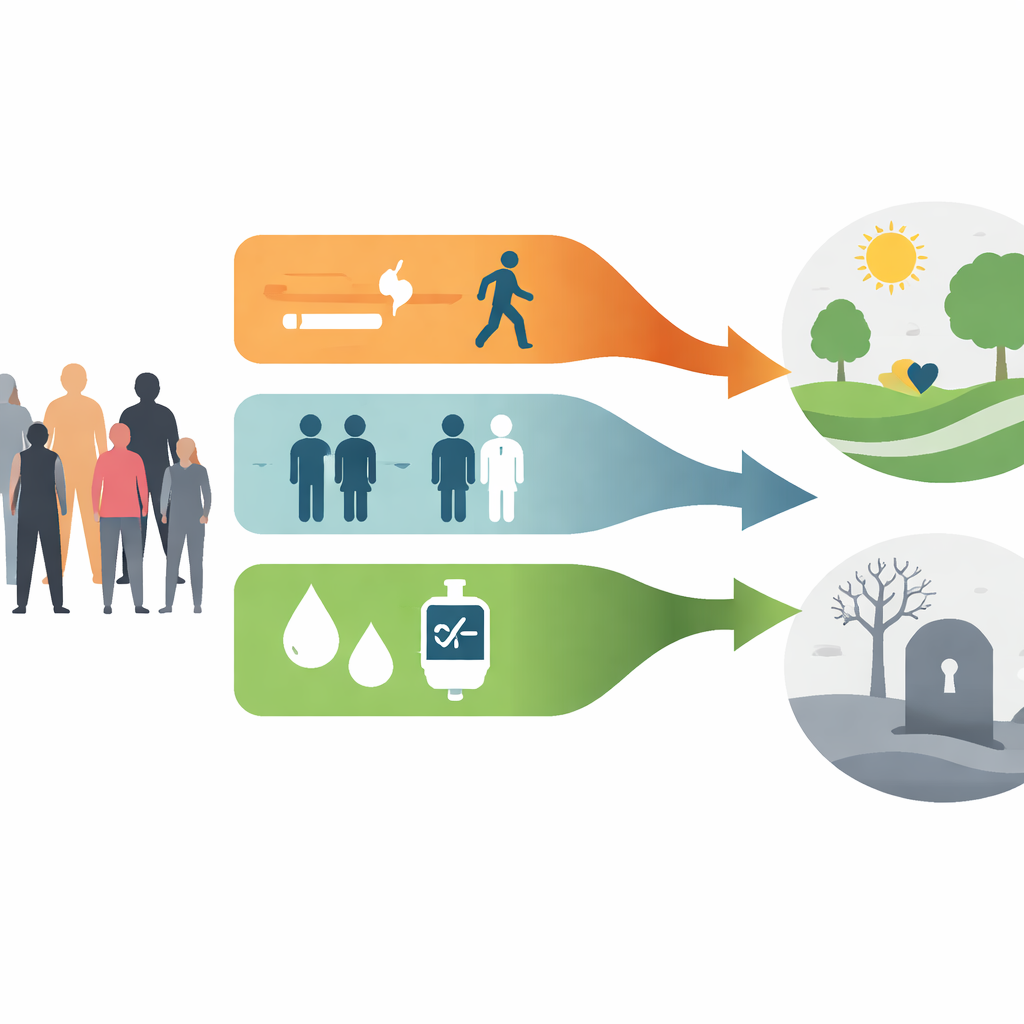
Over the follow-up period, 641 men and 388 women died. When the researchers examined one factor at a time, many characteristics were linked to higher death rates in men, including older age, smoking, low education, inactivity, large waistlines, abnormal blood fats, high blood sugar, and a history of stroke. But when all the important factors were considered together, only a handful remained strong and independent predictors. For men, the key risks were having type 2 diabetes, living without a partner, currently smoking, being older, and having higher levels of a blood marker of inflammation called high-sensitivity C‑reactive protein (hs‑CRP). Men with type 2 diabetes or high hs‑CRP had markedly higher chances of dying during the study, even after accounting for age and other health problems. Living without a partner and smoking each added further risk on top of these medical factors.
What mattered most for women
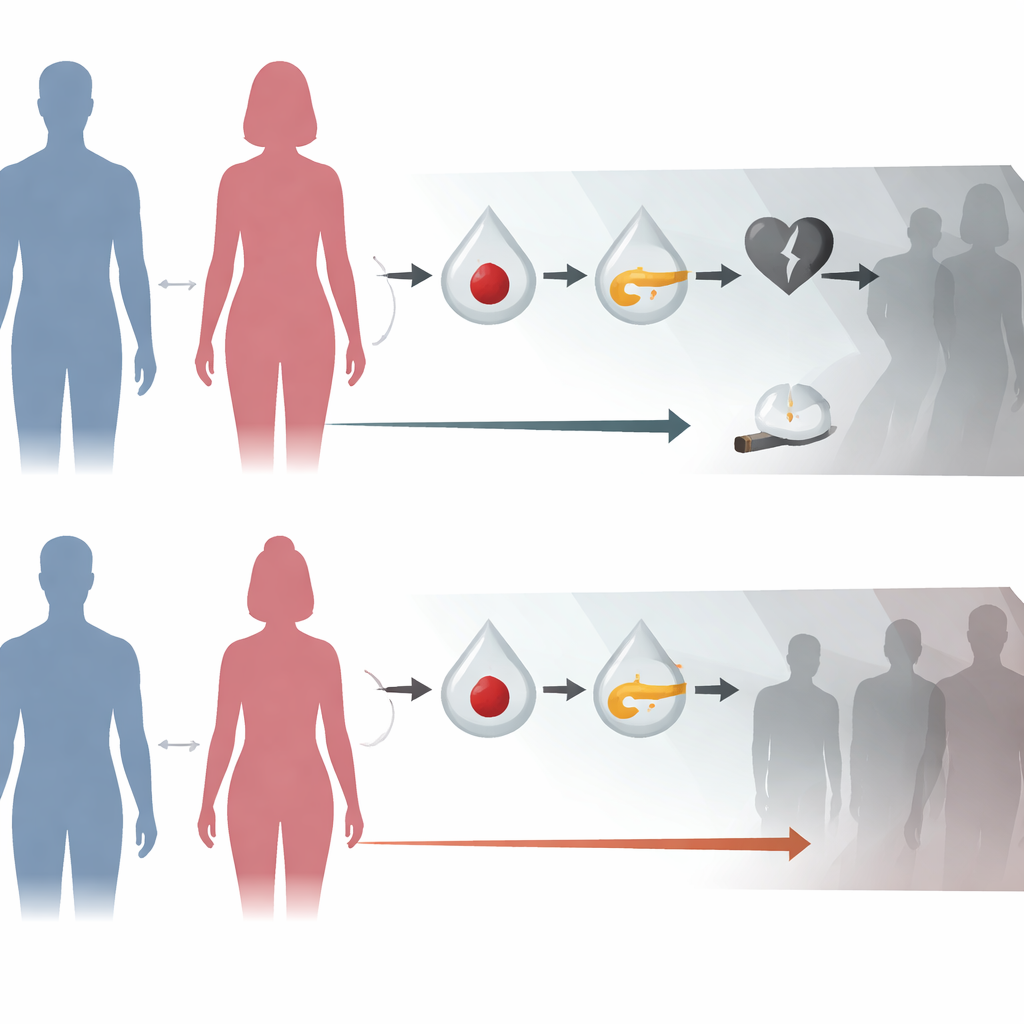
In women, many of the same characteristics—such as extra weight around the waist, inactivity, low education, and past heart or brain disease—were linked to higher death rates when studied individually. However, once the researchers built a combined model, only two factors clearly stood out: type 2 diabetes and elevated hs‑CRP. Unlike in men, smoking, partnership status, and age itself did not remain independent predictors after other influences were taken into account. This suggests that among women in this population, long‑term survival was driven less by social circumstances or smoking patterns and more by underlying metabolic disease and chronic low‑grade inflammation. In both sexes, type 2 diabetes was the single most powerful predictor of dying earlier.
Turning risk information into a practical tool
To make these results usable in clinics and public health, the team built simple scoring charts, called nomograms, separately for men and women. Each chart assigns points to a person based on whether they have type 2 diabetes, their hs‑CRP level, and, for men, their age, smoking status, and whether they live with a partner. Adding up the points gives an estimated chance of dying within 5, 10, or 20 years. Although these scores were developed in one German region and cannot yet be applied universally, they summarize complex data into an easy visual tool that could one day help doctors and patients discuss long‑term risk in a more concrete way.
What this means for staying alive longer
For non-specialists, the message of this work is straightforward: controlling type 2 diabetes and quieting chronic inflammation appear crucial for living longer, regardless of sex. For men, avoiding or quitting smoking and maintaining supportive relationships may offer additional survival benefits. While not every risk factor can be changed, many highlighted here—blood sugar control, physical activity, body fat, smoking, and social isolation—are at least partly modifiable through personal choices and public policies. Tailoring prevention efforts to recognize that men and women face somewhat different patterns of risk could help health services use resources more wisely and support more people in reaching older age in better health.
Citation: Lederman, C., Mariño Coronado, J., Damasceno, N.R.T. et al. Comparison of all-cause mortality risk factors in a population-based cohort study. Sci Rep 16, 10526 (2026). https://doi.org/10.1038/s41598-026-44015-4
Keywords: all-cause mortality, type 2 diabetes, chronic inflammation, smoking and longevity, social isolation and health