Clear Sky Science · en
Prevalence of Pseudomonas aeruginosa in Australian wild birds, native wildlife, livestock and domestic animals
Why this matters for people and animals
Pseudomonas aeruginosa is a hardy bacterium that can cause serious infections in hospitals and veterinary clinics, and many strains are hard to treat with antibiotics. This study asks a simple but important question for both public health and animal care: how common is this germ in everyday Australian wildlife and domestic animals, and are drug resistant forms quietly spreading in the background?
Looking for a hidden germ in many species
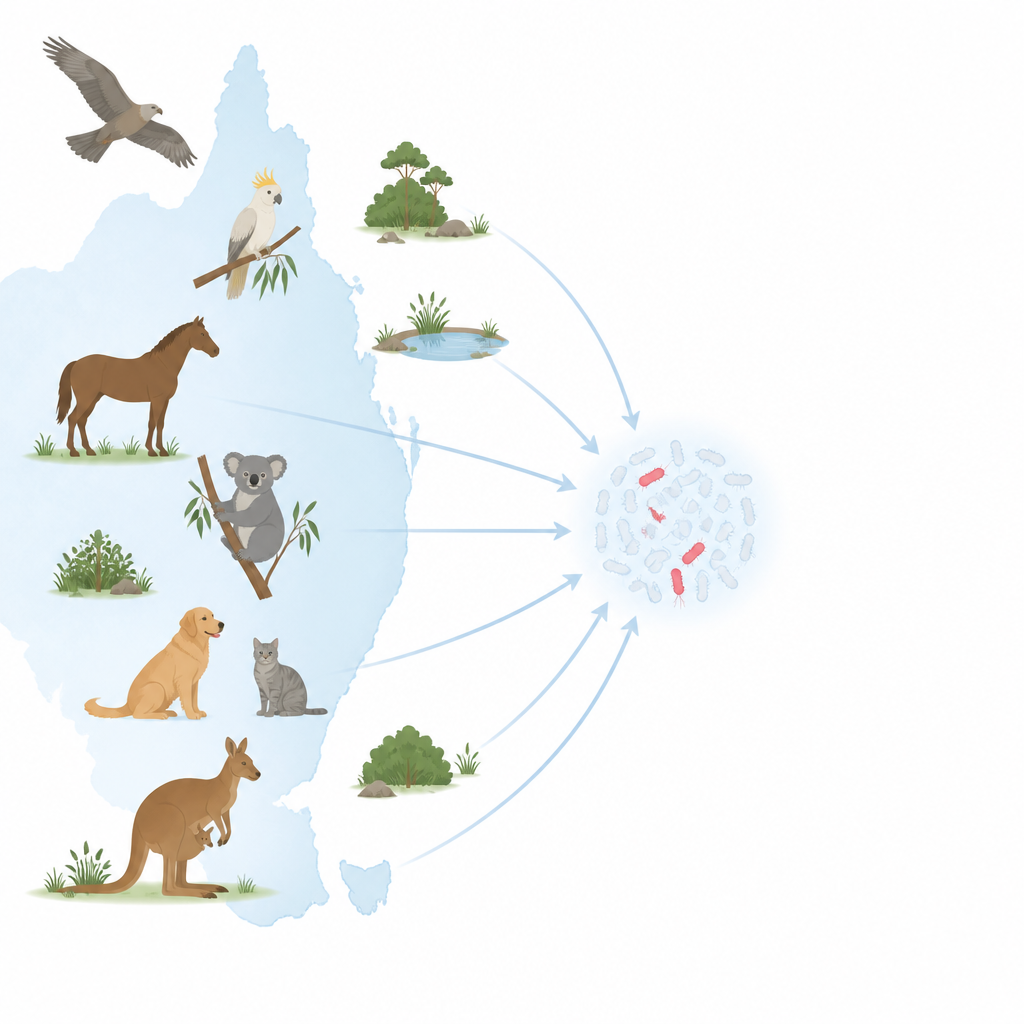
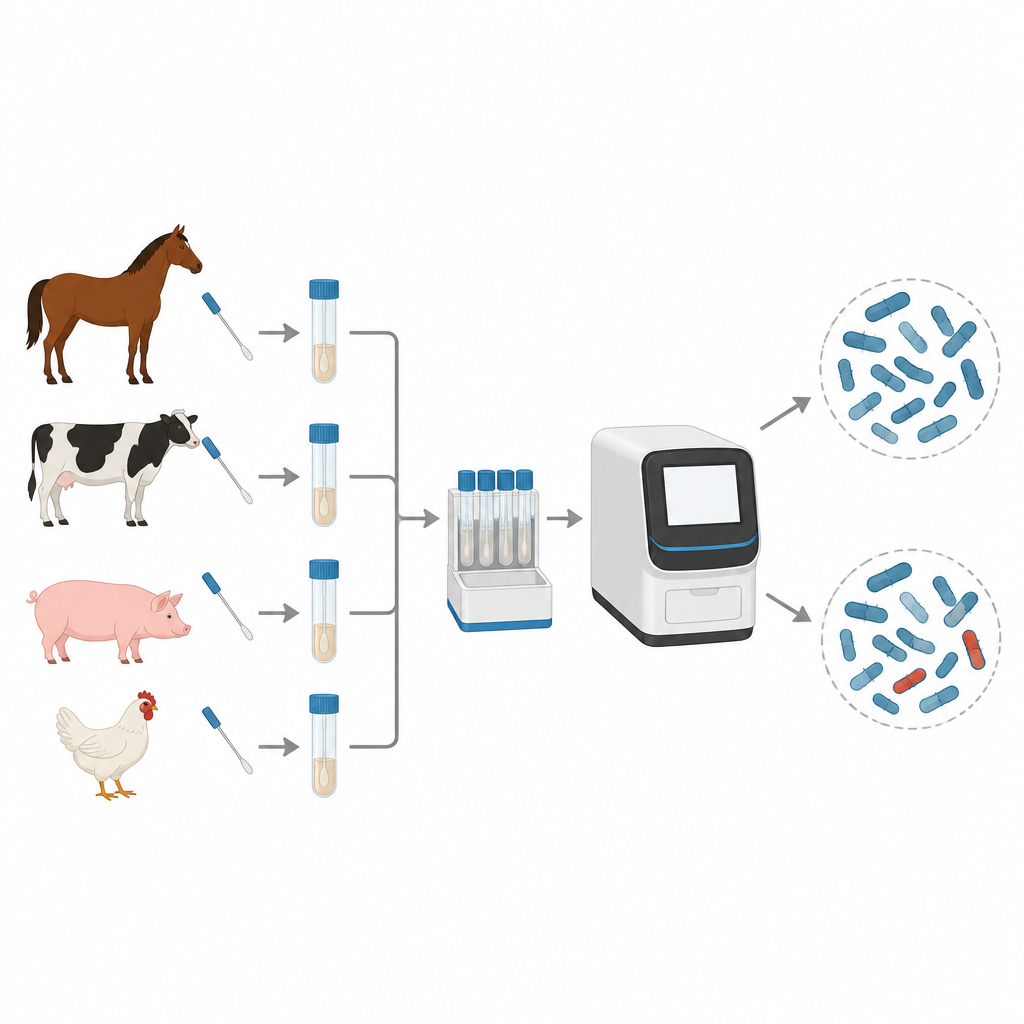
To explore this, researchers examined 1,669 stored DNA samples collected between 2010 and 2023 from a wide range of animals in Southeast Queensland. These included wild birds, pets such as cats and dogs, farm animals like horses and cattle, and native marsupials including koalas and kangaroos. Rather than growing bacteria in the lab, the team used a highly sensitive DNA test to search each sample for genetic fingerprints of P. aeruginosa, while also measuring the overall amount of bacterial DNA to ensure the samples were suitable for testing.
What the team found in Australian animals
The results were surprisingly reassuring. Across all animals, only 1.8 percent of samples contained P. aeruginosa, a much lower rate than many reports from Europe, Asia, and the Middle East. Livestock showed the highest levels, with 4.5 percent of samples testing positive, driven mainly by horses at 7.4 percent. Wild birds, koalas, and domestic animals such as cats and dogs had similarly low rates, around 1.5 to 2 percent. No positives were found in cattle, kangaroos, goats, poultry, guinea pigs, or rabbits, although some of these groups had modest sample numbers.
Eyes and horses as key clues
Patterns within the data revealed some interesting twists. Among wild birds, almost every positive sample came from eye swabs, pointing to the eye as a frequent site where this bacterium can take hold, even in animals admitted for many different reasons. In horses, the bacterium was detected not only in manure but also in samples from the penis and the breathing tract. These findings fit with what vets already see in practice, where P. aeruginosa is linked to eye disease and reproductive problems in horses, which can affect fertility and animal welfare.
Tracking signs of drug resistance
The team also looked for genetic changes that are known to make P. aeruginosa resistant to a widely used class of antibiotics called fluoroquinolones. They focused on two common resistance mutations in a bacterial gene named gyrA. None of the positive samples carried one of these key changes, but two horse samples showed a mixed signal for the other mutation, suggesting that both drug sensitive and drug resistant versions of the bacterium were present in the same animal. Although the researchers could not grow the bacteria to confirm this, the DNA evidence points to small pockets of resistant strains circulating in horse populations.
What this means for health and biosecurity
For a lay reader, the main takeaway is that this troublesome bacterium appears to be uncommon in the surveyed Australian wildlife and domestic animals, especially compared with reports from other parts of the world. Horses stand out as the main animal group where P. aeruginosa is more often found, and where early signs of important antibiotic resistance genes are emerging. The study suggests that Australia’s strong biosecurity rules and cautious use of key antibiotics may be helping to keep these risks relatively low. However, the detection of resistance linked DNA in horse samples is a warning sign that continued careful use of antibiotics and wider monitoring across regions and species will be vital to protect both animal and human health.
Citation: Strickland, K.R., Jelocnik, M., Price, E.P. et al. Prevalence of Pseudomonas aeruginosa in Australian wild birds, native wildlife, livestock and domestic animals. Sci Rep 16, 15423 (2026). https://doi.org/10.1038/s41598-026-43853-6
Keywords: Pseudomonas aeruginosa, antimicrobial resistance, wildlife, horses, Australia