Clear Sky Science · en
Efficiency and economic performance of honey producers in southwest Nigeria: a comprehensive empirical analysis
Why Bees and Honey Matter for Everyday Life
Honey is far more than a sweetener. In many rural communities, beekeeping provides extra income, improves diets, and helps crops grow by supporting pollination. This study looks closely at honey producers in Southwest Nigeria to find out how well their businesses are doing, how efficiently they use their resources, and what holds them back. Understanding this helps show how a simple activity like keeping bees can support families, reduce imports, and strengthen local food systems.
Who the Beekeepers Are
The researchers surveyed 144 honey producers across three states in Southwest Nigeria using detailed interviews and farm records. They found that beekeeping in this region is strongly male-dominated: about 85% of producers are men, most of them married and around 50 years old. These beekeepers are relatively well educated, with nearly 14 years of schooling on average, and they tend to come from moderate-sized households of about five people. Many have close to a decade of experience with bees. Yet only about one in four has access to formal loans, meaning most must rely on personal savings or help from friends and relatives to invest in their hives and equipment. 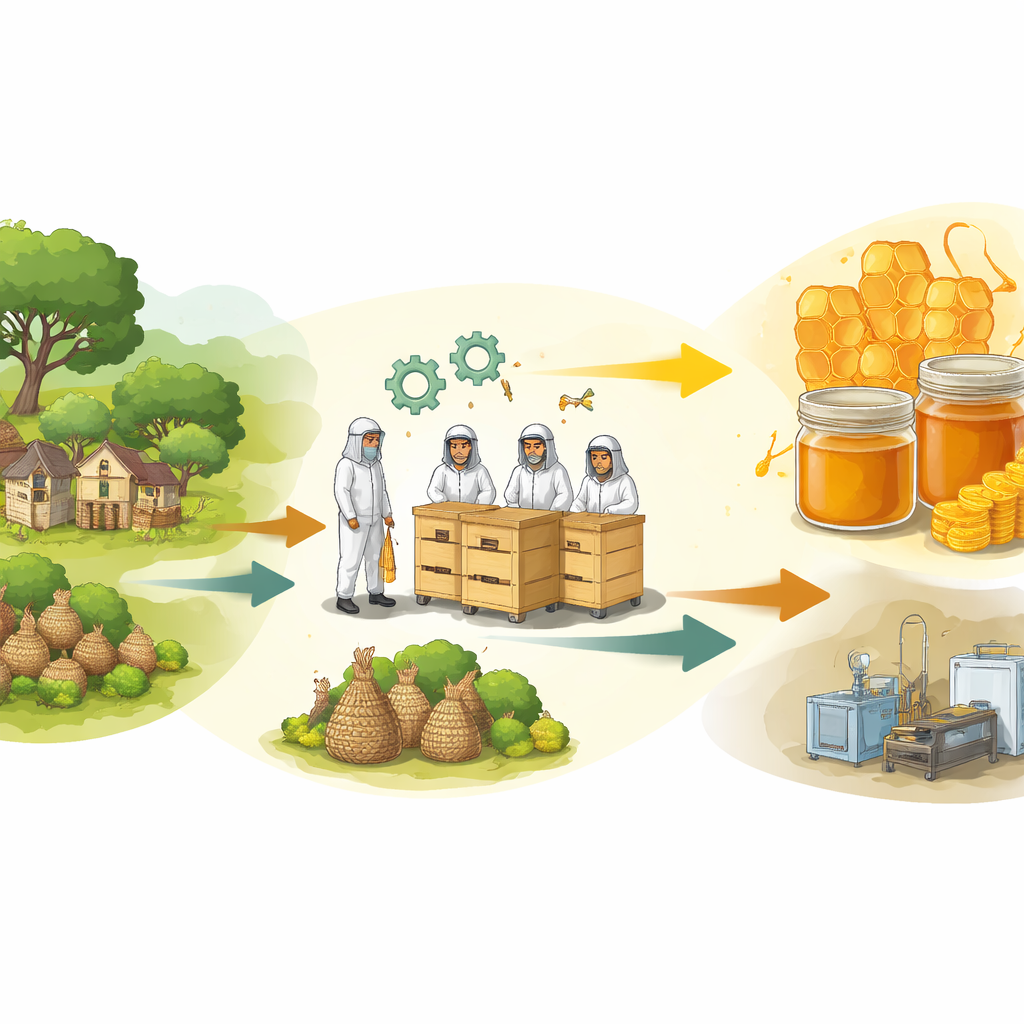
How Honey is Produced and Sold
Most beekeepers in the study area have moved beyond purely traditional methods. Only a small fraction still use very simple hives such as hollowed logs or clay pots. Instead, the majority now rely on either conventional hives like top-bar designs or fully modern frame hives. These improved systems make it easier to manage colonies and harvest honey without destroying the comb. Over half of the producers use mechanical extractors rather than squeezing honey out by hand, saving time and boosting yield. Honey is mainly sold right at the farm gate to processors and traders, with fewer producers reaching urban or international markets, in part because of transport costs and limited marketing links.
What the Numbers Say About Profits
To see whether beekeeping really pays, the authors compared all the costs of running an apiary—such as labor, hive equipment, protective clothing, and transport—with the income from honey sales. On average, a producer spent about ₦137,000 per year and earned about ₦509,000, leaving a profit of roughly ₦371,000. For every ₦1 invested, beekeepers received about ₦3.70 back in revenue. These figures make honey production clearly profitable in this region. At the same time, when the researchers used advanced statistical tools to compare each farm’s output with what would be possible under ideal management, they discovered an important contrast: producers were very good at turning their current mix of inputs into honey, but not very good at choosing the most cost-effective mix in the first place.
Hidden Inefficiencies Beneath the Surface
The study found that, on average, beekeepers achieved about 92% of their potential output given the resources they used—a sign of high technical efficiency. However, when costs were taken into account, their economic and allocative efficiency dropped to about 43%. This means that, although beekeepers manage their hives well day to day, they spend more than necessary on some items and too little on others, leaving money on the table. Larger apiaries, better-maintained equipment, and higher honey prices were linked with greater output, while heavy spending on labor, herbicides, and transport tended to reduce it. The main obstacles identified were limited access to modern tools and hives, outdated extraction methods, human disturbances such as theft or vandalism, and the high upfront cost of improved hives.
Steps Toward Stronger Honey Businesses
To help honey producers move from “good” to “great,” the authors suggest a set of practical measures. Making modern hives, protective gear, and mechanical extractors more affordable—especially through cooperative buying and low-interest credit—would allow beekeepers to scale up and cut waste. Training and extension services can guide producers in choosing the right mix of inputs and adopting smarter extraction methods. Encouraging youth to enter beekeeping and strengthening producer groups could further improve bargaining power and market access. 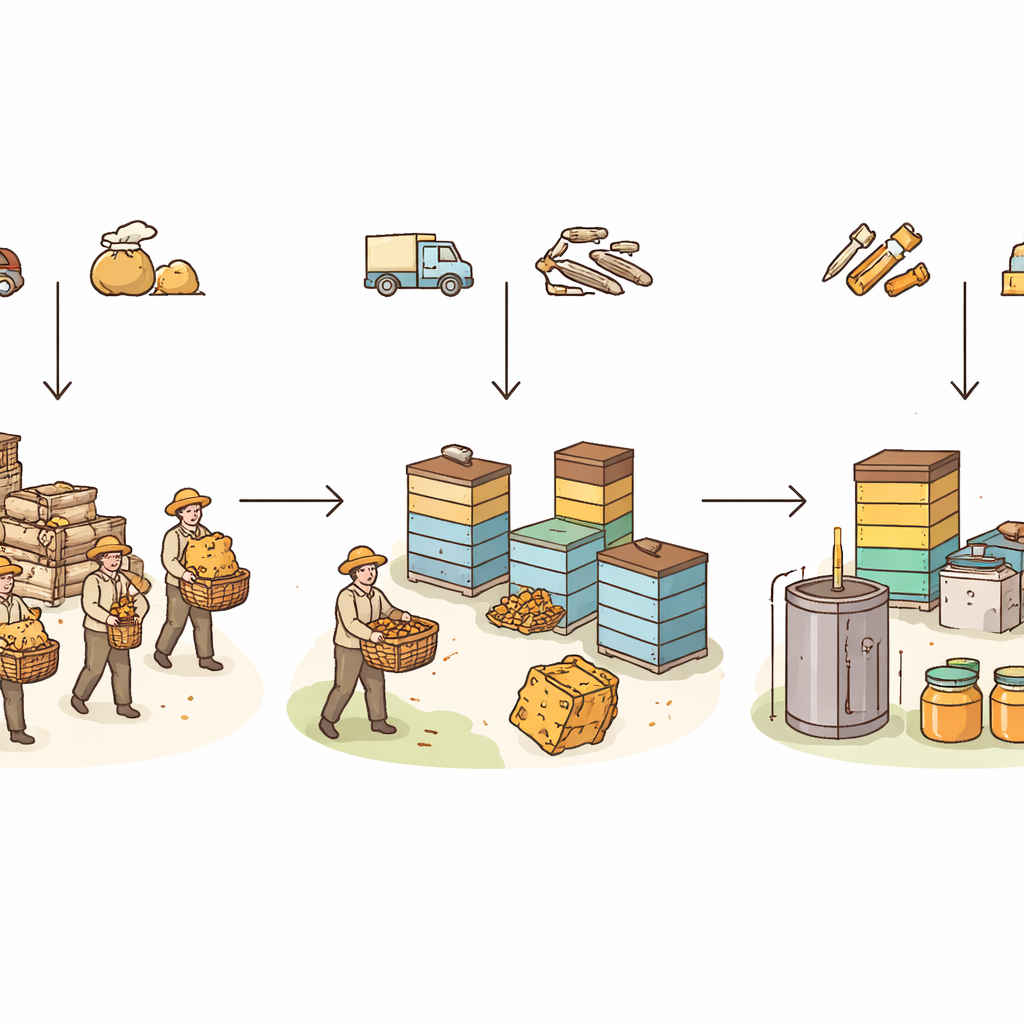
What This Means for Families and Food Security
In plain terms, the study shows that beekeeping in Southwest Nigeria already brings in solid profits and uses existing technology fairly well, but it could deliver much more. By improving how money and materials are allocated—rather than simply working harder—producers could lower their costs, raise their incomes, and supply more local honey, reducing the need for imports. Better tools, smarter training, and easier access to finance would turn a promising side activity into a stronger engine for rural livelihoods and a more resilient food system.
Citation: Ijigbade, J.O., Toluwase, S.O.W., Agbede, T.M. et al. Efficiency and economic performance of honey producers in southwest Nigeria: a comprehensive empirical analysis. Sci Rep 16, 13210 (2026). https://doi.org/10.1038/s41598-026-43835-8
Keywords: honey production, beekeeping, rural livelihoods, farm efficiency, Nigeria agriculture