Clear Sky Science · en
Association between air pollution exposure and multimorbidity among middle-aged and older adults in China: a cross-sectional study
Why the Air We Breathe Matters as We Grow Older
As people live longer, many do not face just one illness, but several long-lasting conditions at the same time—a situation doctors call multimorbidity. This study looks at whether dirty air is linked to different bundles of chronic diseases among older adults in China. Understanding these links can help families, doctors, and policy makers see air pollution not only as a cause of single diseases like asthma, but as a silent force shaping how multiple illnesses cluster together in later life.
Following Nearly Ten Thousand Older Adults
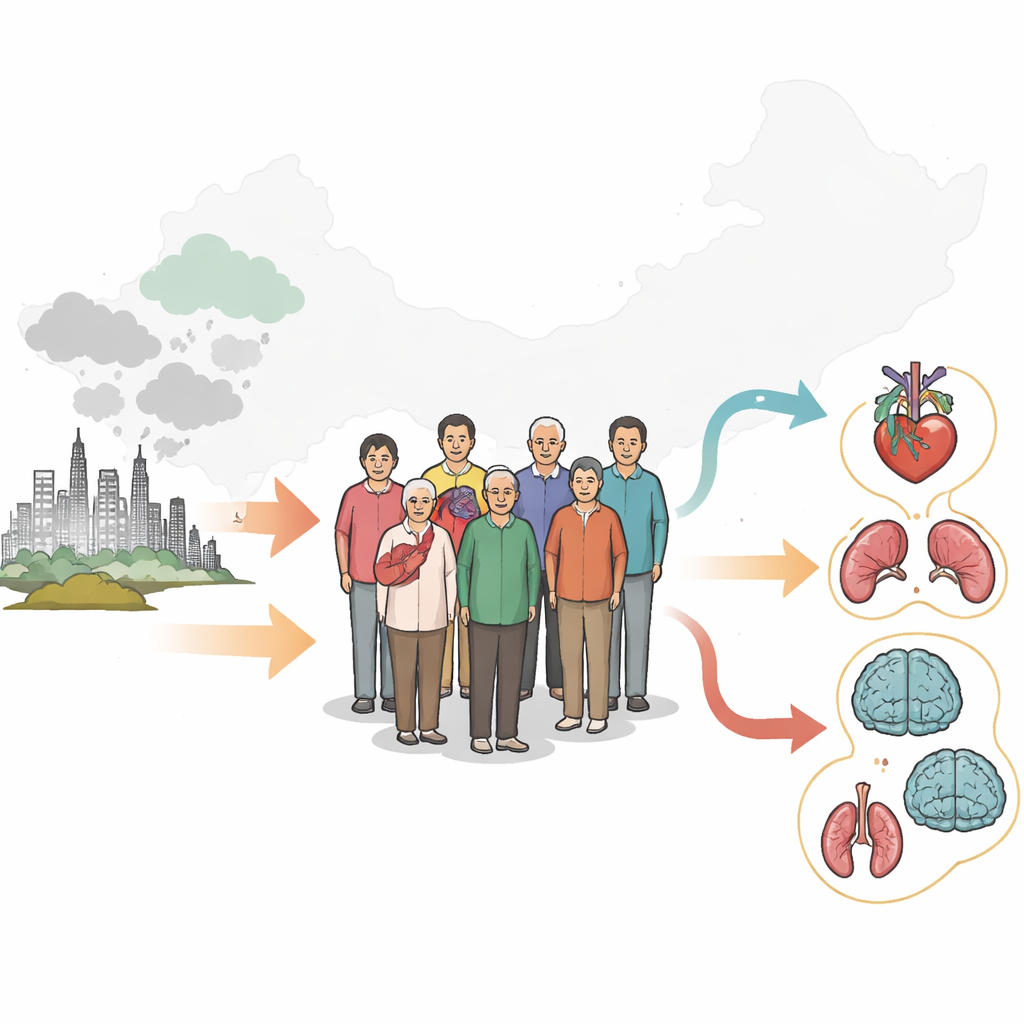
The researchers used data from the 2020 wave of the China Health and Retirement Longitudinal Study, a national survey of health and aging. They focused on 9,941 people aged 60 and above. Each person reported whether a doctor had ever diagnosed them with any of 15 common long-term conditions, including high blood pressure, diabetes, heart disease, stroke, lung disease, liver and kidney problems, arthritis, digestive disorders, memory problems, and depression. Multimorbidity was defined as having at least two of these conditions, and about six in ten participants met this definition. The team then linked each person’s home city to long-term records of outdoor air pollution, averaging two years of measurements for several major pollutants, including fine particles (PM2.5), nitrogen dioxide, ozone, sulfur dioxide, and carbon monoxide.
Four Common Bundles of Illness
Rather than studying each disease separately, the scientists used statistical methods to find patterns in how conditions tend to appear together. They identified four main bundles. One centered on the brain and mood, including stroke, memory problems, Parkinson’s disease, and emotional disorders. A second group captured heart and metabolism problems, such as high blood pressure, abnormal blood fats, diabetes, heart disease, and stroke. A third group focused on the lungs, including chronic lung disease and asthma. The fourth pattern brought together joint pain and internal organs, including arthritis, digestive, liver, and kidney diseases. Each person could belong to more than one pattern, depending on which conditions they had.
Polluted Air and Different Disease Patterns
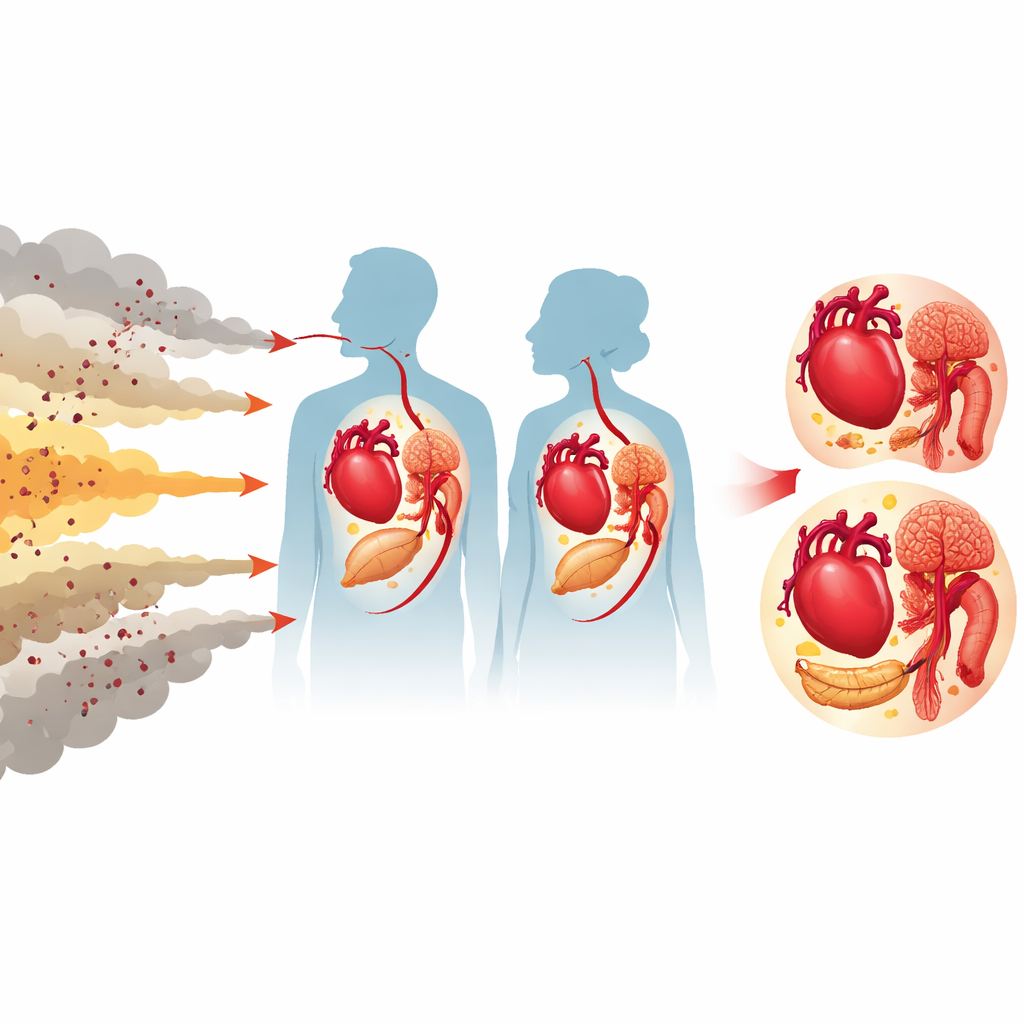
To explore how air quality related to these bundles, the team applied mixed-effects models that accounted for age, sex, income, education, smoking, drinking, sleep, physical activity, and differences between cities. They found that higher levels of fine particles, nitrogen dioxide, and ozone were consistently linked to a greater chance of belonging to the heart–metabolism pattern. For example, each step up in long-term PM2.5 was associated with a noticeably higher odds of having combined cardiovascular and metabolic illnesses. In contrast, the joint–organ pattern showed an unexpected negative link with all five pollutants, and the brain–mood pattern showed a negative link with ozone, while the lung pattern did not show clear connections with any pollutant in these models. The authors caution that some of these surprising negative links may reflect short-term adaptive responses, measurement limits, or the cross-sectional design, rather than true protective effects of pollution.
Differences Between Men, Women, and Regions
When the sample was split by sex, the harmful connection between polluted air and the heart–metabolism pattern was stronger in women than in men, especially for fine particles and ozone. Biological differences, including hormone-related effects on inflammation and oxidative stress, and social factors, such as time spent near indoor and outdoor sources of pollution, may help explain this extra vulnerability. The researchers also mapped how both disease patterns and pollution cluster across China. They found that certain northern and northeastern provinces formed “hot spots” where brain–mood problems, heart–metabolism issues, and joint–organ conditions were more common, and where air pollution levels were also higher. Spatial models suggested that geography and local living conditions still played a strong role even after pollution was taken into account.
From Data to Practical Tools
Going a step further, the team built an online prediction tool using machine learning methods. By entering basic information such as age, sex, lifestyle habits, and place of residence, the tool can estimate an older person’s likelihood of belonging to each disease pattern. While not a diagnostic instrument, it is intended as a screening aid to help identify people who might benefit from closer medical follow-up or preventive care. This platform showcases how large health surveys and modern computational techniques can be turned into practical resources for public health and clinical planning.
What This Means for Healthy Aging
In plain terms, the study suggests that long-term exposure to polluted air is tied to specific clusters of chronic illnesses in older Chinese adults, especially those involving the heart and metabolism, and that women may be at higher risk. The work also shows that where a person lives—north or south, urban or rural—shapes both their pollution exposure and their chances of developing certain bundles of diseases. Although the study cannot prove cause and effect, it strengthens the case that cleaning up the air could help reduce not just single diseases, but the complex webs of health problems that many people face in later life.
Citation: Zhu, J., Zhao, Z., Yin, B. et al. Association between air pollution exposure and multimorbidity among middle-aged and older adults in China: a cross-sectional study. Sci Rep 16, 13185 (2026). https://doi.org/10.1038/s41598-026-43757-5
Keywords: air pollution, multimorbidity, older adults, cardiometabolic health, China