Clear Sky Science · en
Risk factors influencing construction supply chain management in Saudi Arabia
Why construction supplies matter to everyday life
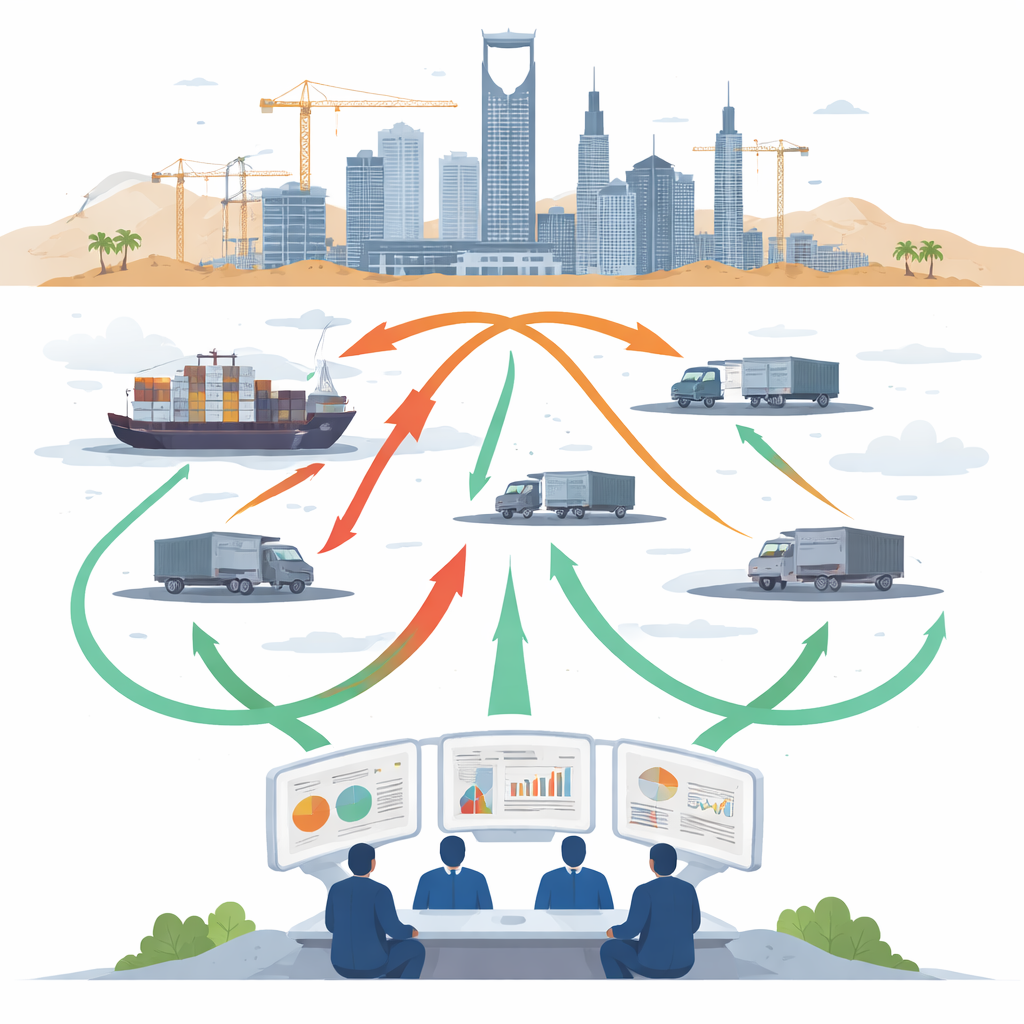
From new metros and airports to entire futuristic cities, Saudi Arabia is in the midst of a massive building boom. Yet behind every skyline is an invisible web of ships, trucks, warehouses, and contracts that must work together flawlessly. When this supply chain falters, projects stall, costs soar, and public services are delayed. This study takes a close look at what most threatens that web in Saudi construction projects, and how understanding these dangers can keep major developments on time and on budget.
The setting: big projects and big vulnerabilities
Saudi Arabia’s construction sector depends heavily on imported materials, foreign labor, and complex contracts among government agencies, contractors, and suppliers. Each project is unique and temporary, with tight schedules and high public visibility. That combination makes construction especially fragile: a missed shipment of steel, a sudden price spike in cement, or a strike among workers can quickly ripple through a project. The authors argue that, despite international research on construction supply chains, the specific risks facing Saudi Arabia’s mega projects had not been systematically mapped or ranked. Their goal was to identify the riskiest weak links in this national building effort so that decision‑makers can focus their attention where it matters most.
How the researchers mapped the weak links
The team began by scanning global and regional studies, industry reports, and previous analyses of construction supply chains, extracting an initial list of 50 possible risk factors. They then convened six highly experienced experts from Saudi mega projects to review and refine this list. These experts, drawn from contracting, consulting, and client organizations, narrowed the 50 items down to 23 risks they considered most relevant and damaging. To see how common and serious each risk appeared across the industry, the authors designed a detailed questionnaire and sent it to a randomly selected group of 112 professionals involved in procurement, project management, and related roles.
Survey participants rated each of the 23 risks on two scales: how likely it was to occur and how severe its impact would be if it did. The researchers combined these ratings using a technique called the Relative Importance Index and then created a “Risk Index” by multiplying the probability and impact scores. They also checked that the survey itself was reliable and that the rankings made sense statistically. The results showed strong internal consistency and a clear pattern: risks that happened more often tended also to be the ones that hurt the most.
The biggest threats inside the supply chain
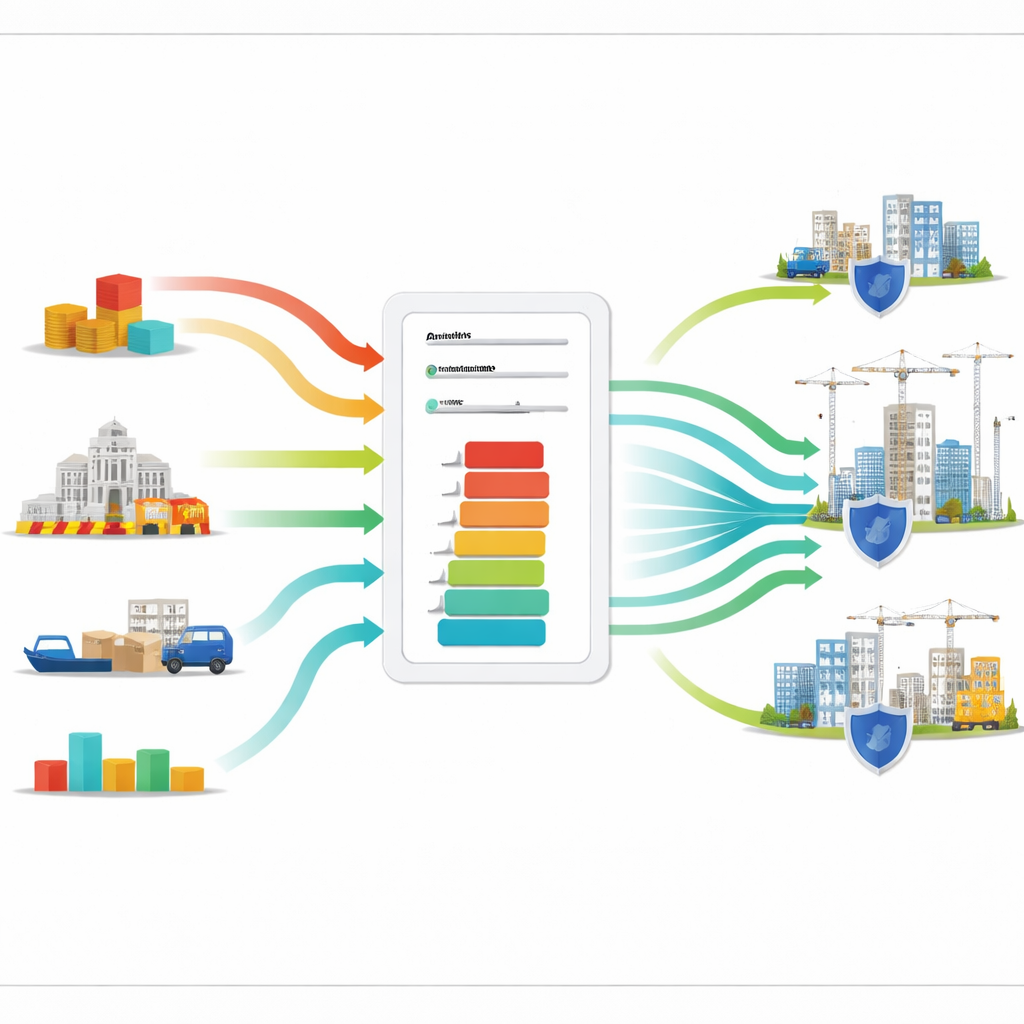
The analysis revealed a clear top tier of problems. Financial instability—such as cash flow shortages, delayed payments, or poor access to funds—emerged as the single most critical threat. When money stops flowing smoothly, it can choke off material purchases, delay salaries, and trigger a cascade of other disruptions. Close behind were failures in supplier deliveries, swings in demand for materials, and overreliance on a single supplier. In other words, projects are especially vulnerable when they depend on one key source or route, and when that source cannot be counted on to deliver on time.
Other high‑ranking risks included economic turbulence (like inflation or currency shifts), changing government rules, rising raw material prices, and the danger of suppliers going bankrupt. Labor disputes and damage to cargo on its way into the country were also important. The authors grouped all 23 risks into four broad categories—environmental (political and economic conditions), organizational (internal management and finance), supply (suppliers and logistics), and demand (market and client behavior). This structure shows that vulnerabilities are not just technical or logistical; they span government policy, company finances, contracts, and market swings, and they often reinforce one another.
Turning risk rankings into better projects
Knowing which risks are most dangerous only matters if it leads to better decisions. Drawing on their rankings, the authors propose several practical moves. These include stronger cash‑flow planning and financial safeguards, diversifying suppliers instead of depending on a single source, building backup transport routes, and adopting more flexible purchasing practices to cope with changing demand. They also highlight the promise of digital tools: data dashboards, forecasting systems, and technologies such as Building Information Modeling and sensor‑based tracking could give project teams earlier warnings before a disruption becomes a crisis.
What this means for future building
For non‑specialists, the main message is straightforward: Saudi Arabia’s ambitious building plans will succeed or fail not only on engineering skill, but on how well the country manages the everyday flow of money, materials, and information behind each project. This study provides a ranked “danger list” of supply chain problems—placing financial instability, unreliable deliveries, demand swings, and single‑supplier dependence at the top—and shows that these issues are closely intertwined. By treating the supply chain as a system to be monitored and strengthened, rather than a background detail, project leaders and policymakers can build more resilient infrastructure and reduce the chances of costly delays and disputes.
Citation: Alqahtani, F.K., Shafaay, M., Alagha, E. et al. Risk factors influencing construction supply chain management in Saudi Arabia. Sci Rep 16, 12353 (2026). https://doi.org/10.1038/s41598-026-43672-9
Keywords: construction supply chain, risk management, Saudi Arabia projects, infrastructure resilience, supplier reliability