Clear Sky Science · en
Distribution of extended red blood cell phenotypes among blood donors: experience from a low- and middle-income country
Why knowing your blood beyond A, B, and O matters
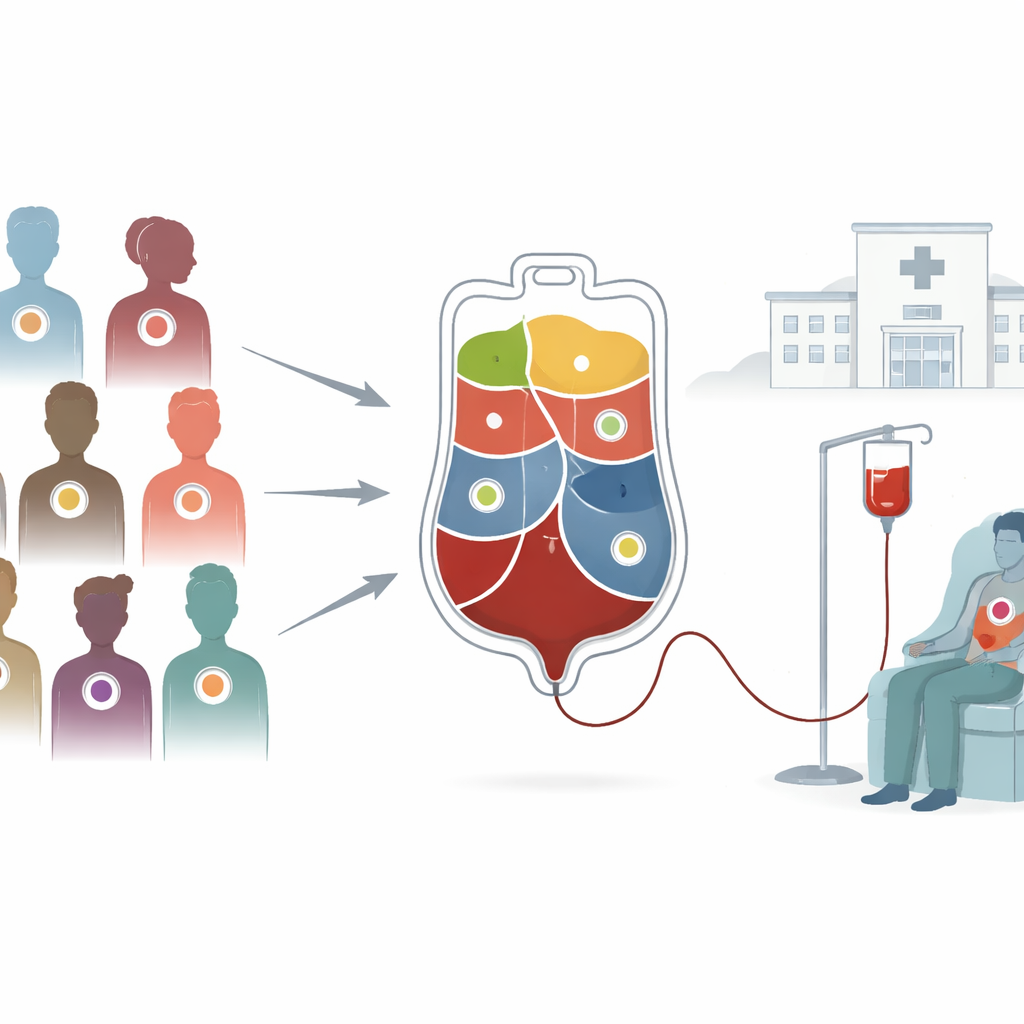
Most of us think of blood types as the familiar A, B, AB, and O, plus the plus or minus sign. In reality, our red blood cells carry dozens of other tiny markers that can make the difference between a life-saving transfusion and a dangerous reaction. This study looks closely at those lesser-known blood traits in Palestinian blood donors, showing how local genetic history shapes blood compatibility and why that matters for patients who depend on frequent transfusions.
Looking deeper than standard blood types
Doctors have long known that patients can form antibodies against “minor” blood markers when they receive repeated transfusions. These antibodies can silently build up and later attack transfused cells, leading to delayed and sometimes serious complications. The risk of this happening depends on how common each marker is in a given population. In many low- and middle-income countries, however, detailed data on these markers are scarce. The researchers set out to map the distribution of several clinically important red blood cell features in Palestinian donors, focusing on systems with names like Kell, Duffy, Kidd, MNS, Lewis, Lutheran, and P1 that rarely appear on a standard hospital bracelet but strongly influence transfusion safety.
How the team studied Palestinian donors
Between April and September 2024, the team collected blood from 200 healthy volunteers at five blood banks across the West Bank, covering northern, central, and southern regions. All donors met routine eligibility standards and had Palestinian ancestry on both parents, to ensure a relatively uniform genetic background. In a specialized laboratory, technologists used a standard agglutination method—mixing donor red cells with specific reagents that clump in the presence of certain markers—to identify which antigens were present on each donor’s cells. For some systems where reagents were limited, they tested smaller random subsets but confirmed those subsets matched the larger group in age, sex, and region.
Unique blood patterns shaped by history
The results revealed a striking pattern: some markers were overwhelmingly common, while others were quite rare. For example, nearly all donors had the k and Kpb antigens, and a large majority had the S antigen and the Lub antigen. In contrast, the highly immunogenic K antigen appeared in only about 7% of donors, and the Kpa antigen in about 1%. The Duffy system—strongly linked to both transfusion reactions and resistance to certain malaria parasites—showed particular variety. Roughly 42% of donors had one common Duffy pattern, 36% had another, and about 17.5% had a “null” form lacking both main Duffy markers, a pattern associated with African ancestry. This mix fits with genetic studies suggesting that Palestinians carry influences from ancient Canaanites, Arabs, Europeans, and Africans. When the researchers compared these frequencies with European, Asian, African, Saudi, and Israeli data, they found many important differences, especially in the Duffy, MNS, and P1 systems, meaning that imported blood from other regions often would not be a good antigen match.
What this means for transfusion safety
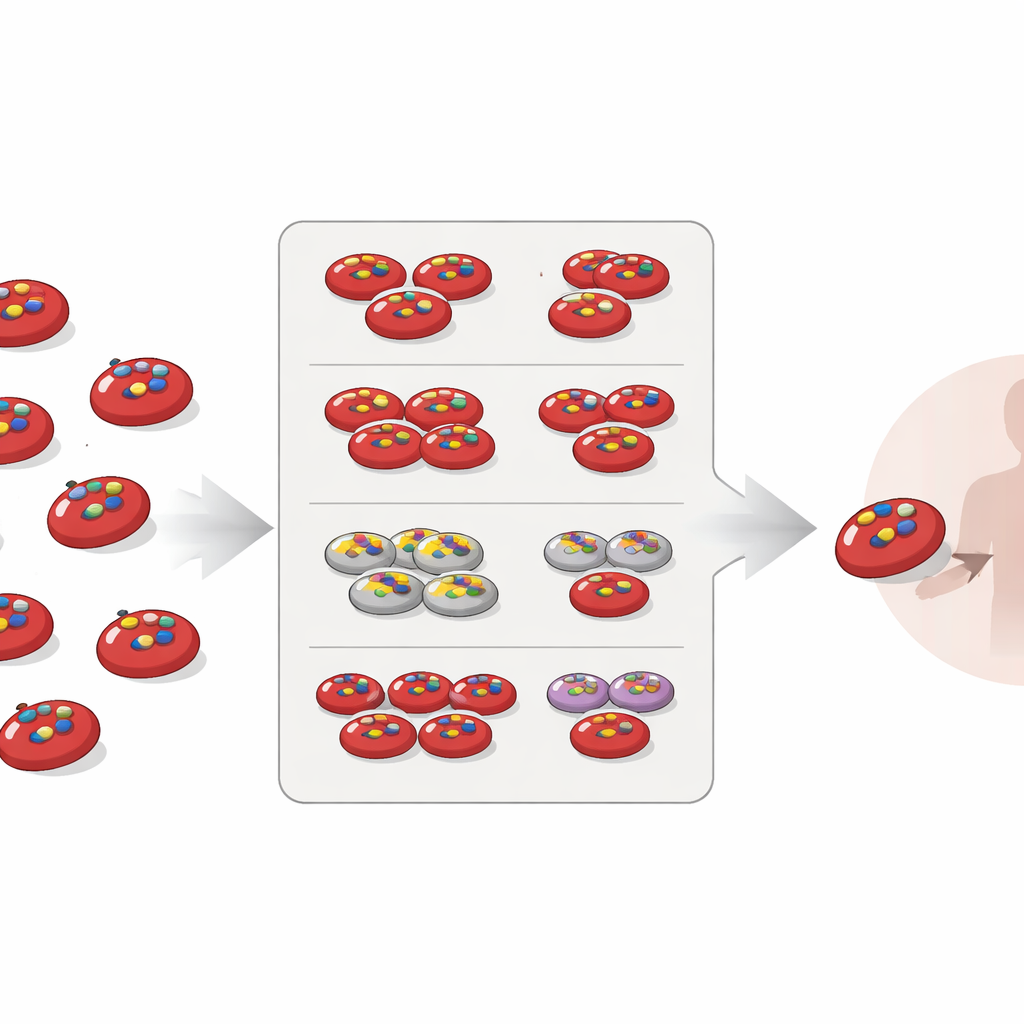
For Palestinian patients who receive many transfusions—such as those with thalassemia or sickle cell disease—the study’s findings are more than an academic curiosity. If clinicians rely only on A, B, and Rh matching and supplement local supply with blood from poorly matched foreign donor pools, patients are much more likely to develop antibodies against Duffy, Kidd, or MNS antigens. The analysis showed that, for some systems, compatibility with certain foreign populations could be as low as about one in ten units, implying that the vast majority of transfusions from those sources would carry a high risk of sensitization. On the other hand, blood from donors within the same population offered substantially better matching for many key markers, although not perfectly so. These insights allow planners to estimate how often two random Palestinians will share the same extended blood pattern and to gauge how risky it is to import blood from different world regions.
Steps toward safer, locally tailored blood banks
The authors conclude that Palestinians have a distinctive “blood fingerprint” that cannot be safely inferred from neighboring countries’ data. They argue that Palestine should build a national registry of donors whose extended blood traits are carefully mapped, starting with the most important markers—Kell, Duffy, and Kidd—and then expanding to others as resources allow. With about 35,000 donations per year, they estimate that such a registry could be created within two to three years at a cost far lower than continuing to rely on expensive, hard-to-find international donor programs. While they stress that larger, genetically confirmed studies including Gaza and Jerusalem are still needed before final policies are set, this pilot work provides a practical roadmap: understand the local blood landscape, match high-risk patients more precisely, and reduce avoidable transfusion reactions in a sustainable way.
Citation: Abu-sibaa, W., Abu Taha, A., Srour, M.A. et al. Distribution of extended red blood cell phenotypes among blood donors: experience from a low- and middle-income country. Sci Rep 16, 13784 (2026). https://doi.org/10.1038/s41598-026-43582-w
Keywords: blood transfusion safety, red blood cell antigens, Palestinian donors, alloimmunization, blood group diversity