Clear Sky Science · en
Association of park features with total and prolonged sedentary behavior among older adults: An observational study in Macau
Why park seating matters for healthy aging
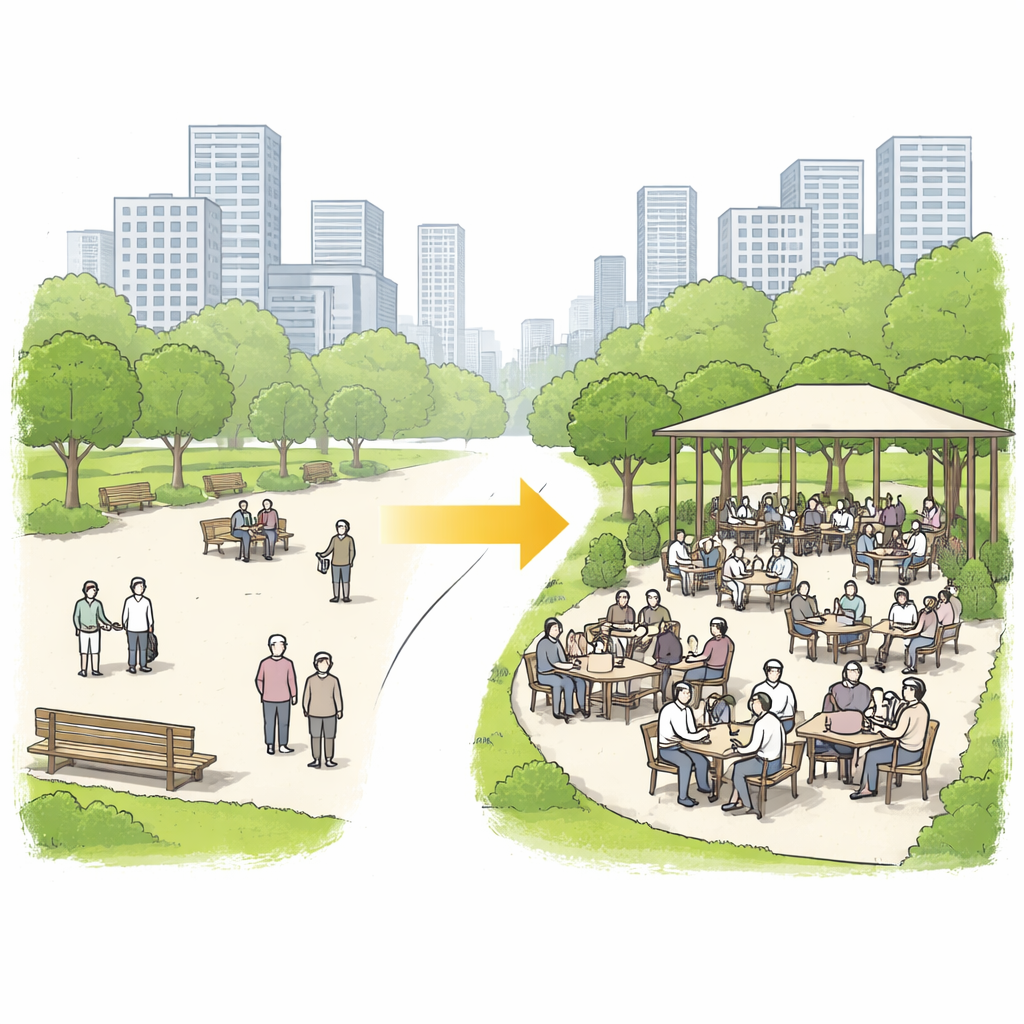
For many older adults in crowded cities, neighborhood parks are daily living rooms: places to chat, play games, and escape the heat. This study from Macau asks a deceptively simple question with big health implications: how do specific park features—like shade, benches, and tables—shape not just how often older adults sit, but how long they sit without getting up? The answer reveals that well-loved park comforts can quietly encourage long stretches of inactivity that may harm physical health, even while supporting social and mental well-being.
How the study watched people sit
Researchers focused on three busy urban parks in Macau, a very dense Asian city with a rapidly aging population. They divided the parks into 51 smaller zones—places where older adults actually sat, usually on paved open areas rather than lawns or paths. Over several September and October days, trained observers counted how many older adults used each zone, what they were doing, and whether they were sitting or moving. At the same time, discreet video recordings captured how long individuals stayed sitting in one stretch, so the team could measure “bouts” of uninterrupted sitting without relying on memory or self-report.
What older adults do when they sit
Across all observations, more than half of the 5,208 older park users were sedentary. Men were more often sedentary than women, and sitting peaked in the late afternoon. The team grouped seated activities into five everyday types: chatting, using a smartphone, playing card or board games, watching others play, and simply resting or enjoying the view. Chatting was the most common, but card and board games—along with people who sat and watched these games—stood out for how strongly they clustered in particular areas and how many people they drew together.
When relaxing becomes prolonged sitting
Health researchers worry most about long, unbroken stretches of sitting, typically defined as more than 30 minutes at a time. In this study, the average sitting spell for every activity type already passed that threshold. But card and board games produced the longest bouts by far, often stretching close to an hour and sometimes much longer, as the same players and spectators returned at the same times and places day after day. Informal observation showed that some players tried to ease discomfort from staying seated—briefly squatting, bending, or shifting posture—but the park furniture and layout did little to support standing breaks or light movement during these social gatherings.
How shade and furniture quietly shape behavior
To understand how the physical setting mattered, the researchers compared zones based on four simple features: how many seats they had, whether they used only benches or also tables and chairs, whether they were shaded, and how large the zone was. Shade emerged as a powerful magnet for sitting: shaded areas had nearly five times as much total sedentary behavior as unshaded ones, and every recorded case of prolonged sitting happened in shaded spots. Tables and chairs were strongly tied to very long sitting during games; zones with outdoor tables and chairs were about six times more likely to host prolonged sitting than zones with benches alone, and statistical modeling suggested that the odds of long bouts were roughly ten times higher in these table-and-chair areas. In contrast, larger zones encouraged more physical activity, while shade itself did not reliably boost movement.
Designing parks that support both rest and movement
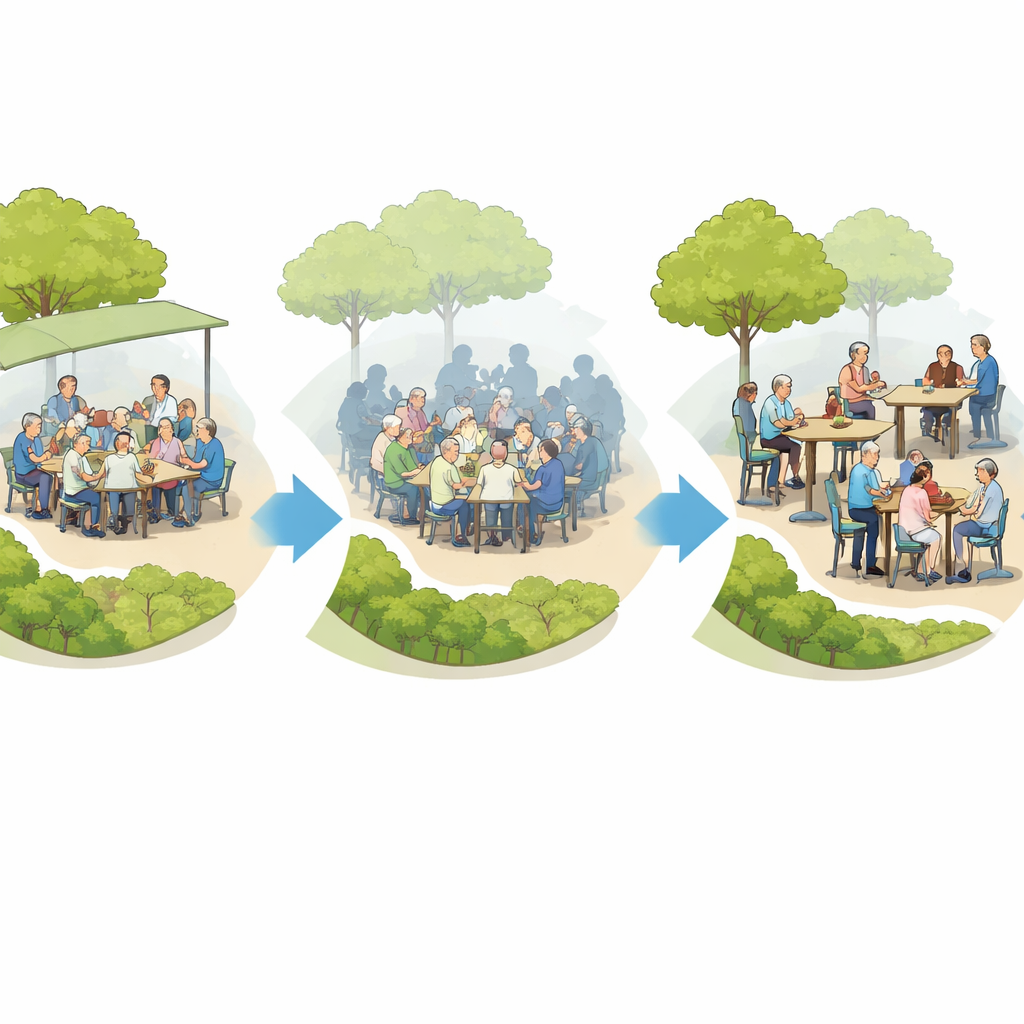
These findings suggest that older adults are not simply choosing to be inactive; rather, current park designs make it much easier to sit comfortably for long periods than to mix rest with light movement. The authors argue that reducing harmful prolonged sitting will require different strategies than just trying to increase exercise. They propose new kinds of “leisure stations” that keep the social benefits of games and conversation but gently nudge people to move more—such as higher tables with stools that make it easy to stand for a while, or seats paired with small pedal devices that turn a seated game into light physical activity. Thoughtful placement of shade, furniture, and nearby amenities could help older adults enjoy their parks as welcoming social hubs while protecting their long-term health.
Citation: Chen, Y., Zheng, J. & Huang, L. Association of park features with total and prolonged sedentary behavior among older adults: An observational study in Macau. Sci Rep 16, 12642 (2026). https://doi.org/10.1038/s41598-026-43566-w
Keywords: older adults, urban parks, sedentary behavior, park design, healthy aging