Clear Sky Science · en
Sex-related differences in blood concentrations and emergence profiles following total intravenous anesthesia with remimazolam and remifentanil
Why Waking Up From Anesthesia Can Differ Between Women and Men
Most of us only think about anesthesia when we are about to have surgery and are told we’ll be “put to sleep” and then safely woken up. But the drugs that make this possible do not act the same way in every body. This study looks at a new anesthetic called remimazolam, used together with a pain‑relief drug remifentanil, and asks a simple question with important safety implications: do women and men process this drug differently, and does that change how quickly they wake up after surgery?
A New Way To Put Patients To Sleep
Remimazolam belongs to a family of calming drugs, but it stands out because the body breaks it down very quickly through a special pathway in the liver. This rapid breakdown means patients tend to fall asleep fast and wake up quickly, and doctors can even reverse its effect with an antidote drug if needed. Because older anesthetics have shown clear differences between men and women in how long they last and how strong they feel, the researchers wanted to know whether remimazolam follows the same pattern. Understanding this helps doctors choose doses that are strong enough to keep patients safely asleep, but not so strong that recovery is delayed.

What The Researchers Actually Did
The team followed 35 healthy young adults, 19 women and 16 men, who underwent relatively minor oral and jaw surgeries. Everyone received general anesthesia through an intravenous drip, using the same weight‑based dosing rules for remimazolam and remifentanil. The researchers carefully recorded how long it took for each person to lose consciousness and then to wake up enough to have their breathing tube removed. They also drew blood at two key moments: right when the anesthetic infusion was stopped and again just before the patient was fully awake and the breathing tube was taken out. These blood samples were analyzed in the lab to measure how much remimazolam was still circulating.
Different Drug Levels, Similar Wake‑Up Times
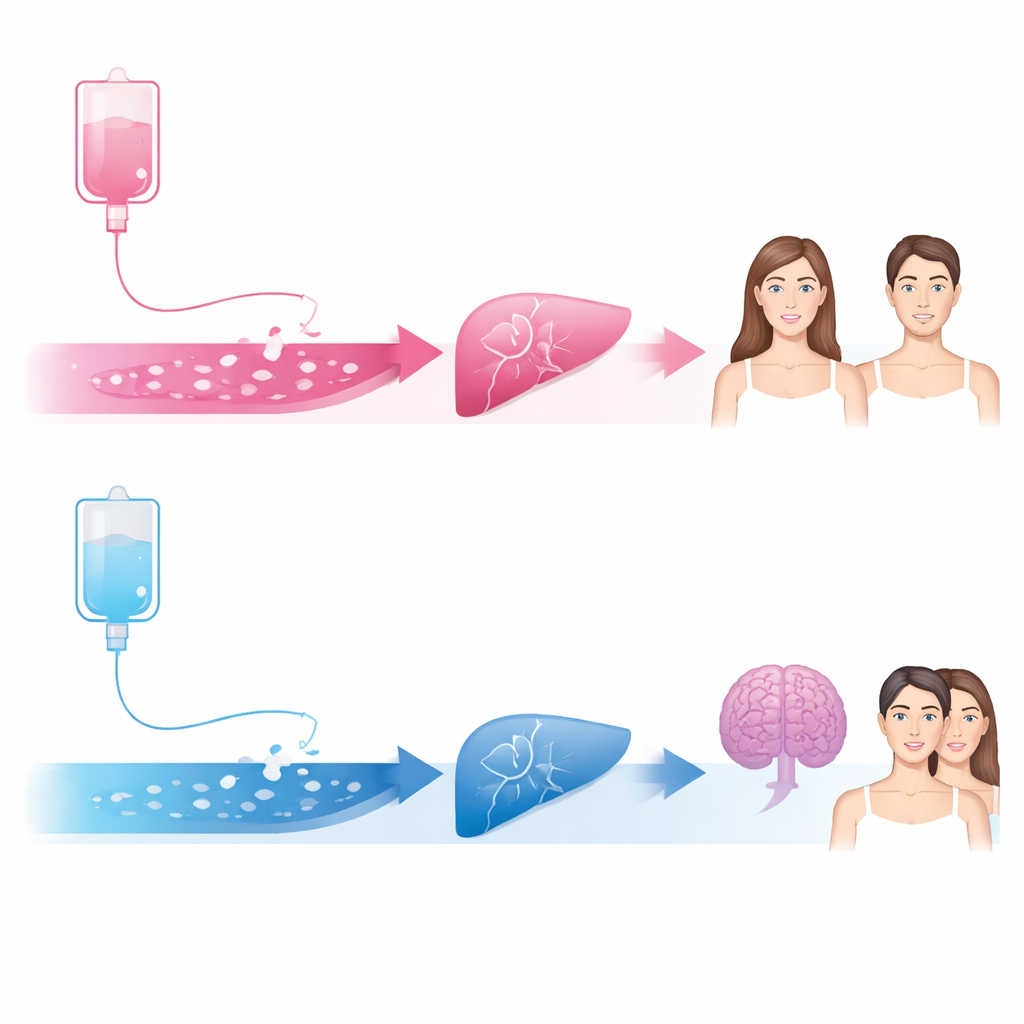
The most striking finding was that women consistently had lower remimazolam levels in their blood than men at both sampling times, even though the drugs were dosed in the same way per kilogram of body weight. This held true even after adjusting the measurements for how much drug each person had actually received. The results strongly suggest that women clear remimazolam from their bodies faster than men do. Yet, despite these clear differences in blood levels, the actual time to awakening was not significantly different. On average, women woke up about 80 seconds earlier than men, but in a small study like this, that gap could not be distinguished from normal variation.
What Might Be Happening Inside The Body
Why would women have lower drug levels without waking up dramatically sooner? One possible explanation lies in liver enzymes called carboxylesterases, which chop remimazolam into inactive pieces. Earlier work suggests that these enzymes can be more active in women, speeding up drug breakdown. Body size may also play a role, because using actual body weight for dosing can leave lighter people, typically women in this study, with lower effective exposure. At the same time, waking up from anesthesia is not driven by this one drug alone. The pain‑relief drug remifentanil also affects breathing and protective airway reflexes, and past research has shown that men and women can respond differently to opioids as well. The combined actions of both drugs, along with individual brain sensitivity, likely blur the link between simple blood levels and the clock on the wall.
Why This Matters For Future Patients
For patients, the reassuring news is that both women and men in this study woke up safely and within a similar time frame under this anesthetic combination. At the same time, the clear sex‑related differences in remimazolam blood levels warn clinicians not to assume that a “one size fits all” dose is truly equal for everyone. The study authors caution that their work is exploratory and based on a modest number of people, but it adds real‑world evidence that women may process this drug more quickly. Larger studies that track hormone levels, genetic differences, and more detailed drug‑level time courses may eventually lead to personalized dosing rules. That, in turn, could help ensure that each patient—regardless of sex—gets just the right amount of anesthesia for a smooth, safe sleep and an equally smooth return to consciousness.
Citation: Sato, R., Higuchi, H., Nishioka, Y. et al. Sex-related differences in blood concentrations and emergence profiles following total intravenous anesthesia with remimazolam and remifentanil. Sci Rep 16, 13650 (2026). https://doi.org/10.1038/s41598-026-43531-7
Keywords: remimazolam, anesthesia, sex differences, drug metabolism, postoperative recovery