Clear Sky Science · en
Circulating levels of high mobility group box-1 and nucleophosmin/B23 proteins and clinical significance in debut non-small cell lung cancer patients
Why blood signals from lung tumors matter
Lung cancer often hides in the body for years before it causes symptoms, making it one of the deadliest cancers worldwide. Doctors are eager to find simple blood tests that could hint at a tumor’s presence or behavior long before it shows up clearly on a scan. This study looks at two “danger signal” proteins in the blood of people with newly diagnosed non-small cell lung cancer (NSCLC) to see whether their levels track with how far the disease has progressed and how the tumor is spreading.
Alarm molecules that call the immune system
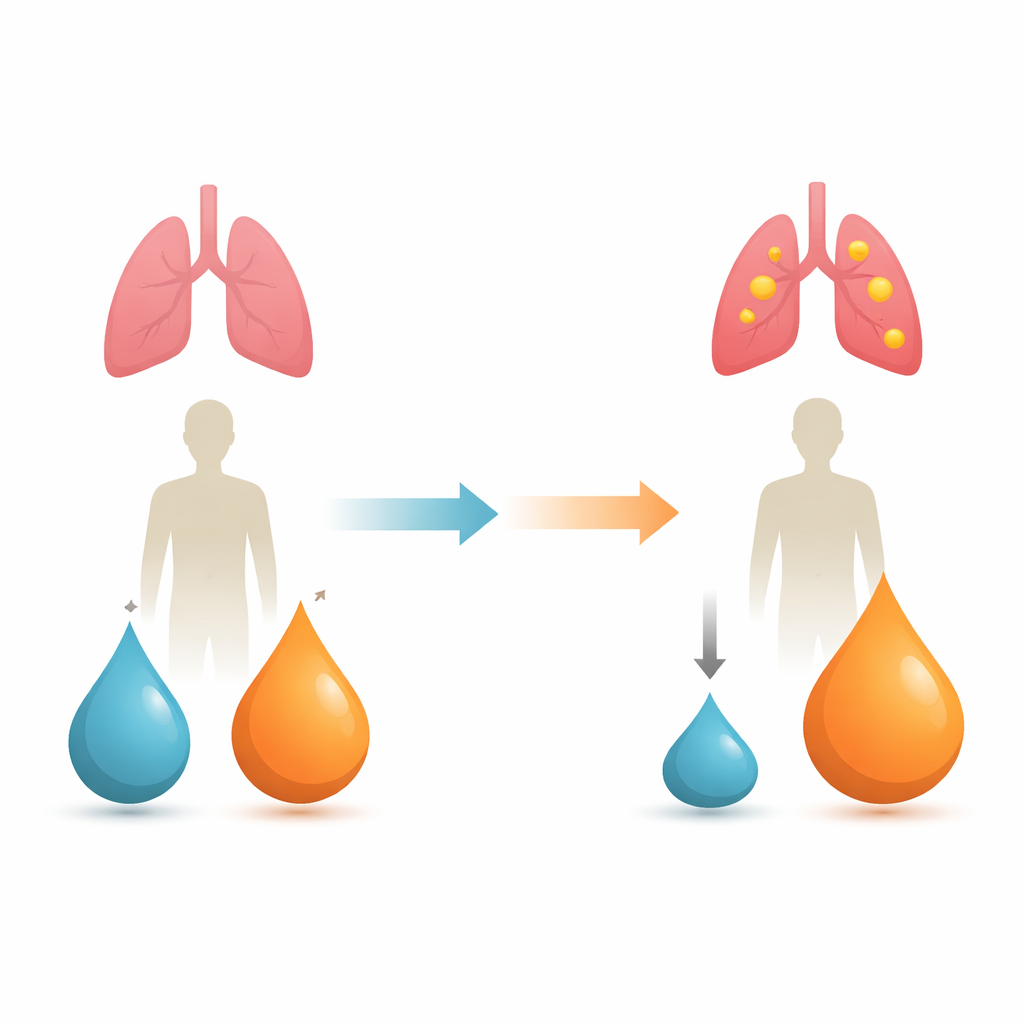
When our cells are injured or stressed, they can release internal proteins into the surrounding tissue and bloodstream. These molecules, known as alarmins, act like flares that alert the immune system. The researchers focused on two such proteins, called HMGB-1 and nucleophosmin (also known as NPM/B23). Both normally live inside the cell nucleus, helping to manage DNA and other vital tasks, but when released they can stir up inflammation and shape how the body responds to cancers and infections. While HMGB-1 has been widely studied in different cancers, nucleophosmin’s role as an alarm signal in cancer patients has been less clear.
Comparing patients and healthy volunteers
The team examined blood samples from 162 people with newly diagnosed NSCLC—mostly lung adenocarcinoma and squamous cell carcinoma—and 60 age-matched healthy volunteers. None of the patients had yet received surgery, chemotherapy, radiation, or immunotherapy, so the measurements reflect the untreated disease. Using sensitive laboratory tests, they measured how much HMGB-1 and nucleophosmin were circulating in each person’s blood and then compared these levels with clinical details such as tumor size, microscopic patterns of spread in the lung, and whether cancer cells had reached the lymphatic system or the chest lining.
A tale of two blood proteins
The results were striking. On average, lung cancer patients had lower blood levels of HMGB-1 than healthy people—a surprise, given earlier reports in some cancers. Yet within the patient group, those whose tumors were larger than 2 centimeters tended to have higher HMGB-1 levels than those with smaller tumors, suggesting this protein may rise as the tumor grows. Nucleophosmin showed the opposite baseline pattern: it was clearly higher in patients than in healthy volunteers, across both main lung cancer types. Higher nucleophosmin was also linked to larger tumors and to a histologic pattern called “spread through airspaces,” in which cancer cells drift away from the main mass into nearby lung tissue, a feature associated with early, stealthy spread.
How the two signals move together
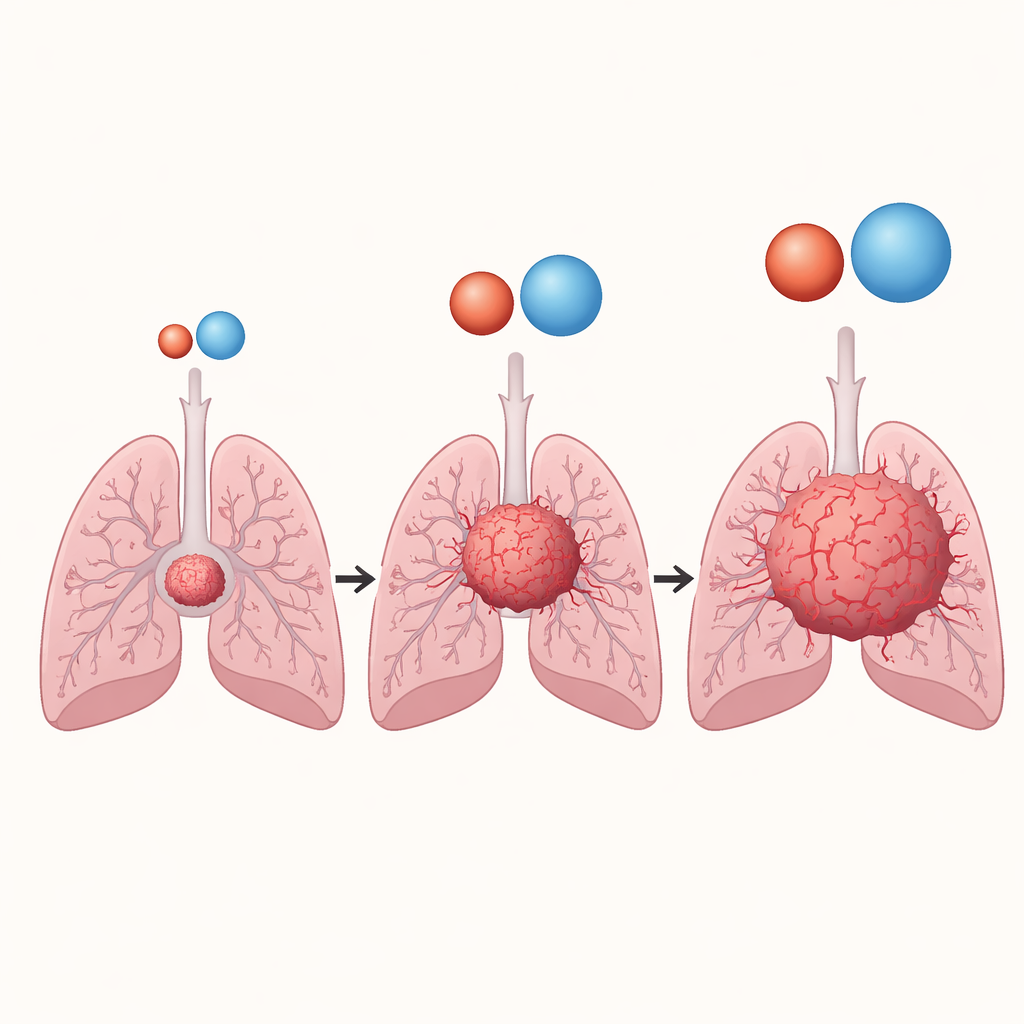
Beyond their individual behavior, the two proteins were strongly linked to each other in the blood of patients. When HMGB-1 was higher, nucleophosmin tended to be higher as well, and this connection was much tighter in patients than in healthy volunteers. The most pronounced pairing appeared in a small but important subgroup: patients whose tumors were 2 centimeters or smaller yet already showed spread through airspaces. In these early-stage but biologically aggressive tumors, HMGB-1 and nucleophosmin levels rose and fell almost in lockstep. The researchers also examined tumor tissue and nearby normal-appearing lung under the microscope. Both proteins were frequently present inside cells in these samples, but the correlations in tissue were weaker than those seen in blood, hinting that circulating levels may better capture disease dynamics.
What this could mean for patients
For people facing lung cancer, the promise of a blood test that reveals how a tumor is behaving is compelling. This study suggests that while each protein alone reflects tumor size, the combination of HMGB-1 and nucleophosmin—and especially how tightly their levels move together—may flag early yet worrisome patterns of spread. These findings do not translate into a ready-to-use clinical test just yet: the work needs to be repeated in larger and more diverse patient groups, and scientists must determine how stable these markers are over time and treatment. Still, the results point to a future in which a simple blood draw could help identify patients whose seemingly small lung tumors are more likely to grow or recur, allowing doctors to tailor monitoring and therapy more precisely.
Citation: Tan, H., Liu, L., Yi, Y. et al. Circulating levels of high mobility group box-1 and nucleophosmin/B23 proteins and clinical significance in debut non-small cell lung cancer patients. Sci Rep 16, 12481 (2026). https://doi.org/10.1038/s41598-026-43471-2
Keywords: non-small cell lung cancer, blood biomarkers, HMGB1, nucleophosmin, early cancer detection