Clear Sky Science · en
Improving workplace safety at EOT crane operating area through behavioral-based safety approach: a case study analysis
Why safer crane work matters
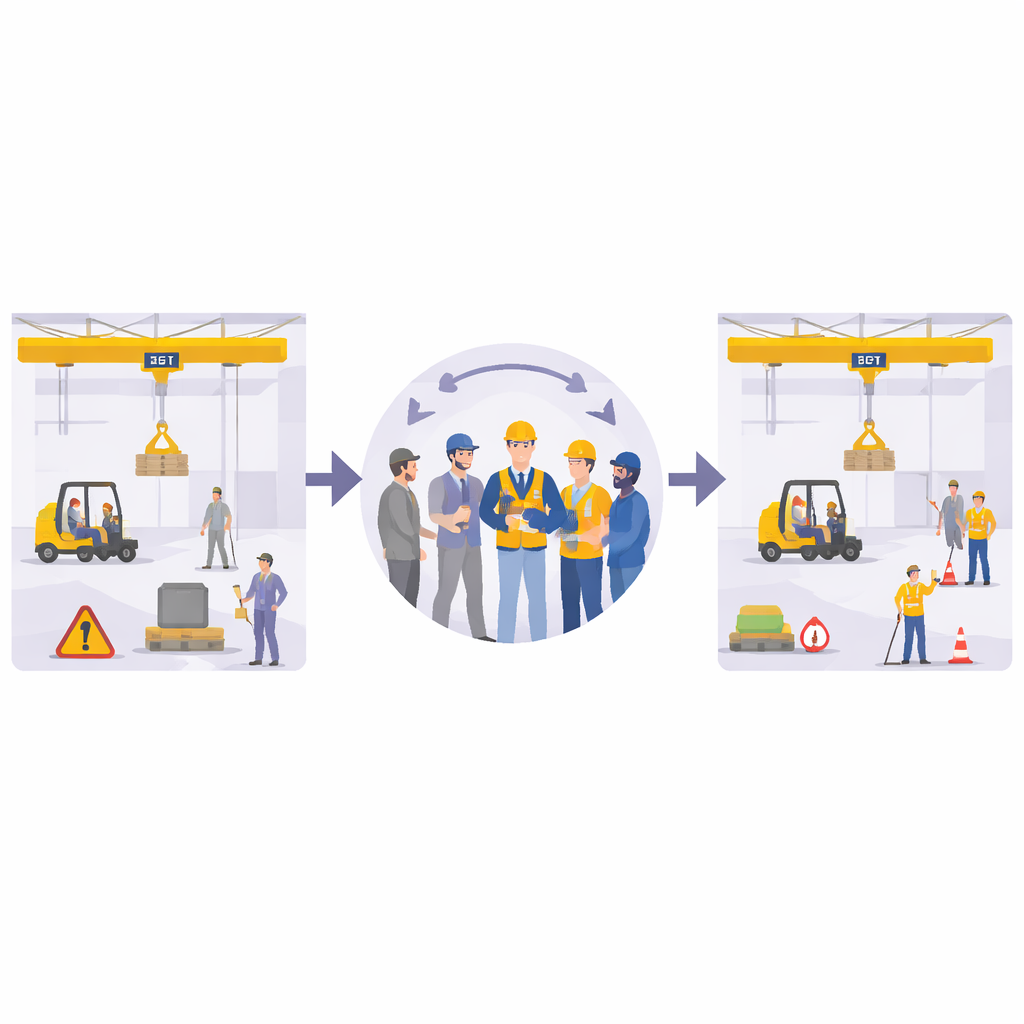
Many factories depend on huge overhead cranes to move heavy steel parts, but a single mistake near this equipment can cause serious injury or worse. This article looks at how one Indian manufacturing plant, where a five-ton electric overhead traveling (EOT) crane is used every day, set out to make its crane area safer not by buying new machines, but by changing how people behave. The study shows how a structured, step‑by‑step program focused on everyday actions and peer feedback turned a high‑risk zone into a much safer place to work.
From rules on paper to habits on the shop floor
The researchers start by noting a problem many fast‑growing industries face: a shortage of experienced workers. Newer employees may not fully understand risks around heavy machinery, and accidents often stem less from broken equipment than from rushed, distracted, or uninformed behavior. Traditional safety programs emphasize written rules, inspections, and punishment after something goes wrong. In contrast, the approach used here—called behavior‑based safety—tries to spot risky actions early, talk about them constructively, and reward safer habits until they become the new normal.
Inside a busy crane bay
The case study takes place in a logistics and manufacturing plant where a five‑ton EOT crane moves steel racks, pallets, and raw materials along a 50‑meter‑long bay. At the same time, workers weld, grind, drive forklifts, and handle materials by hand. This crowded, constantly changing scene creates many hazards: people can be struck or crushed by moving loads, slip on oil or scrap metal, receive electric shocks, or suffer eye, ear, and back injuries. The team focused on 22 volunteer workers from roles such as crane operation, welding, and forklift driving, and followed them closely over several weeks.
Watching, recording, and giving feedback
To understand how people actually behaved, the researchers combined several tools. Workers filled out structured questionnaires about safety commitment, communication, and behavior. Trained observers then blended into the workplace and, over three months, quietly noted whether people wore protective gear, kept walkways clear, used tools correctly, and maintained good posture while lifting and attaching loads. A detailed checklist covering items such as helmets, goggles, gloves, earplugs, housekeeping, and clear access to fire extinguishers helped turn these observations into numbers rather than opinions, and a statistical package was used to make sure the survey questions were consistent and trustworthy.
Turning unsafe moments into learning moments
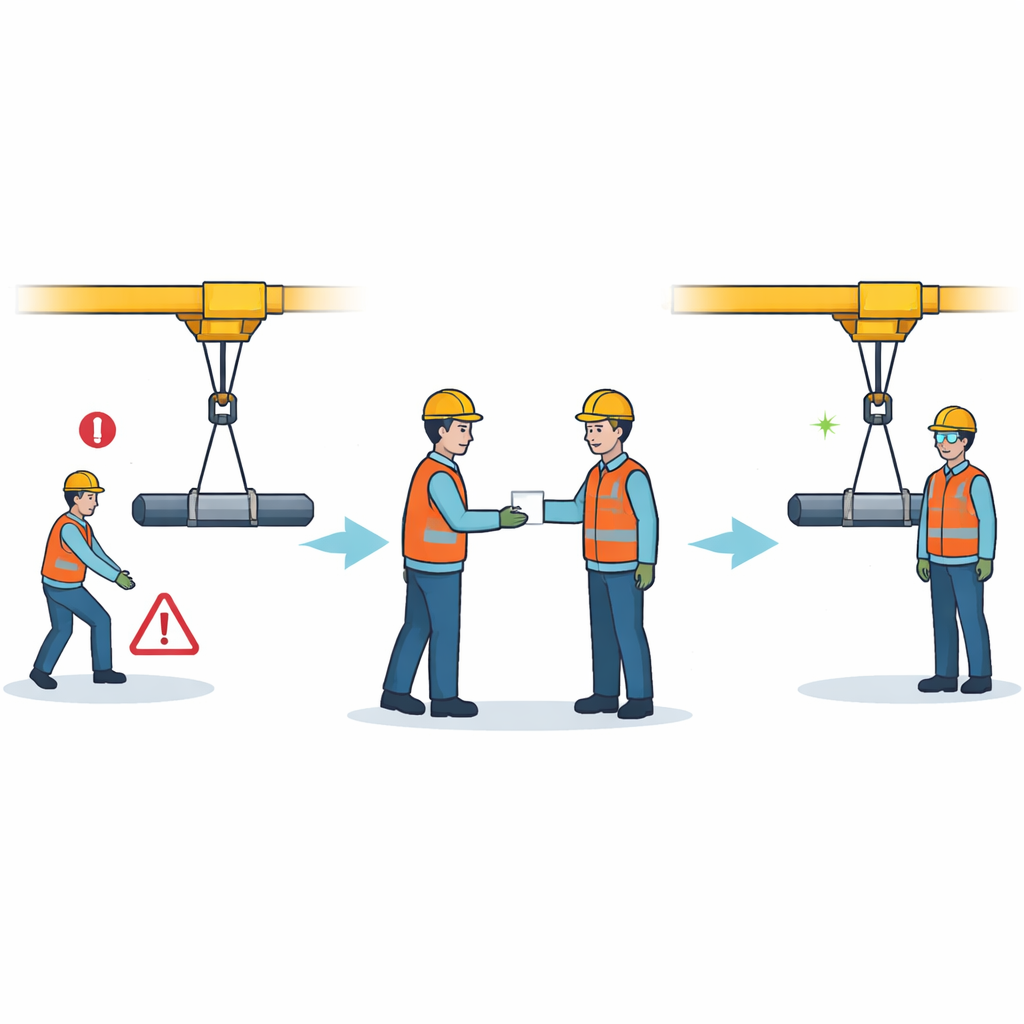
The heart of the program was a seven‑step cycle of observation and feedback. The team first identified “critical behaviors” that strongly influenced risk, such as standing under a suspended load or skipping leg protection while welding. Observers then watched daily work, marked each behavior as safe or at‑risk, and immediately spoke with the worker. Safe behavior earned positive feedback, reinforcing good habits. Risky behavior prompted a calm conversation about why it was happening and how to change it. A simple alert card system was added: workers who broke rules received a card and a follow‑up with management, while those with few or no cards were recognized. Over time, workers became more aware that their choices—like putting on goggles before grinding or using proper trolleys—directly affected not just their own safety, but their team’s.
Measuring real change, not just good intentions
The researchers did more than rely on impressions. They tracked how often each guideline was followed, then compared scores at the start, after 15 days, and after 30 days. Many basics, such as wearing goggles, using ear protection, keeping walkways clear, and maintaining housekeeping, started in the 40–70% safe range. After a month of feedback and alert cards, average safe performance climbed to about 85%. A more rigorous statistical test confirmed that this rise over time was not due to chance. Survey results also showed that most workers believed management cared about safety, that training was useful, and that observing and discussing behavior helped. Some weak spots remained, including consistent use of earplugs and gloves in certain tasks, and not everyone liked the alert cards, but the overall trend was strongly positive.
What this means for everyday workers
For a layperson, the key takeaway is that safer factories are not only about better machines or more warning signs; they also depend on how people look out for one another. In this crane bay, carefully structured observation, respectful conversations, and a simple card system turned vague safety slogans into concrete daily habits. Within four weeks, the share of safe behaviors jumped from just over half to nearly nine out of ten. The study suggests that when workers are involved in spotting risks, get timely feedback, and see that their efforts are recognized, dangerous places can become much safer without slowing down the work—and this model could be adapted to many other busy, high‑risk workplaces.
Citation: Dhamotharan, V., Arumugaprabu, V., Ajith, S. et al. Improving workplace safety at EOT crane operating area through behavioral-based safety approach: a case study analysis. Sci Rep 16, 13484 (2026). https://doi.org/10.1038/s41598-026-43379-x
Keywords: workplace safety, crane operations, behavior-based safety, occupational health, industrial hazards