Clear Sky Science · en
Spatial and temporal evolution and interaction of soil erosion intensity and influencing factors in Wenzhou City from 2000 to 2023
Why the changing ground matters
In many fast-growing coastal cities, building new roads, factories, and homes means cutting into hillsides and reshaping riverbanks. When this happens in a wet, mountainous place like Wenzhou, on China’s southeastern coast, heavy rains can wash precious soil off the slopes and into rivers and the sea. This study tracks how soil erosion in Wenzhou has changed over more than two decades and asks a key question: are recent efforts to protect the environment actually helping keep the ground in place?
Watching the land over two decades
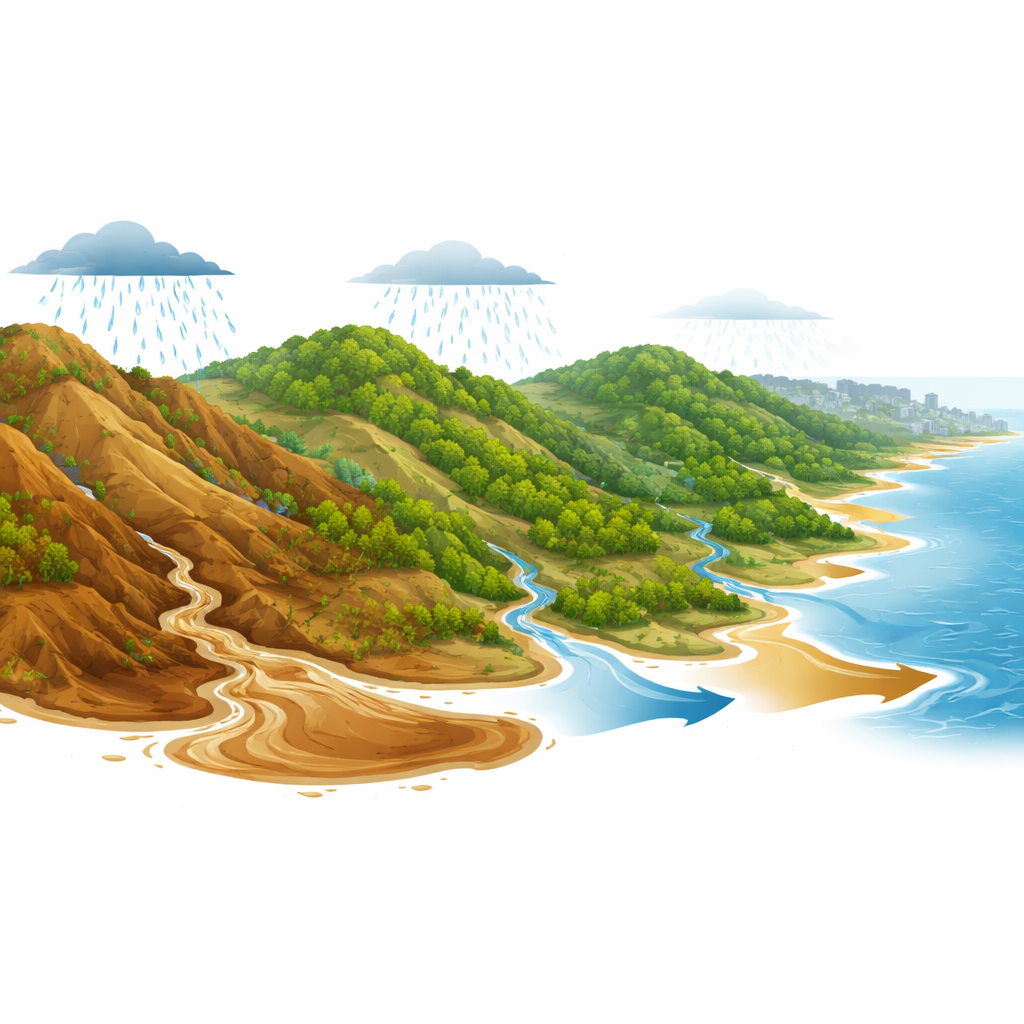
The researcher combined satellite images, digital maps of elevation, and long-term weather records from 2000 to 2023 to estimate how much soil was being washed away over time. Using a well-established erosion model, they divided the city’s land into categories ranging from almost untouched soil to heavily scoured slopes. They then looked at how those categories shifted over six key years: 2000, 2005, 2010, 2015, 2020, and 2023. Throughout the period, more than 99 percent of Wenzhou’s land fell into the two mildest erosion classes, but there was a clear hump in more serious erosion around 2010, followed by a steady improvement afterward.
Where the land is most at risk
Although most of Wenzhou’s soil loss is relatively gentle, it does not happen evenly across the map. The city is often described as “mountains on three sides and the sea on one,” and that pattern shows up in the erosion results. The western low hills and plains, covered mostly by forests and farmland on gentle ground, tend to experience only very slight soil loss. By contrast, the steeper coastal hills in the east and some central and southern highlands show light but persistent erosion. Pockets of moderate to strong erosion appeared mainly on steep, disturbed slopes in the eastern hills, expanded up to 2010, then shrank sharply as vegetation recovered and land management improved. Over time, the sharp divide between more and less affected areas has blurred, suggesting that the landscape is becoming more stable overall.
How nature and people shape erosion
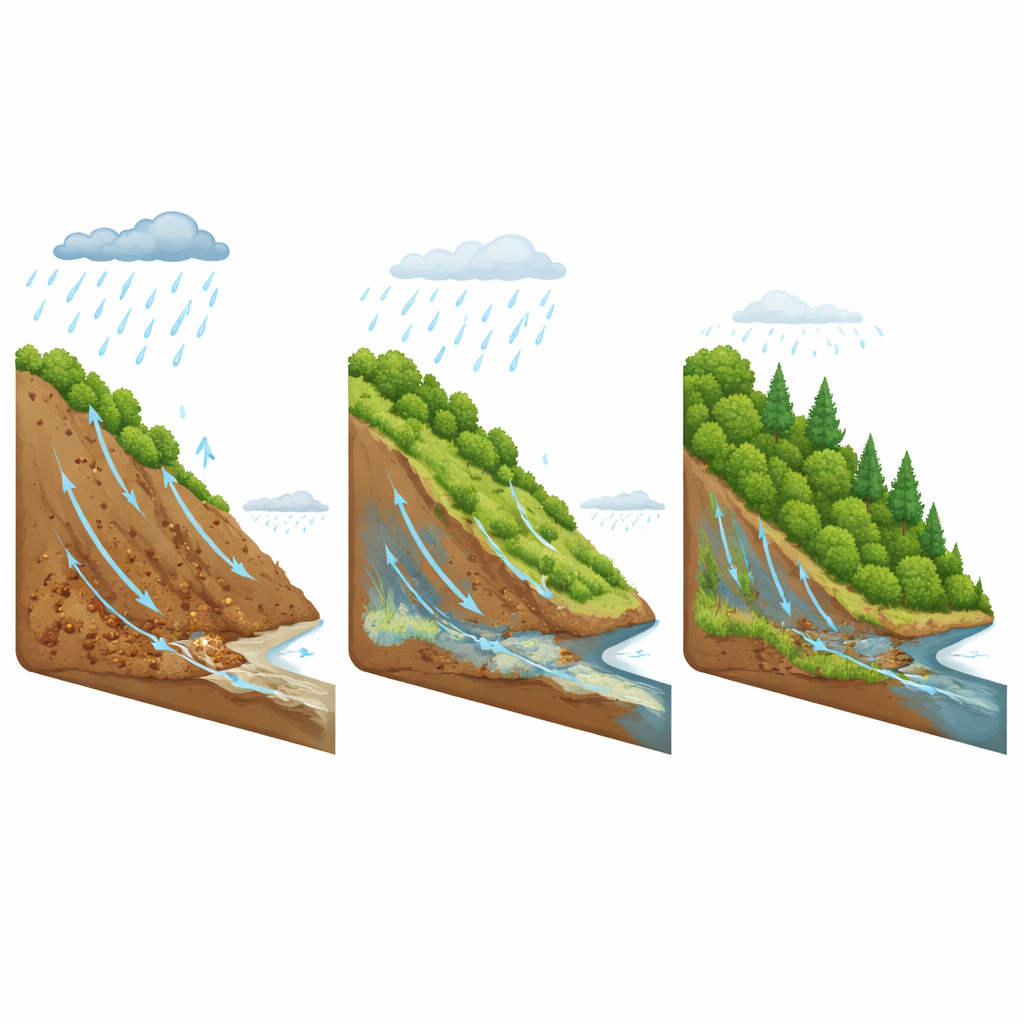
Soil erosion is not driven by a single culprit. This study examined how terrain, rainfall, temperature, evaporation, soil wetness, and land use (such as forest, farm, or city) work together. Two natural factors stand out: slope and rainfall. Steep slopes give water a fast downhill path, while heavy rain provides the energy to move soil. When both are high, soil loss increases markedly. At the same time, soil moisture plays an unexpectedly important protective role. Wetter soils under healthy vegetation help soak up rainfall, reduce fast surface runoff, and strengthen soil structure. After about 2020, soil moisture became even more important than land use type in explaining where erosion was low or high, hinting that years of ecological restoration and vegetation growth have improved the ground’s ability to hold itself together.
Cities, farms, and forests on the move
Human activity has reshaped Wenzhou’s land cover over the same period. Forests and cultivated fields still make up over 90 percent of the area, but both have shifted in size and location, while construction land has more than doubled as the city expanded. Much of this growth spread outward from coastal city centers along rivers and highways, often replacing farmland and some forest. At the same time, ecological policies encouraged converting some marginal farmland back to forest and restoring slopes. The study mapped how land parcels changed from one use to another across three phases: rapid expansion of construction land before 2010, more mixed gains and losses around the middle of the period, and a more balanced pattern with stronger ecological restoration in recent years.
What this means for the future
Overall, the findings suggest that Wenzhou has moved from a period of rising soil loss to one of gradual recovery. Serious erosion has become rare, and small, high-risk patches on steep, disturbed slopes have largely faded. The combination of better soil and water conservation policies, smarter land-use planning, and long-term vegetation restoration appears to be paying off. For lay readers, the key message is that even in a rainy, mountainous coastal city undergoing rapid development, careful management of slopes, forests, and farmland can reduce the amount of soil swept away each year. As climate change threatens more intense downpours, understanding how slope, rain, and soil moisture interact will be crucial for protecting both rural hillsides and the growing city below.
Citation: He, H. Spatial and temporal evolution and interaction of soil erosion intensity and influencing factors in Wenzhou City from 2000 to 2023. Sci Rep 16, 13121 (2026). https://doi.org/10.1038/s41598-026-43284-3
Keywords: soil erosion, Wenzhou, coastal hills, land use change, ecological restoration