Clear Sky Science · en
The relationship between perceived stress, psychological resilience, and depressive symptoms in college students, and the moderating role of gender
Why this study matters to everyday life
College can be an exciting time, but for many students it is also a period of intense pressure. This study looks at how feeling stressed is linked to low mood in university students, and why some young people seem better able to weather this pressure than others. By unpacking the role of inner resilience and differences between men and women, the researchers offer clues for how campuses can better protect students’ mental health.
Stress on campus and rising low mood
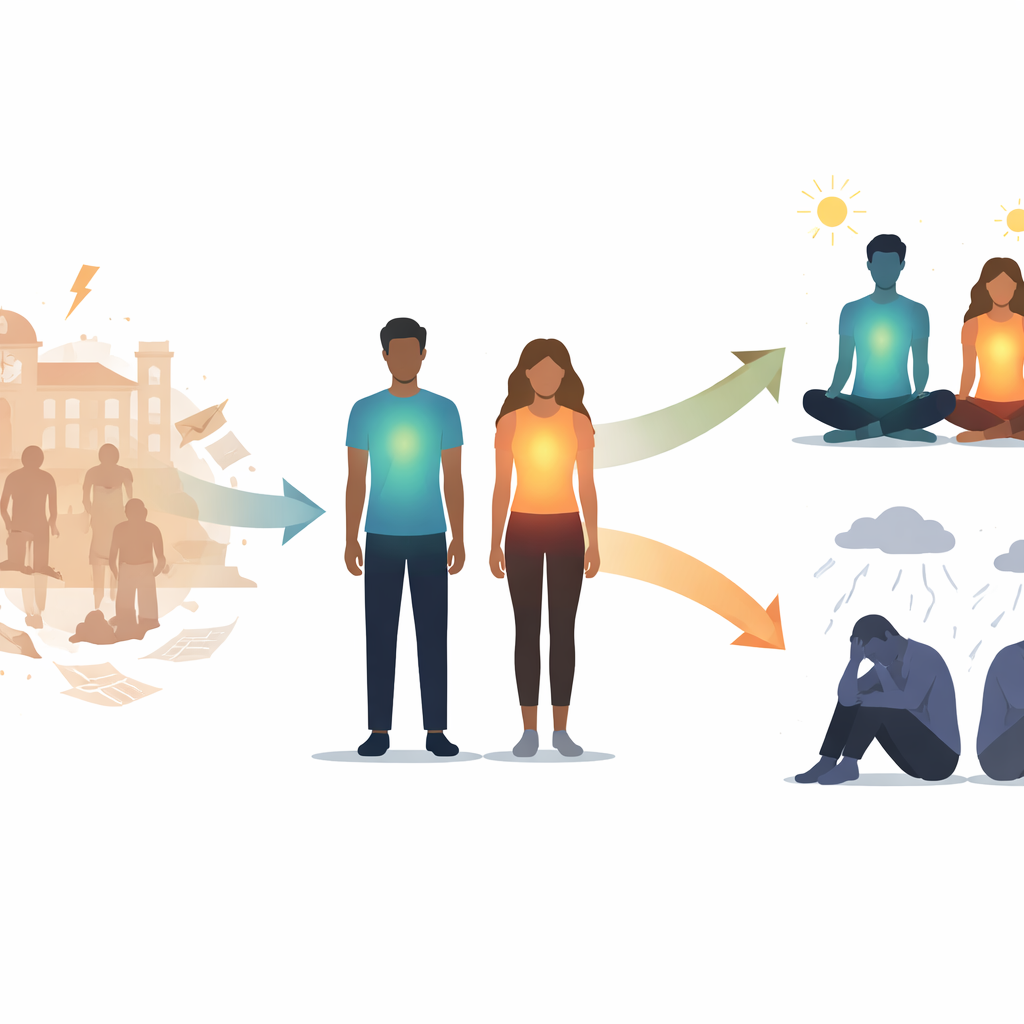
Depression is more than an occasional bad day; it is a lasting downturn in mood that can seriously disrupt daily life and, in severe cases, lead to self-harm. Around the world, signs of depression are common in teenagers and young adults, and surveys show that Chinese college students are no exception. They face heavy workloads, social competition, and uncertainty about the future. The authors focused on “perceived stress” – not just what happens to students, but how overwhelming they feel their lives to be. Earlier research suggests that this sense of being under strain is a strong early warning sign for later depression.
Inner bounce-back as a hidden resource
To understand why some stressed students sink into low mood while others stay afloat, the team examined “psychological resilience” – the ability to adapt and recover during tough times. They broke this broad idea into three parts: tenacity (sticking with things when they are hard), strength (bouncing back and learning from setbacks), and optimism (expecting that the future can improve). The researchers reasoned that long-lasting stress might gradually chip away at these inner resources. In turn, a weakened capacity to endure challenges could leave students more vulnerable to depressive symptoms such as sadness, loss of interest, and fatigue.
What the survey of students revealed
The researchers surveyed 1,193 university students in Shanghai using standard questionnaires on perceived stress, depressive symptoms, and resilience. Nearly one in five students showed signs of depression, and these students reported higher stress and lower scores on all three aspects of resilience. Statistical models confirmed that the more stress students felt, the more depressive symptoms they reported. At the same time, higher stress was tied to lower resilience, and lower resilience was tied to more symptoms. When the authors tested how these pieces fit together, only one part of resilience – tenacity – acted as a crucial bridge between stress and depression. In other words, stress appeared to raise the risk of depression in part by eroding students’ willingness and ability to persist through difficulties.
Different patterns for women and men
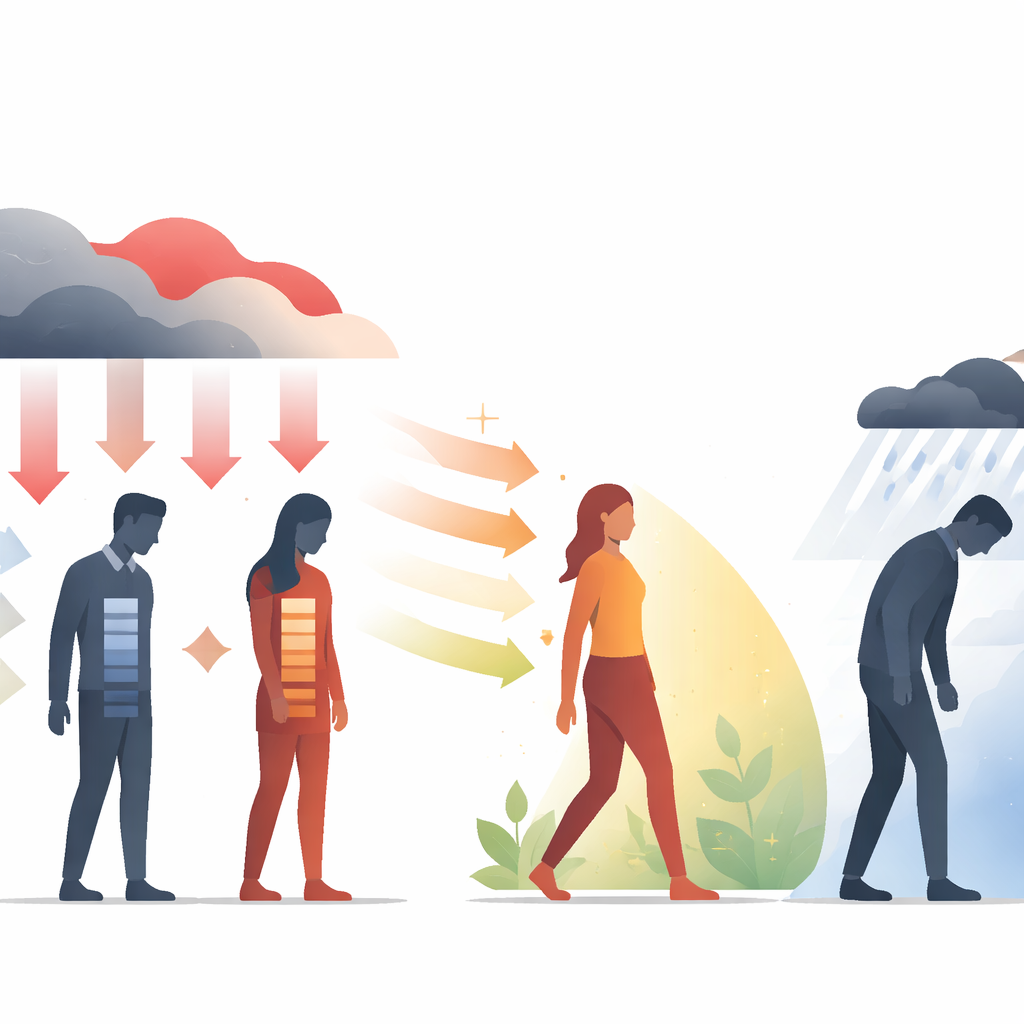
The study also explored whether these links worked the same way for female and male students. The answer was no. For both groups, greater stress meant more depressive symptoms, but this direct link was much stronger in women. Women under high stress were more likely than men to show signs of depression. Tenacity also played out differently by gender. Among women, higher tenacity clearly went hand-in-hand with fewer depressive symptoms, suggesting a genuine protective effect. Among men, however, tenacity did not meaningfully change their levels of depressive symptoms, possibly because social norms encourage them to endure in silence rather than seek support.
What this means for helping students
Taken together, the findings suggest that how stressed students feel and how persistent they are in the face of that stress are key ingredients in their emotional health. Persistent, unrelieved stress can wear down tenacity, making it harder to stay emotionally balanced and increasing the risk of depression. This pattern is especially pronounced for women, who both feel the emotional strain of stress more strongly and benefit more when their tenacity is reinforced. The authors argue that universities should not only try to reduce students’ stress where possible, but also actively build up resilience – for example, through programs that strengthen coping skills, encourage realistic optimism, and normalize seeking help. Tailoring these efforts by gender may make mental-health support more precise and effective.
Citation: Chen, S., Li, S. & Zhang, Z. The relationship between perceived stress, psychological resilience, and depressive symptoms in college students, and the moderating role of gender. Sci Rep 16, 12789 (2026). https://doi.org/10.1038/s41598-026-43237-w
Keywords: college student mental health, perceived stress, psychological resilience, depressive symptoms, gender differences