Clear Sky Science · en
Impact of sex differences on revascularization and long-term clinical outcomes in patients with non-ST-elevation myocardial infarction: a multicentre study from China
Why heart attacks do not affect everyone the same way
Heart attacks are often seen as a “man’s disease,” yet many women suffer and die from them each year. This study looks at a specific type of heart attack—non‑ST‑elevation myocardial infarction, or NSTEMI—and asks a pointed question: do women and men get treated the same way, and does that change how well they do in the long run? Using real‑world data from hospitals across China, the researchers uncover a gap in care that helps explain why women with this kind of heart attack tend to fare worse over time—and what can be done about it.
Looking at thousands of real patients
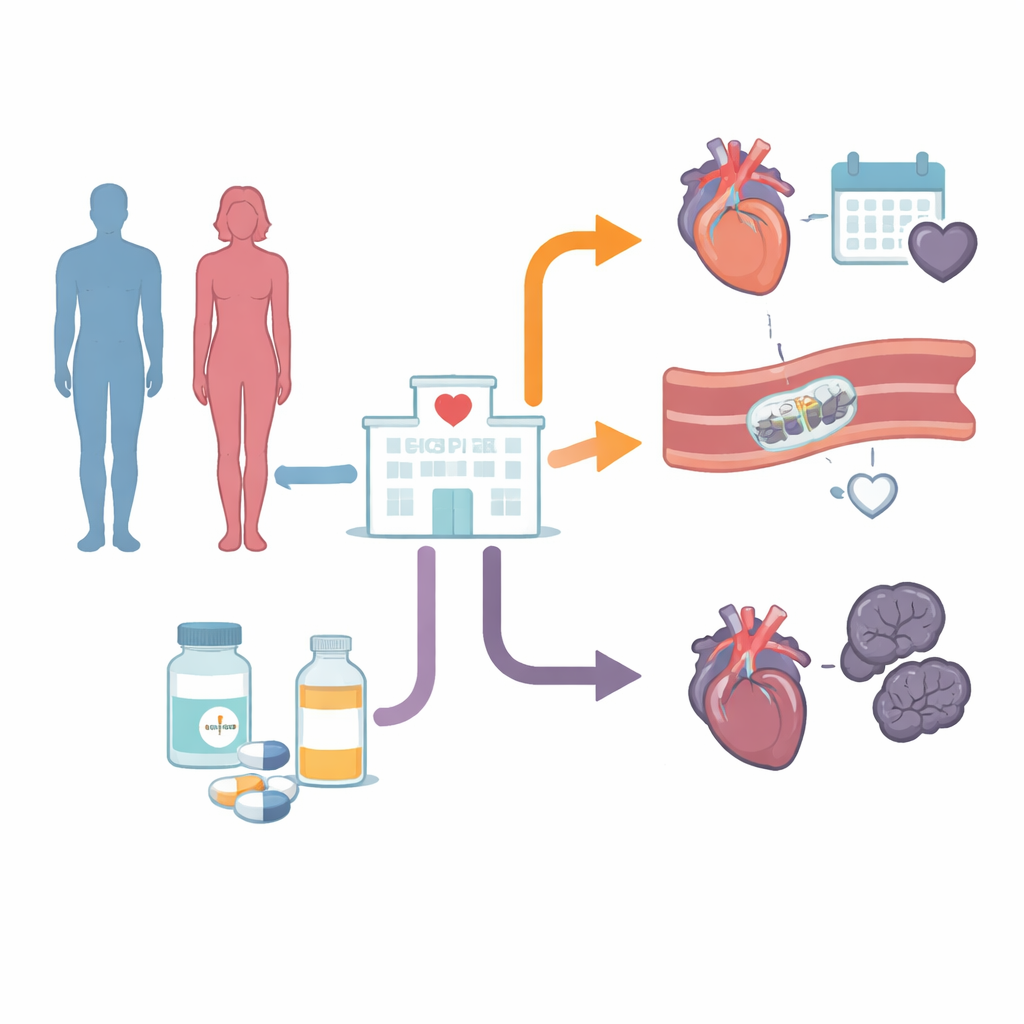
The research team reviewed medical records from five major hospitals in China, covering adults treated for NSTEMI between 2021 and 2022. After excluding people who died in the hospital, had advanced kidney failure, cancer, or no follow‑up, they analyzed 4,911 patients: 3,506 men and 1,405 women. They tracked major problems after discharge, such as death, repeat heart attack, heart failure, stroke, or needing another procedure to reopen blocked arteries. Follow‑up lasted a median of about a year and a half, long enough to see meaningful differences in recovery and survival.
Who these patients were and how they were treated
Women in the study were, on average, about seven years older than the men and more likely to have high blood pressure, diabetes, and a history of stroke. Men, in contrast, smoked far more often and had more abnormal blood fats. Women also tended to have more extensive disease in their heart arteries once they were examined. Yet despite having a higher overall risk profile, women were less likely than men to undergo key tests and procedures. Fewer women received coronary angiography, the X‑ray test that shows where arteries are narrowed, and fewer underwent revascularization—the umbrella term for procedures such as stent placement or bypass surgery that physically restore blood flow to the heart.
Unequal procedures, unequal outcomes
To make sure these differences were not simply due to women being older or sicker, the researchers used several advanced statistical techniques, including matching women and men with similar ages, risk factors, and treatments. Even after this careful balancing, women remained significantly less likely to receive revascularization during their hospital stay. Over the following months, women also experienced more serious complications: higher rates of the combined outcome of death, repeat heart attack, heart failure, stroke, or needing another artery‑opening procedure. These patterns held up even in the matched groups, suggesting that sex itself, together with how care is delivered, plays a role in long‑term results.
When treatment is equal, the gap narrows
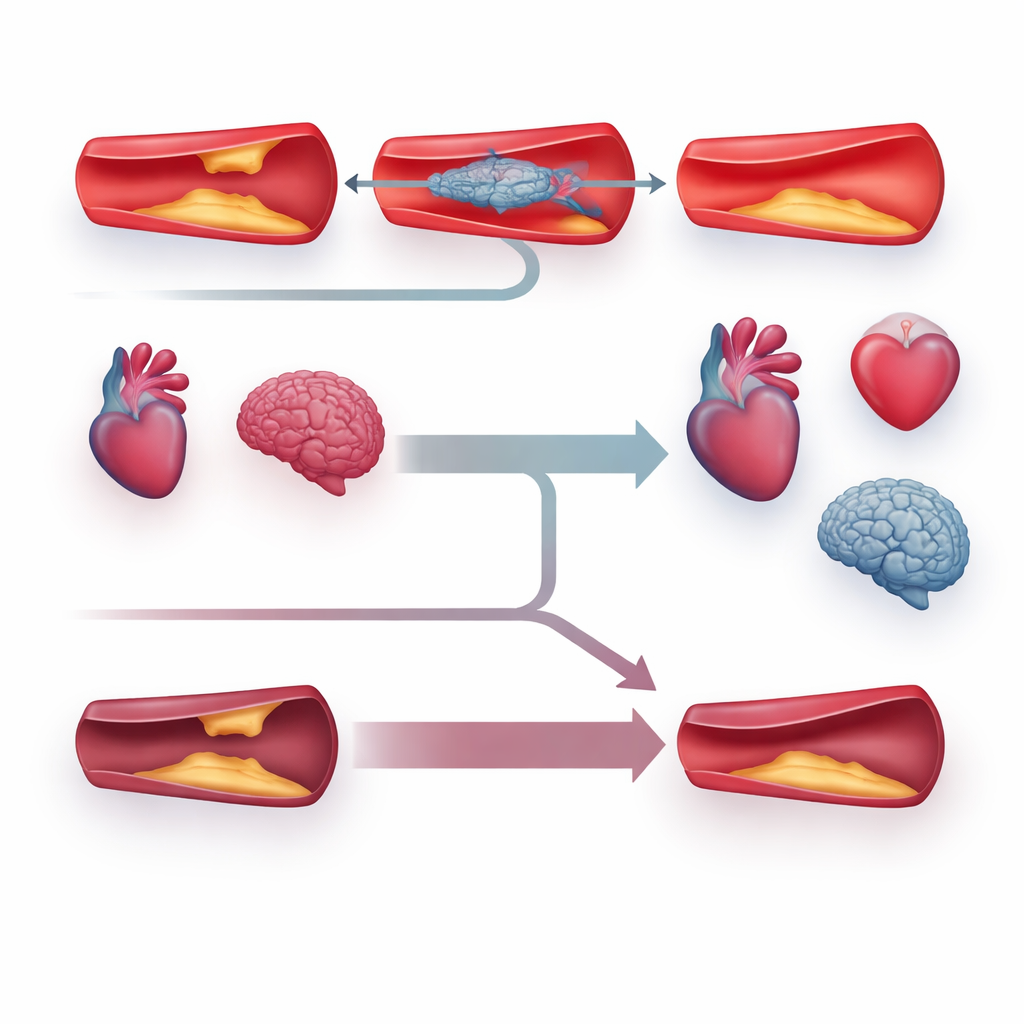
The most revealing insight came when the team split patients into two groups: those who did receive revascularization and those who did not. Among patients whose blocked arteries were opened, women and men had similar long‑term risks of major heart and brain problems or death once other factors were taken into account. In contrast, in the group that did not receive revascularization, women had clearly worse outcomes than men, including more repeat heart attacks and serious combined events. In other words, the survival gap between women and men with NSTEMI was driven largely by differences in how often invasive treatment was used, not by an unchangeable biological destiny.
What this means for patients and doctors
For patients and families, the message is straightforward: women with NSTEMI benefit from guideline‑recommended artery‑opening procedures just as much as men do. When they receive these treatments at similar rates, their long‑term prospects look comparable. The study suggests that underuse or delay of such procedures in women is an important, and avoidable, cause of poorer outcomes. Ensuring that decisions about tests and treatments are based on clinical need rather than sex—while remaining mindful of individual risks—could be a practical way to save lives and reduce disability among women with this common type of heart attack.
Citation: Rao, C., Zhong, Q., Zhou, W. et al. Impact of sex differences on revascularization and long-term clinical outcomes in patients with non-ST-elevation myocardial infarction: a multicentre study from China. Sci Rep 16, 12674 (2026). https://doi.org/10.1038/s41598-026-43210-7
Keywords: non-ST-elevation myocardial infarction, sex differences, revascularization, cardiovascular outcomes, women’s heart health