Clear Sky Science · en
Potency-related effects of smoked cannabis on simulated driving performance: a randomized, controlled crossover trial
Why stronger cannabis and driving matter to everyone
As cannabis products become more widely available, many now contain far higher levels of THC—the main mind‑altering ingredient—than in the past. At the same time, a sizeable number of people report driving within a couple of hours of using cannabis. This study asks a simple but crucial question: does smoking stronger cannabis make people drive worse, even when they are experienced users, and how does that compare with not using cannabis at all?
What the researchers set out to test
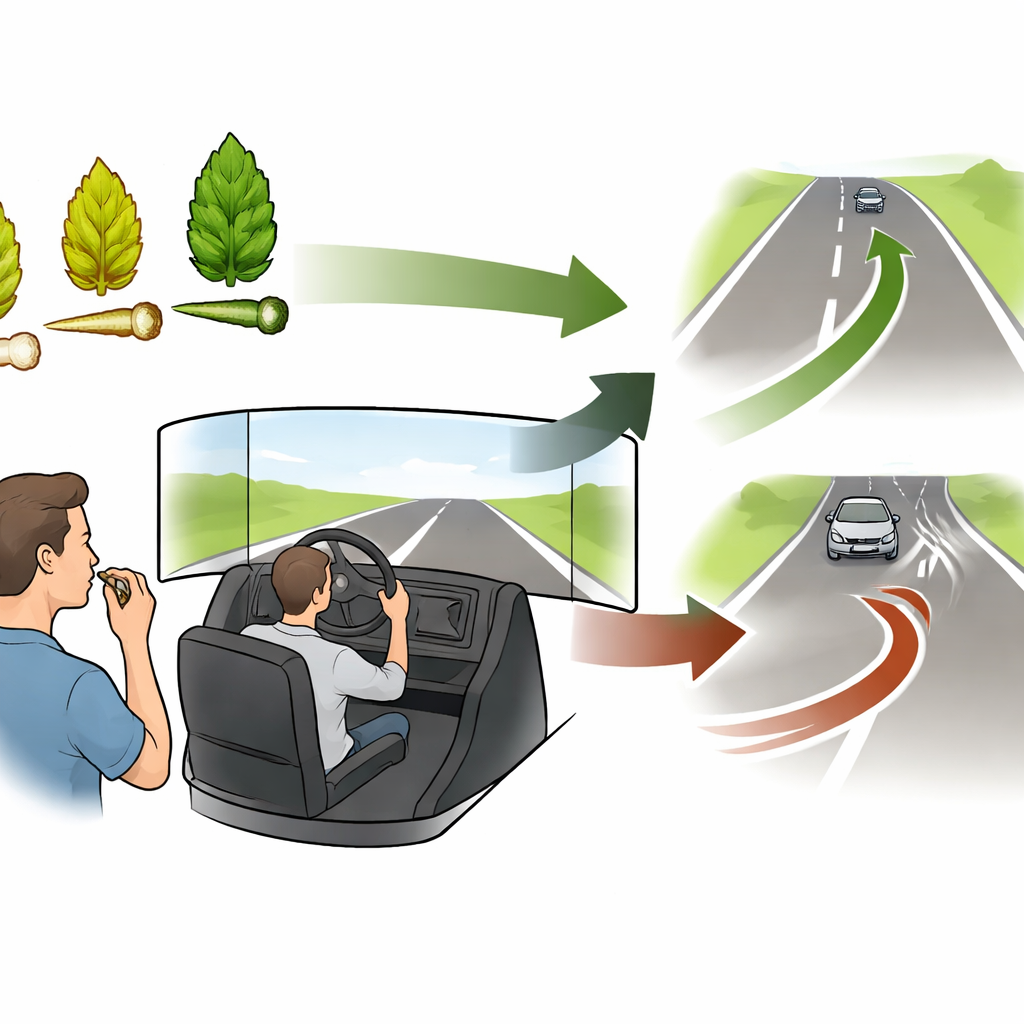
The research team in Toronto designed a tightly controlled experiment using a sophisticated driving simulator that reproduces a car’s controls and a wrap‑around road scene. They recruited adults aged 19 to 45 who used cannabis regularly but did not have a cannabis use disorder, and who held valid driver’s licenses. Each person came to the lab on four separate days and, in random order, smoked either a placebo cannabis cigarette or one with low, medium or high THC strength, up to 22 percent—similar to potent products now sold legally. Neither the participants nor the staff running the tests knew which strength was being used on a given day.
How the study was carried out
Participants smoked a standard cannabis cigarette in a special ventilated room, with the amount they actually consumed estimated by weighing the cigarette before and after. Early in the study they followed a rigid puff‑by‑puff schedule, but this proved hard to tolerate at higher strengths, causing nausea and fainting in some, so the team switched to letting people smoke as they normally would until they felt their usual high. After smoking, each person completed several driving tasks at 30 and 90 minutes. In the main scenarios, they were instructed to keep a steady speed and stay centered in their lane on a rural highway, sometimes while doing an extra mental task of counting backwards to simulate divided attention. In a separate test, they had to react quickly to sudden stop signs, mimicking emergency braking.
What happened to driving after smoking
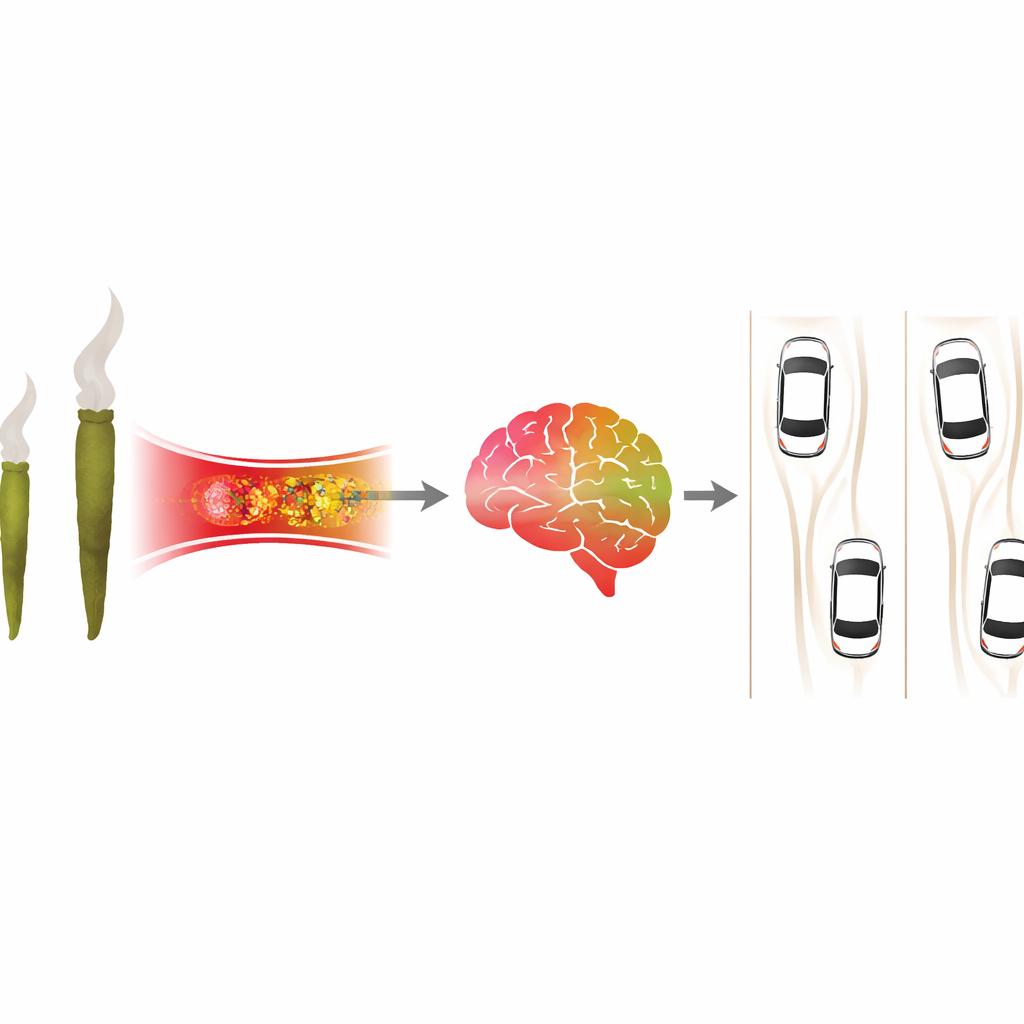
Contrary to the team’s original expectation, average driving speed did not change much with cannabis, regardless of strength. But several other, more subtle measures of performance clearly worsened with stronger products. Drivers’ maximum speeds crept higher with medium and high THC, and their speed became more erratic at the highest strength. Most notably, their ability to hold a steady position in the lane deteriorated under all active cannabis conditions, with the greatest wobble during the high‑potency sessions. The amount of side‑to‑side drifting seen at the highest potency was comparable to what has been reported in drivers with blood‑alcohol levels at or above common legal limits. Reaction times to unexpected stop signs also slowed under medium and high strengths, meaning drivers took longer to hit the brakes when something suddenly appeared ahead.
How people felt and what their blood revealed
The volunteers were not only measurably impaired—they sensed it. When asked to rate their driving skill, their willingness to drive in their current state, and how their driving compared with their usual sober performance, participants gave themselves lower scores after smoking active cannabis, especially at the highest THC level. Blood samples collected throughout the sessions showed that THC and its breakdown products rose sharply after smoking and then declined over several hours. Higher THC concentrations in blood were linked to greater lane drifting and slower reaction times, as well as to worse self‑ratings of driving ability and lower willingness to drive. These patterns held even after accounting for differences in how much cannabis each person smoked.
What this means for real‑world roads
This study suggests that even for regular cannabis users, smoking high‑potency products can significantly impair key aspects of driving: staying in one’s lane, keeping speed under control and reacting quickly to sudden hazards. These impairments were evident within the first 90 minutes after smoking and were closely tied to how much THC was present in the blood. While questions remain about lower‑strength products and how long the risk lasts, the results support strong public‑health messages: driving after using potent cannabis is not safe, and the risks grow as THC levels climb.
Citation: Brands, B., Zaweel, A., Wright, M. et al. Potency-related effects of smoked cannabis on simulated driving performance: a randomized, controlled crossover trial. Sci Rep 16, 12961 (2026). https://doi.org/10.1038/s41598-026-43045-2
Keywords: cannabis and driving, THC potency, driving simulator, road safety, drug-impaired driving