Clear Sky Science · en
DDR2 ameliorates nonalcoholic hepatic steatosis by activating the AMPK/ACC pathway
Why Fatty Liver Disease Matters
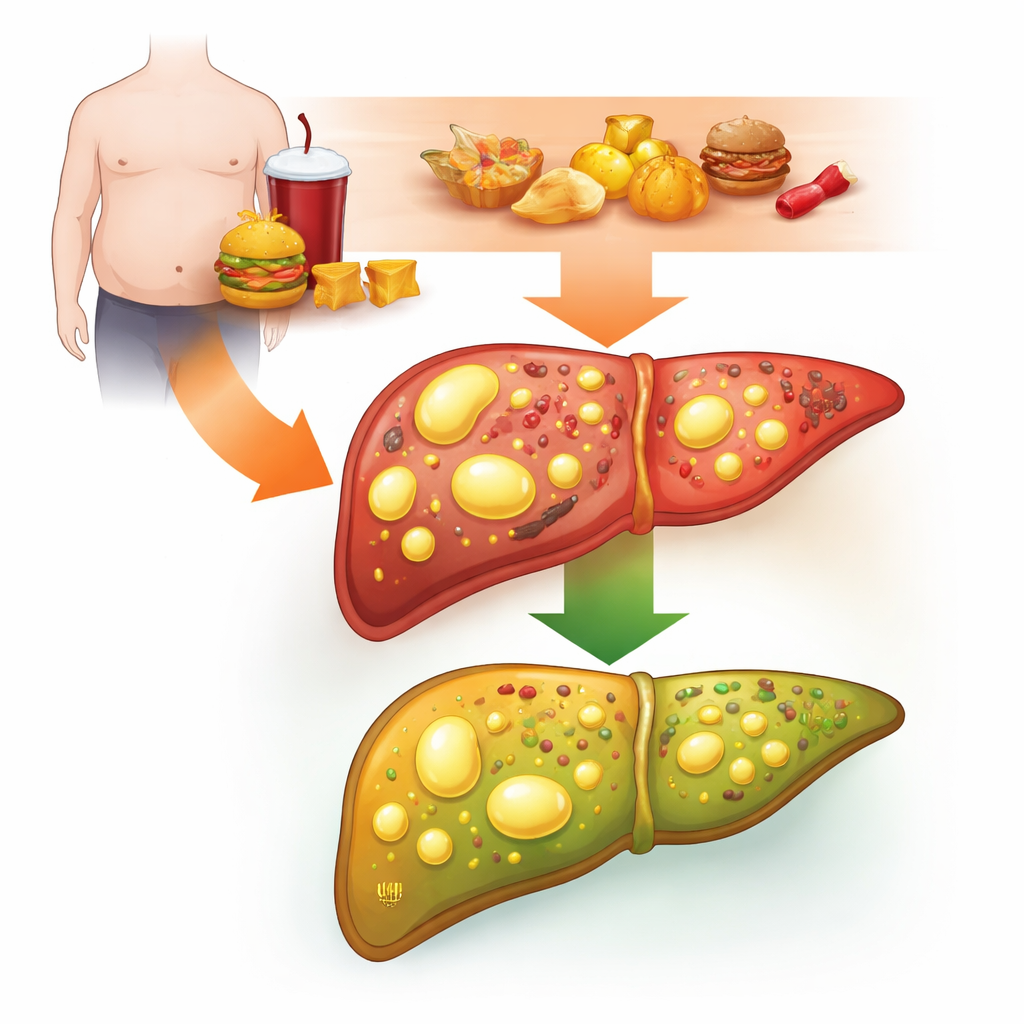
Many people who never drink heavily still develop fatty liver disease, a condition now called metabolic dysfunction-associated steatotic liver disease (MASLD). It is tightly linked to obesity and type 2 diabetes and can silently progress to liver scarring, cancer, and even liver failure. Because most current advice centers on diet and exercise—changes that are hard to maintain—researchers are searching for molecules inside liver cells that could be nudged with medicines to keep fat from piling up. This study explores one such molecule, a little-known cell-surface protein called DDR2, and asks whether turning it on can help protect the liver.
A Little-Known Gatekeeper in Liver Cells
The researchers focused on DDR2, a receptor that usually senses collagen, a major component of the body’s structural framework. DDR2 has been studied in bone growth and tissue scarring, but its role in liver metabolism was unclear. Because MASLD involves both fat overload and remodeling of the liver’s supporting scaffold, the team suspected that DDR2 might sit at a crossroads between the outside environment of the cell and the internal machinery that manages sugar and fat. If DDR2 acted as a gatekeeper, dialing its activity up or down might shift the liver toward either fat storage or fat burning.
What Happens When DDR2 Goes Missing
To see how DDR2 behaves in fatty liver, the scientists examined mice made obese either by genetics or by months on a high-fat diet. In all of these models, DDR2 levels in the liver were noticeably lower than in lean control animals. In dishes of primary mouse liver cells exposed to high sugar and insulin—conditions that mimic the overfed, insulin-resistant state—DDR2 again went down while genes that drive new fat production shot up. When the team deliberately reduced DDR2 in liver cells, the cells stored more fat droplets, activated stress responses inside the endoplasmic reticulum (a protein-processing compartment), and switched on inflammatory signals, all hallmarks of worsening MASLD.
Turning DDR2 Back On to Protect the Liver
The researchers then asked what would happen if they pushed DDR2 activity in the opposite direction. Using engineered viruses to boost DDR2 in mouse liver cells, they saw the accumulation of triglycerides fall and the expression of key fat-building genes drop. In obese db/db mice and in animals fed a high-fat diet, restoring DDR2 in the liver improved the microscopic appearance of the tissue, reduced inflammatory cell infiltration, and lowered levels of stress markers inside cells. Blood triglycerides and blood sugar fell, and the animals handled a surge of injected glucose better, suggesting an overall improvement in metabolic health even though body weight did not change.
An Internal Energy Switch: The AMPK/ACC Pathway
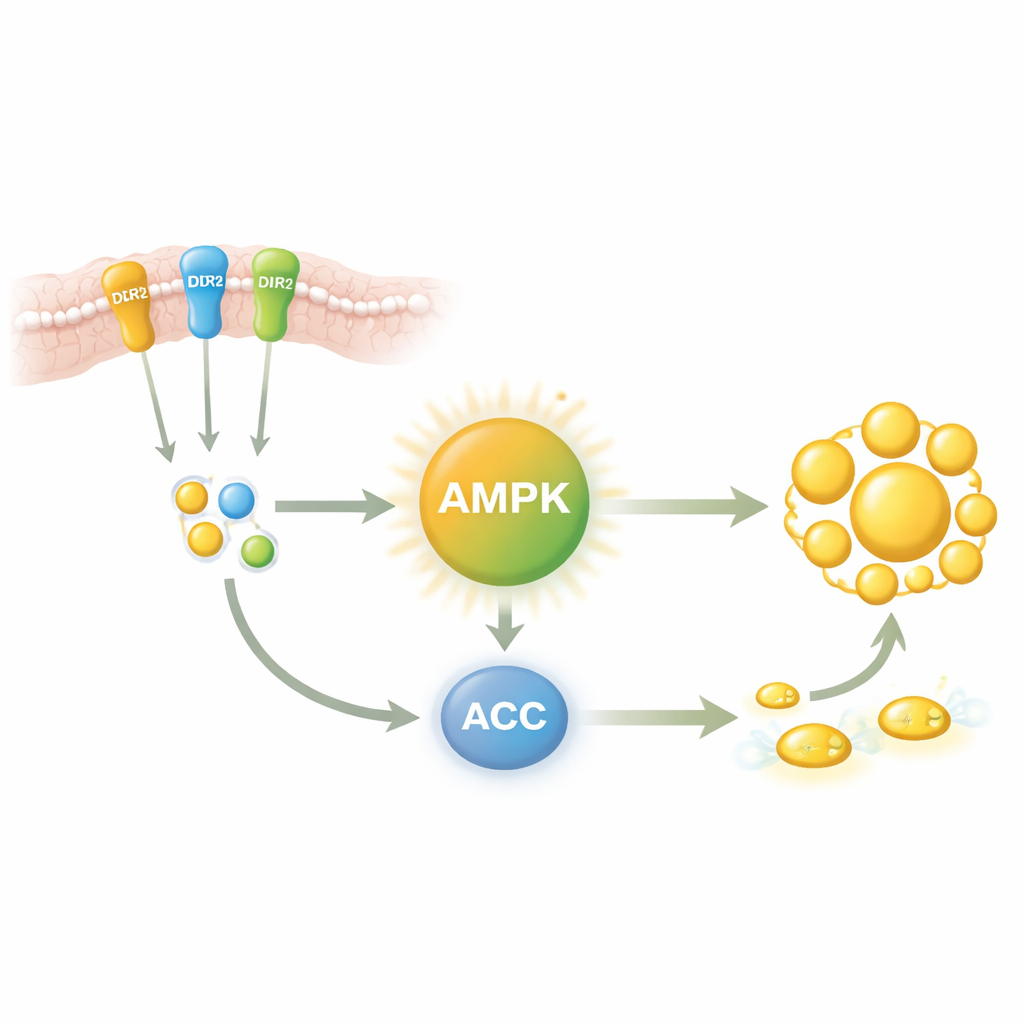
Digging into how DDR2 exerts these benefits, the team homed in on AMPK, a well-known “fuel gauge” enzyme that helps cells decide whether to store energy or burn it. When AMPK is active, it adds a small chemical tag to another enzyme, ACC, which slows down the creation of new fatty acids. Overexpressing DDR2 in liver cells increased the activated forms of both AMPK and ACC while suppressing fat-building genes. Blocking AMPK with a drug erased DDR2’s anti-fat effect, while directly activating AMPK rescued cells from the fat-boosting impact of DDR2 loss. In living mice, higher DDR2 went hand-in-hand with more AMPK and ACC activation, less fat production, and dampened inflammation and cell stress, weaving a consistent story from cells to whole animals.
What This Could Mean for Future Treatments
In simple terms, this work suggests that DDR2 acts like an upstream switch that helps turn on the liver’s own energy-balancing system. When DDR2 levels fall—as they do in fatty liver—AMPK is less active, ACC runs unchecked, and the liver churns out excess fat while becoming stressed and inflamed. Restoring DDR2 reverses much of this, steering the liver toward burning rather than stockpiling fat. Although these findings are in mice and the exact molecular links still need to be mapped and tested in human cells, DDR2 now stands out as a promising target for future drugs aimed at MASLD, potentially offering a way to protect the liver that goes beyond willpower alone.
Citation: Guo, M., Lin, L., Wang, Y. et al. DDR2 ameliorates nonalcoholic hepatic steatosis by activating the AMPK/ACC pathway. Sci Rep 16, 12435 (2026). https://doi.org/10.1038/s41598-026-42992-0
Keywords: fatty liver disease, liver metabolism, DDR2, AMPK pathway, metabolic syndrome