Clear Sky Science · en
Corn silk ameliorates fatty liver disease by modulating the gut microbiota and metabolites in the serum and liver
Why Corn Silk Matters for Liver Health
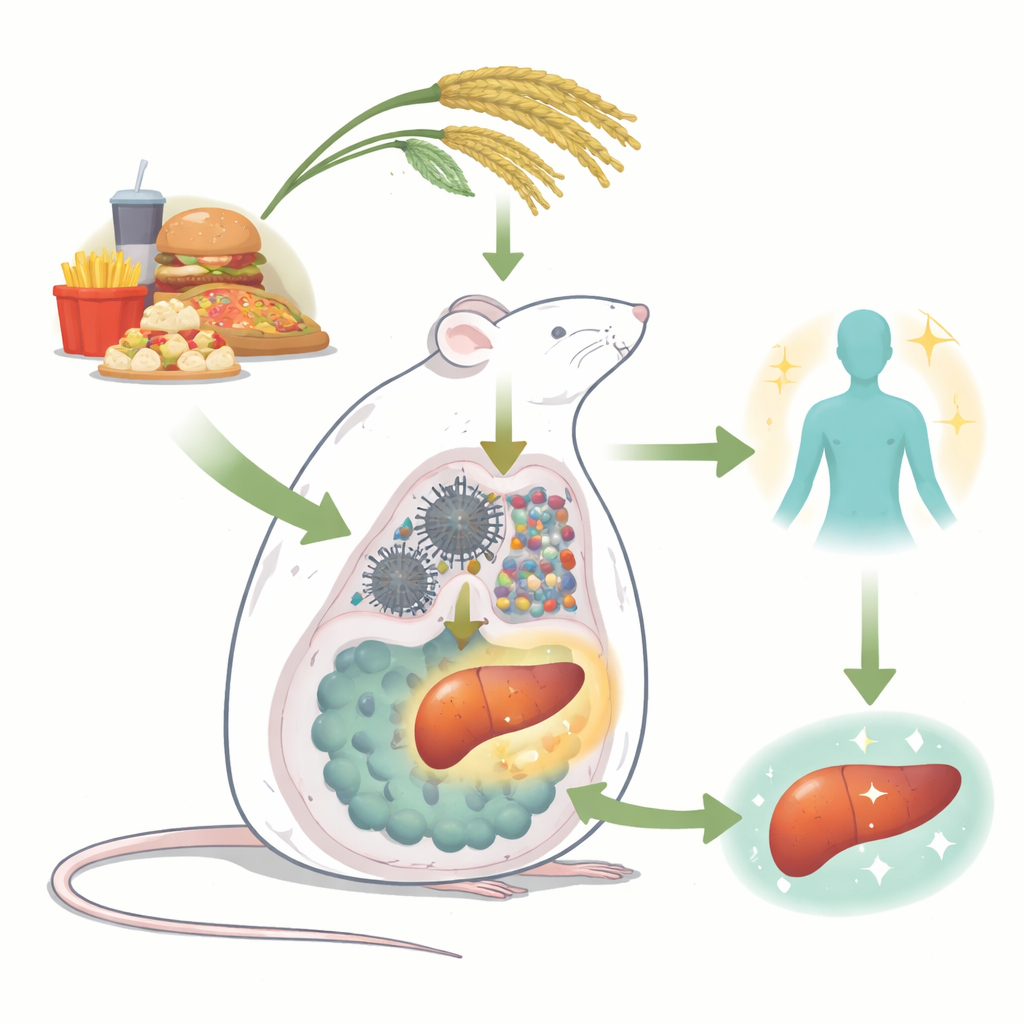
Fatty liver disease is now one of the most common liver problems worldwide, often driven by calorie-dense, high-fat diets. At the same time, many people are interested in gentle, food-based ways to protect their health. This study explores an unexpected ally: corn silk, the long, thread-like strands you usually throw away when shucking corn. Researchers asked whether an extract made from corn silk could help prevent fatty liver disease in mice, and uncovered how it works by teaming up with the gut’s microbes and the body’s tiny chemical messengers.
From Kitchen Scraps to Helpful Extract
Corn silk has a long history in traditional medicine and has recently been recognized as safe for long-term use in food. It is rich in natural compounds such as sugars, plant fibers, flavonoids, and phenolic acids that are known to calm inflammation and support healthy cholesterol levels. In this study, scientists prepared a concentrated water-based extract of corn silk and gave it by mouth to mice that were being fed a high-fat diet designed to trigger fatty liver disease. Over eight weeks, they carefully tracked the animals’ body weight, blood fats, liver condition, and a wide range of chemical signals in the blood and liver, as well as the makeup of the microbes living in the gut.
Less Fatty, Calmer Livers in Overfed Mice
The high-fat diet alone made the mice heavier, raised several blood fats, and filled their livers with large fat droplets—hallmarks of fatty liver disease. Mice that received corn silk extract gained less weight, had lower levels of blood fats such as triglycerides and total cholesterol, and showed reduced signs of inflammation in both blood and liver. When the researchers examined thin slices of liver tissue under the microscope, the untreated high-fat group showed swollen, fat-laden liver cells, while the corn-silk-treated group had noticeably fewer and smaller fat deposits. These changes suggest that the extract helped the liver burn and handle fats more efficiently and prevented the inflammatory “second hit” that can push simple fat buildup toward more serious liver damage.
Gut Bugs as Hidden Middlemen
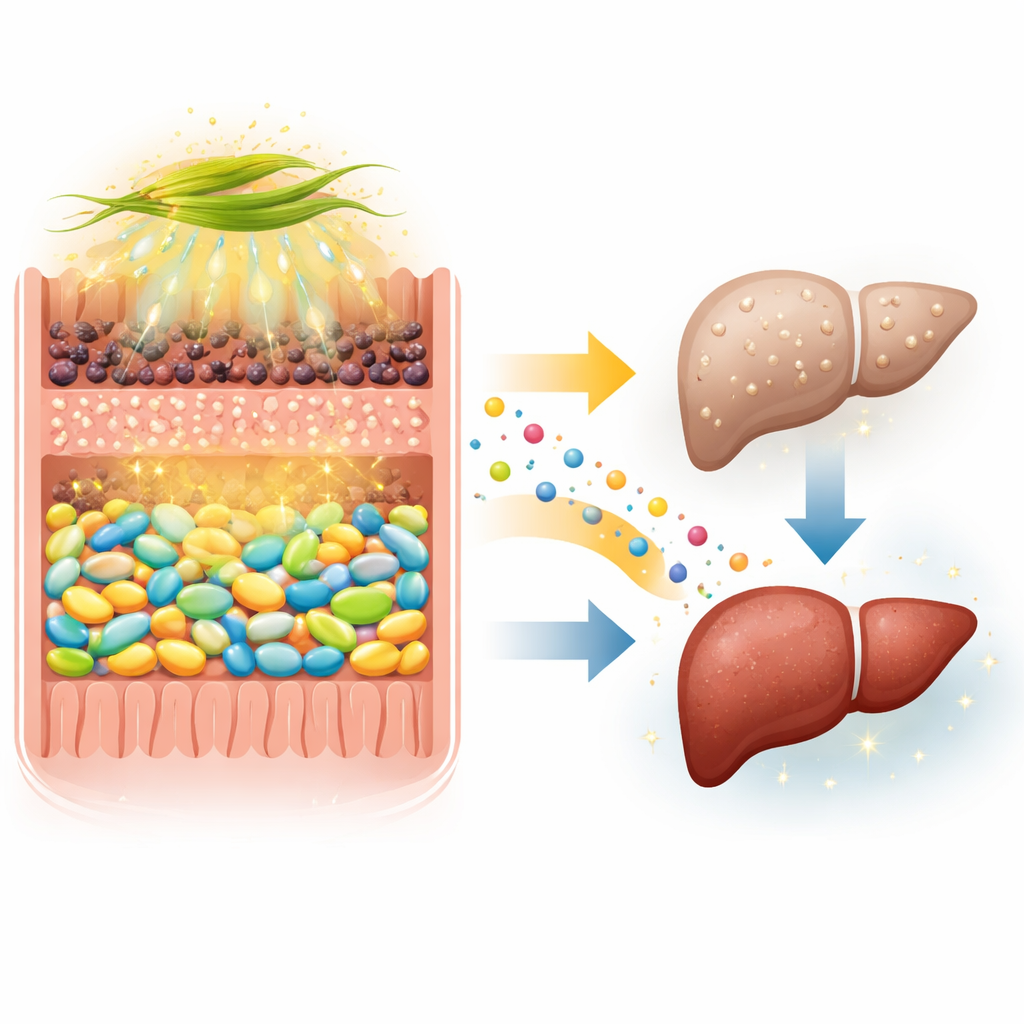
Because the gut and liver are tightly linked, the team next looked at how corn silk reshaped the intestinal ecosystem. A high-fat diet alone reduced the richness of gut microbes and tilted the balance toward groups associated with metabolic problems. Adding corn silk extract partially restored this diversity and, importantly, promoted a particular helpful bacterium called Akkermansia, while keeping several potentially harmful groups in check. Statistical links showed that higher levels of Akkermansia went hand in hand with lower body weight, less liver inflammation, and better blood fat levels. This pattern fits a “competing guilds” picture, in which nutrients from corn silk act like a selective fertilizer that nourishes friendly microbes, which in turn crowd out troublemakers and send healthier signals to the liver.
Chemical Signals that Switch the Liver Back on Track
To understand those signals, the researchers performed broad surveys of small molecules in the blood and liver. Corn silk extract changed networks of sugars, amino acids, and other metabolites, especially pathways involved in processing certain plant-related sugars and making bile acids, the detergents and messengers built from cholesterol. One key finding was a shift in taurine, a small sulfur-containing molecule that helps the body form bile acids and activate a receptor known as FXR. When this signaling route is engaged, the liver tends to make fewer new fats and burns more of the ones it already has. At the same time, corn silk extract boosted compounds linked to the body’s main antioxidant defense system, based on glutathione. This suggests that the extract not only improves fat handling but also helps the liver cope with the oxidative stress that often accompanies fatty liver disease.
What This Could Mean for Everyday Life
Taken together, the results show that corn silk extract can ease diet-induced fatty liver disease in mice by working along a “gut microbe–metabolite–liver” axis. It nurtures helpful gut bacteria, steers chemical pathways that govern bile acids and antioxidants, and ultimately lightens the fat load and calming inflammation in the liver. While these findings still need to be confirmed in people, they support the idea that parts of common foods—even those we usually discard—could be developed into functional ingredients or prebiotic supplements to help protect the liver in an increasingly high-fat world.
Citation: Ding, L., Ren, S., Zang, C. et al. Corn silk ameliorates fatty liver disease by modulating the gut microbiota and metabolites in the serum and liver. Sci Rep 16, 12668 (2026). https://doi.org/10.1038/s41598-026-42966-2
Keywords: fatty liver disease, corn silk, gut microbiome, bile acids, functional foods