Clear Sky Science · en
An integrated multi-criteria decision framework for outlet mall location selection using fuzzy DEMATEL–DANP–VIKOR
Why picking the right outlet site matters
When a company builds a new outlet mall, it is not just adding more shops; it is reshaping how people spend their free time, how neighborhoods grow, and how money flows through a city. Choosing the wrong spot can leave a shiny new complex half empty, while a well chosen site can become a lively hub for shopping, dining, and leisure. This study looks at how to make that choice in a more careful and transparent way, using the case of a new outlet mall planned for Tainan in southern Taiwan.
From simple maps to richer city stories
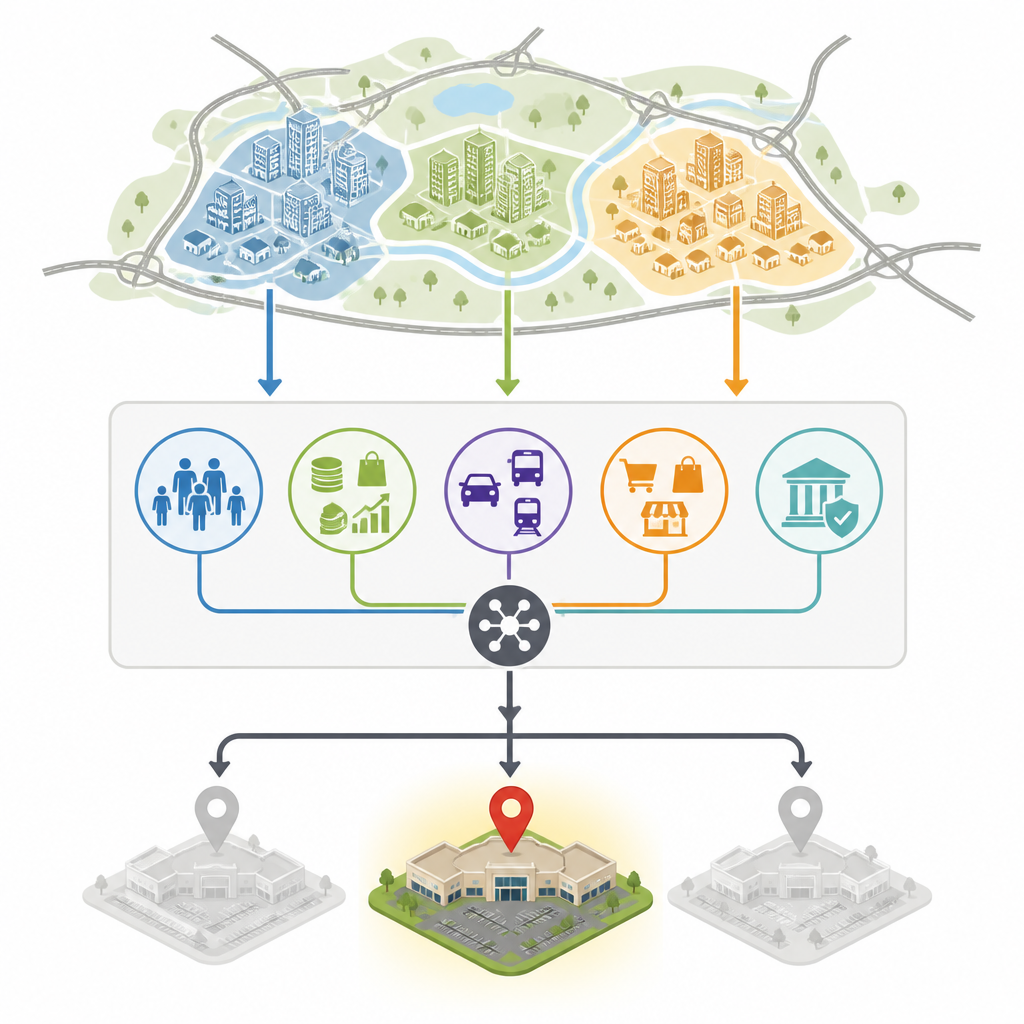
For much of the last century, retailers relied on rather simple ideas to decide where to build stores, such as how far customers would travel, how much rent cost, and how many people lived nearby. Those ideas worked reasonably well when shopping mostly meant buying goods close to home. Today, however, large outlet malls are more like day trip destinations that mix shopping with entertainment and food. They compete across whole regions, and they sit inside tangled webs of roads, trains, rival malls, local rules, and shifting consumer tastes. The authors argue that older location rules, which treat each factor as separate and unchanging, are no longer enough to capture this complexity.
A broader lens on what makes a place competitive
To widen the view, the study leans on a popular framework from business strategy that describes why some regions become more competitive than others. It highlights five groups of influences: basic resources such as land, labor, and capital; the strength and makeup of local demand; how firms position themselves and compete; the presence of related services like restaurants and entertainment; and the role of government in shaping transport links, planning, and incentives. Rather than treating these as isolated checkboxes, the framework sees them as interacting parts of a living system, where a change in one area can ripple across the rest.
Turning expert judgment into a structured comparison
The researchers then translate this broad picture into a step by step decision tool. First, they work with an expert panel from academia, real estate, retail, and government to narrow a long list of possible indicators down to 17 practical ones, from site visibility and land area to purchasing power, brand strength, and tax breaks. Next, they use a technique that asks experts how strongly each factor influences the others and turns these answers into a network map of causes and effects. This map reveals which elements act as drivers, such as labor conditions, food and entertainment offerings, and government incentives, and which respond to changes, such as population and traffic conditions.
Ranking three real world choices
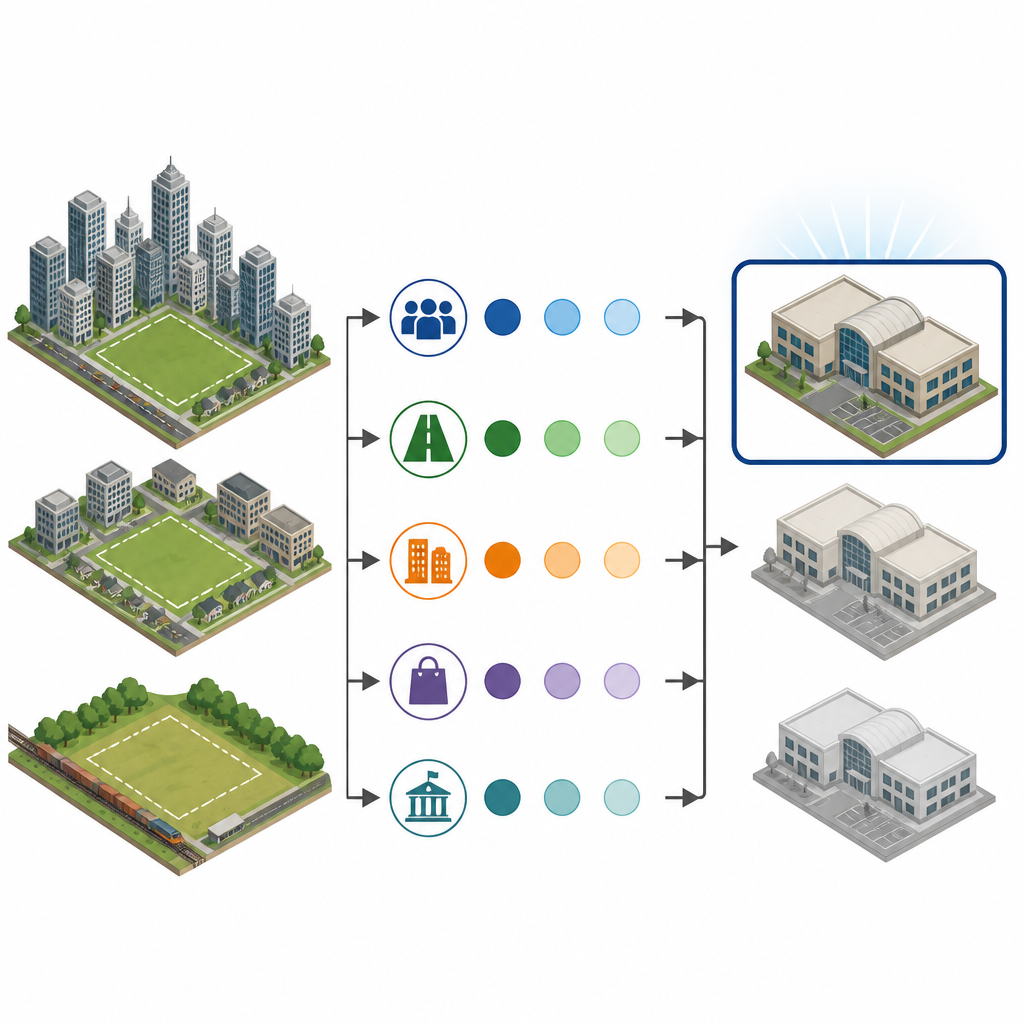
With this network in hand, the team calculates how much weight each of the 17 indicators should carry in judging actual sites. They then ask the same experts to rate three candidate districts in Tainan: a dense, commercially active area; a mid density district; and a more spacious district that hosts the city’s high speed rail station. Using a method designed to balance overall performance against worst case weaknesses, they combine the ratings with the indicator weights to produce a ranking. The rail linked district, with its ample land, strong transport connections, and policy support, comes out on top. The dense urban district scores well on spending power and population, but loses ground due to land scarcity, higher costs, and tougher competition. The third district places last, held back by weaker market activity and access.
What this means for cities and investors
For readers outside the technical world of decision models, the main message is straightforward: choosing where to place a large outlet mall works best when it is treated as a structured conversation rather than a guess or a back of the envelope calculation. By linking big picture ideas about regional strength with a clear set of indicators and a transparent way to weigh trade offs, the framework helps developers and public officials see not only which site currently looks best, but also how that answer might shift if they care more about demand, transport, or long term competition. In doing so, it provides a practical roadmap for planning outlet malls that better serve shoppers, businesses, and the surrounding city.
Citation: Chiang, MH., Huang, BH., Wu, CR. et al. An integrated multi-criteria decision framework for outlet mall location selection using fuzzy DEMATEL–DANP–VIKOR. Sci Rep 16, 15532 (2026). https://doi.org/10.1038/s41598-026-42895-0
Keywords: outlet mall location, multi criteria decision making, retail site selection, Porter diamond model, urban planning