Clear Sky Science · en
Research on hydraulic shock suppression of crawler crane slewing mechanism based on hydraulic simulation
Why Smoother Crane Motion Matters
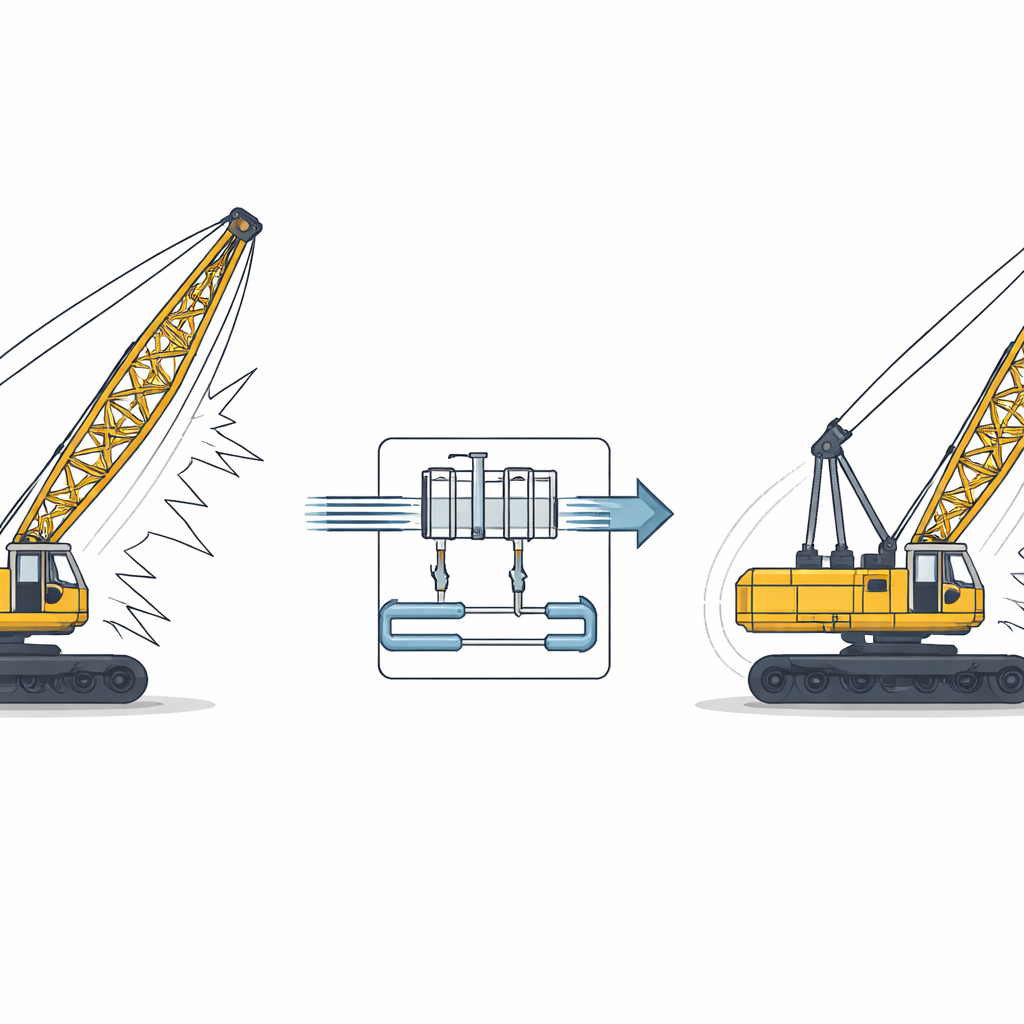
On a construction site, a crawler crane must swing heavy loads with great precision while keeping workers and equipment safe. Yet when the crane’s upper structure starts or stops rotating suddenly, the hydraulic system that drives this motion can experience violent pressure spikes. These brief but intense jolts shake the cab, rattle the boom, and shorten the machine’s working life. This study explores how engineers can tame those hidden shocks inside the hydraulic pipes so that a massive crane behaves with the smoothness of a well-tuned machine.
Hidden Jolts Inside Heavy Machines
Crawler cranes rely on hydraulic motors and valves to rotate their massive upper structures, a motion known as slewing. When the operator commands a rapid start or sudden stop, the large rotating mass resists the change in motion, creating sharp pressure surges in the oil lines. These surges, or hydraulic shocks, travel through steel and oil alike, appearing as strong vibrations in the cab and boom. Over time, they can fatigue structural parts, disturb precise lifting operations, increase noise, and raise maintenance costs. The problem is especially severe in large cranes with heavy booms and counterweights, where the rotational inertia is far greater than in smaller machines.
Searching for a Better Hydraulic Layout
To tackle this issue, the researchers focused on the crane’s slewing hydraulic circuit—the network of pumps, valves, and lines that feeds the slewing motor. First they analyzed a conventional system using computer simulations to see how pressure behaved under different conditions. They explored eight working scenarios, combining light and heavy loads with flat ground and a modest slope, and simulated rapid starts and stops lasting half a second. In many cases, the hydraulic shock exceeded levels that could be considered acceptable, corresponding to the kind of harsh shaking operators report in real machines. This baseline showed clearly that the traditional design left the crane vulnerable to strong internal hammering during everyday maneuvers.
Key Design Tweaks for Gentler Motion
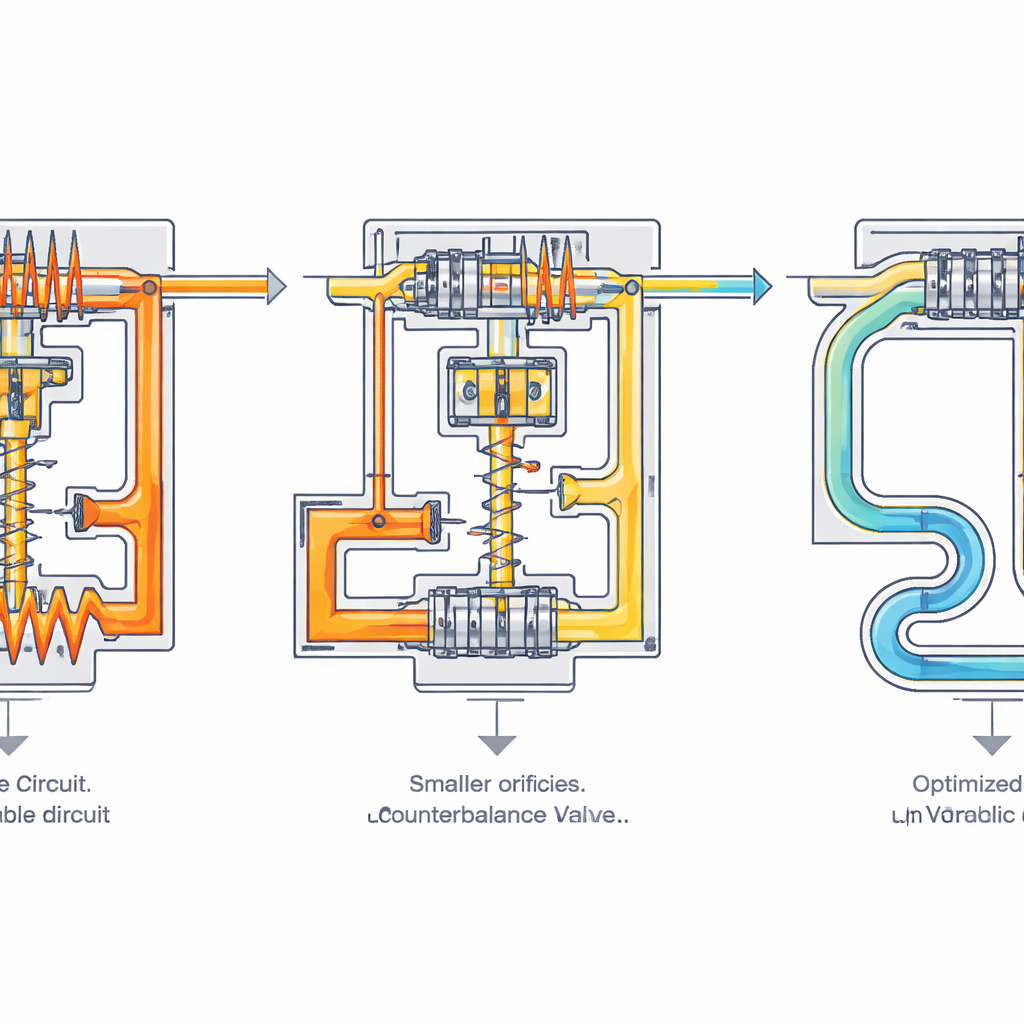
The team then proposed a set of targeted changes to the hydraulic layout. One change involved how the main slewing valve behaves when the operator’s lever is in the neutral position. In the old design, the valve allowed the motor and pump to relax and unload, which meant that every new start had to rebuild pressure suddenly, creating a sharp jolt. In the revised design, the valve keeps the oil trapped and the motor locked, so the system is already partly pressurized and better able to cushion motion when slewing begins. A second change reduced the size of a small opening that meters the oil flow; this made the pressure rise more gradually instead of spiking. The engineers also replaced simple pressure-limiting devices with counterbalance valves that adjust their opening smoothly according to load, and they added make‑up valves that quickly refill any local voids in the oil circuit, preventing the formation of damaging low-pressure pockets.
From Computer Screen to Real Crane
To see how these tweaks work together, the researchers built a detailed virtual model of the hydraulic circuit and linked it to a three-dimensional mechanical model of a 750‑ton crawler crane. This combined simulation allowed them to watch how pressures in the hydraulic lines changed as the full crane started and stopped slewing under different loads and slopes. The optimized system reduced the calculated hydraulic shock by roughly half across the eight tested conditions. To confirm that the virtual results reflected reality, the team then built and installed the improved circuit on an actual crane, equipped it with sensors, and repeated the tests. The measured pressure peaks closely matched the simulated ones, with agreement better than 90 percent, lending confidence that the model captured the essential behavior of the machine.
What This Means for Safer Construction Sites
In everyday terms, the study shows that by rethinking how valves are arranged and how oil is guided through a crane’s slewing system, engineers can greatly soften the internal hits that occur during rapid starts and stops. The improved design cuts hydraulic shock roughly in half, which translates into less shaking in the cab, smoother control of suspended loads, and reduced wear on critical components. While the authors note that further work is needed to fully understand long-term and more complex effects, their results point the way toward quieter, safer, and more durable heavy cranes—and, by extension, more reliable lifting operations on construction sites around the world.
Citation: Wei, Y., Gu, Y., Zhang, Y. et al. Research on hydraulic shock suppression of crawler crane slewing mechanism based on hydraulic simulation. Sci Rep 16, 12533 (2026). https://doi.org/10.1038/s41598-026-42887-0
Keywords: crawler crane, hydraulic shock, slewing mechanism, vibration reduction, hydraulic simulation