Clear Sky Science · en
Genetic variants and serum biomarkers of CXCL8, MAP3K7, LTA/TNF, EXOC3L1, PROCR, and TRAF2 in Age-Related macular degeneration: associations with disease risk and therapeutic response
Why this eye disease story matters
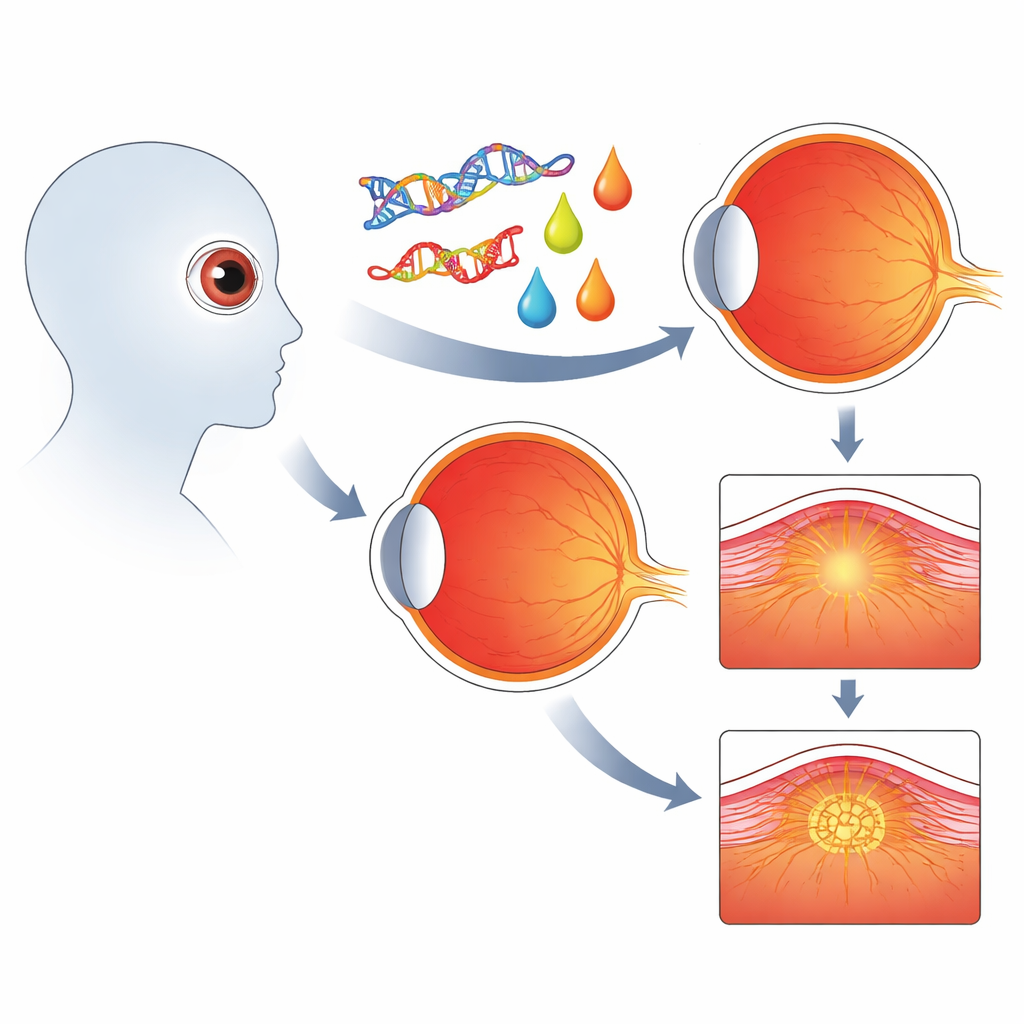
As people live longer, more of us face age-related macular degeneration (AMD), a condition that gradually robs the sharp, central vision needed for reading, driving, and recognizing faces. Doctors can slow one advanced form of AMD with injections that block a growth signal for new blood vessels, yet many patients do not respond as well as hoped. This study asks a two-part question that matters to patients and families: which inherited differences in our genes raise or lower the risk of AMD, and can the same differences help predict who will benefit most from current treatments?
Looking beyond the usual suspect genes
Earlier research firmly linked AMD to genes involved in the body’s complement system, a kind of molecular cleanup and defense crew. But those known genes do not fully explain why some people develop AMD and others do not. The authors turned to a different set of genes tied to inflammation, blood vessel growth, cell stress, and the health of the retina’s support cells. They focused on six genes—CXCL8, MAP3K7, LTA/TNF, EXOC3L1, PROCR, and TRAF2—and on small, common DNA changes within them called single-nucleotide variants. They also measured the levels of the corresponding proteins in the bloodstream to see whether gene differences translated into measurable changes in the body.
Who was studied and what was measured
The team examined 946 people treated at a university eye clinic in Lithuania. Participants were grouped into those without AMD, those with early signs of the disease, and those with the advanced “wet” or exudative form, which involves fragile new blood vessels leaking beneath the retina. All participants had detailed eye exams and imaging. For each person, the researchers analyzed DNA from a blood sample to determine which version of each selected gene they carried. In a subset, they also measured blood levels of the six proteins. Among patients with exudative AMD, they tracked vision and retinal thickness over several months of anti-VEGF injection therapy and classified eyes as responders or non-responders.
A protective gene signal and a hint of added risk
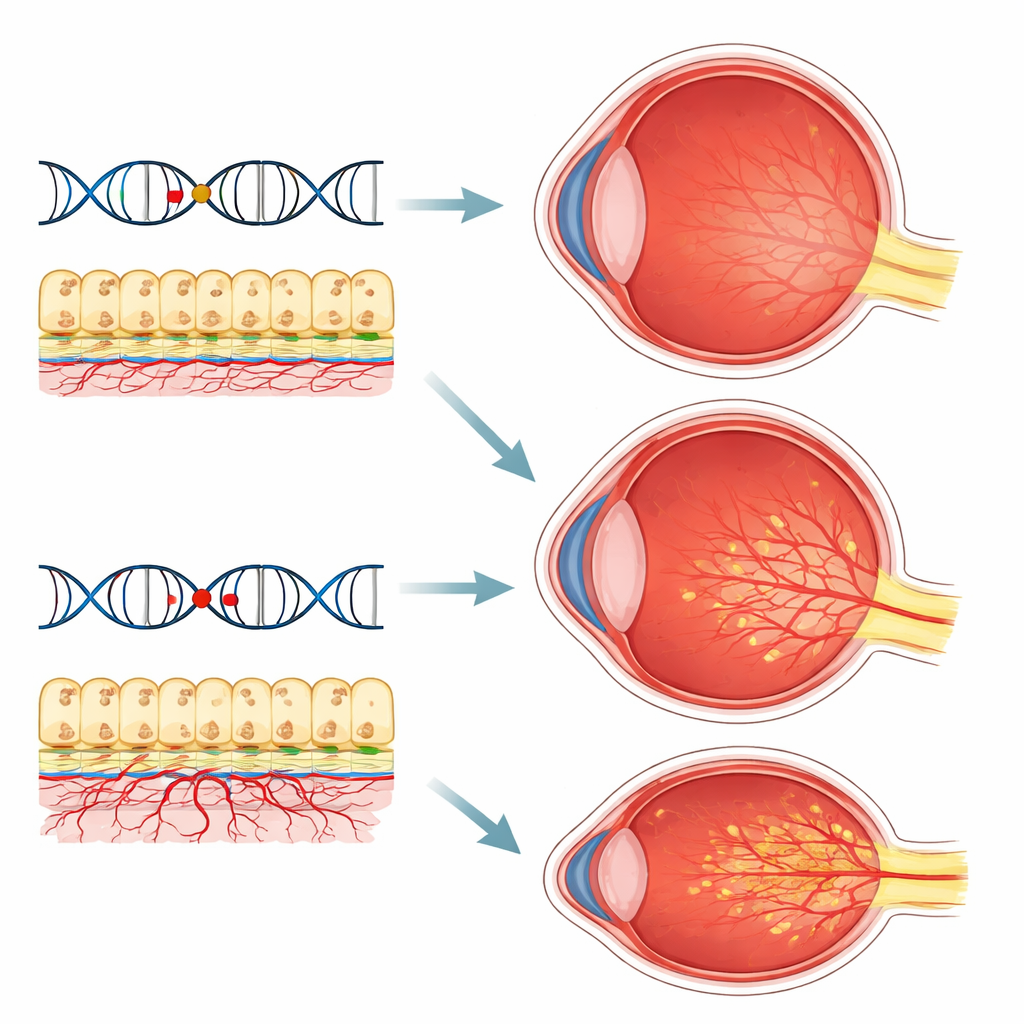
The clearest genetic pattern emerged in the EXOC3L1 gene, which helps control the movement of packets of material inside cells—an essential process for the health of retinal support cells. One particular version of this gene, defined by the “G” form of the tested variant, was noticeably less common in people with either early or exudative AMD than in those without the disease. Statistical modeling suggested that carrying this G variant cut the odds of having AMD by roughly half or more, in both men and women, supporting a protective role. In contrast, a variant in the CXCL8 gene—better known for making the immune signal IL-8—showed a tendency to increase the odds of having exudative AMD, especially in certain genetic comparison models and more clearly in women, although some of these links weakened after very strict correction for multiple tests.
Blood markers and treatment response
When the team looked at protein levels in the blood, most of the tested markers, including CXCL8, MAP3K7, LTA/TNF, EXOC3L1, and TRAF2, did not differ meaningfully between people with and without AMD. One exception was PROCR, a gene active in the cells lining blood vessels. People with exudative AMD had higher levels of the PROCR protein than control participants, and this was especially true for those with a specific PROCR genotype. This pattern supports the idea that subtle problems in blood vessel regulation contribute to the leaky, fragile vessels seen in wet AMD. However, none of the tested genetic variants or protein levels reliably separated patients who responded well to anti-VEGF injections from those who did not, at least in this study’s sample size.
What this means for patients and future care
Taken together, the results strengthen the view that AMD is driven by several overlapping biological routes—chronic inflammation, disturbed blood flow, and stressed retinal support cells—rather than by a single “bad” gene. A variant in EXOC3L1 appears to offer some natural protection, while CXCL8 and PROCR may tip the balance toward harmful vessel growth in the eye. Today, these findings will not change how a patient is treated in the clinic, but they push the field toward a future in which a simple blood test or genetic panel could help identify who is at highest risk of vision loss and who might benefit from new, more tailored treatments that go beyond current anti-VEGF drugs.
Citation: Cebatoriene, D., Vilkeviciute, A., Duseikaite-Vidike, M. et al. Genetic variants and serum biomarkers of CXCL8, MAP3K7, LTA/TNF, EXOC3L1, PROCR, and TRAF2 in Age-Related macular degeneration: associations with disease risk and therapeutic response. Sci Rep 16, 13793 (2026). https://doi.org/10.1038/s41598-026-42838-9
Keywords: age-related macular degeneration, genetic variants, retinal blood vessels, inflammation, personalized eye treatment