Clear Sky Science · en
From chain length to cell death: mechanistic basis for ROS-mediated apoptosis induced by saturated fatty acids
Why Fatty Acids Can Help Target Cancer Cells
Fats are often painted as dietary villains, but certain fat-like molecules can act as precision tools inside our bodies. This study explores a family of such molecules called fatty acid ethanolamides and asks a surprisingly simple question with big implications: does the length of their carbon chain determine how well they can kill cancer cells while sparing healthy ones? By carefully tuning chain length, the researchers show how these lipids can be engineered to trigger controlled cell death in prostate cancer cells, hinting at new ways to design smarter cancer treatments and drug carriers.
Building Designer Fat Molecules
The team synthesized a series of closely related molecules by attaching an ethanolamine “head” to saturated fatty acid “tails” of different lengths, from short (8 carbons) to long (18 carbons). This created a stepwise set of fatty acid ethanolamides with gradually changing properties. They then carried out a broad physical and chemical characterization, measuring how easily each compound dissolved in water, how oily or hydrophobic it was, how it behaved at surfaces, and how it flowed as a liquid. These tests revealed that shorter chains were more water-loving and easier to dissolve, while longer chains became more oil-like, formed tighter structures, and led to thicker, more viscous solutions. In other words, simply adding carbons to the tail systematically reshaped how each molecule behaved in mixed water–fat environments.
How Chain Length Shapes Cell Death
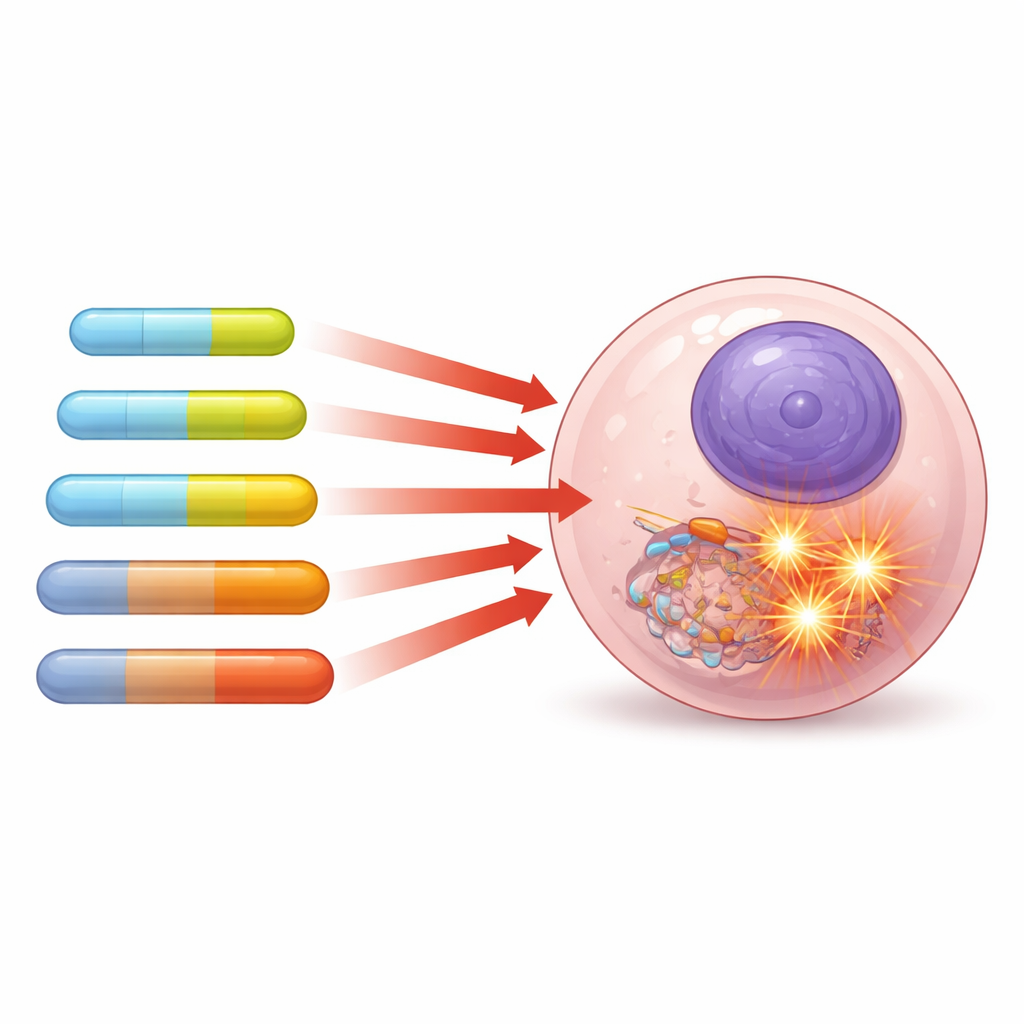
Next, the researchers tested how these tailored lipids affected three human cancer cell lines, focusing on prostate cancer cells (PC-3), which turned out to be the most sensitive. Short-chain members barely harmed cells, but as the tails lengthened, the compounds became increasingly toxic to PC-3 cells. A medium-length molecule based on a 12-carbon fatty acid showed a distinctive pattern: it strongly boosted reactive oxygen species—highly reactive byproducts of cell metabolism—disrupted the electrical balance across mitochondria (the cell’s powerhouses), and triggered marked apoptosis, a form of programmed cell death. Even longer chains (14 to 18 carbons) were more hydrophobic and also induced strong apoptosis, sometimes through oxygen-dependent damage, sometimes through more direct effects on cell membranes and mitochondria. Importantly, these same compounds caused very little rupture of red blood cells, suggesting they can be potent against tumor cells yet gentle on normal blood cells.
Inside the Cell: Stress, Power Failure, and DNA Breakdown
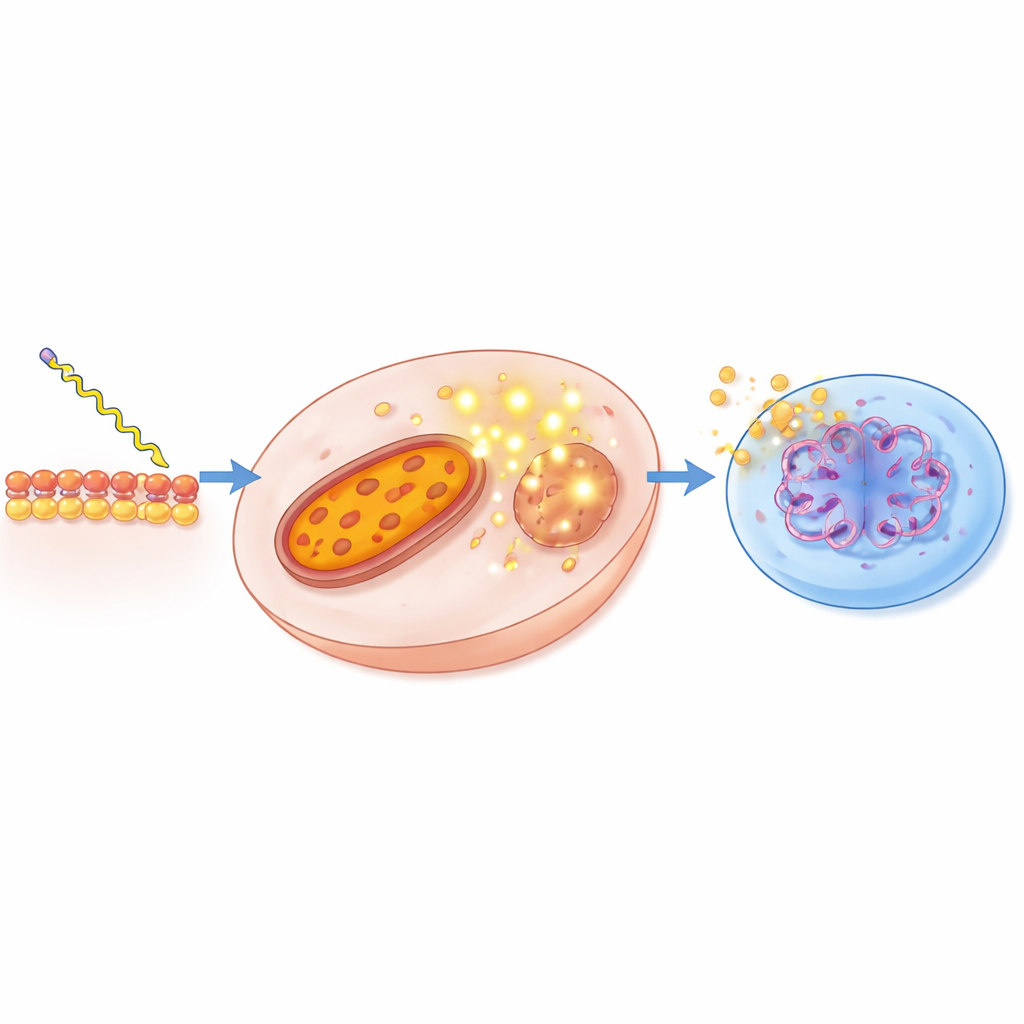
To understand what was happening inside the cancer cells, the team used fluorescent dyes and flow cytometry to follow key steps in the death process. They observed that medium and long-chain compounds caused the mitochondrial membrane potential to collapse, a sign that the cell’s energy machinery was failing. At the same time, reactive oxygen species surged, especially for the 12-carbon and 18-carbon molecules. Under the microscope, treated PC-3 cells showed condensed and fragmented nuclear material, and DNA gel tests revealed the characteristic “ladder” pattern of apoptosis. Flow-based assays further confirmed that most dying cells followed the programmed cell death route rather than bursting open in uncontrolled necrosis. Together, these pieces build a coherent story: tuned fatty acid ethanolamides enter cancer cells, disturb mitochondria, drive oxidative stress, and culminate in clean, programmed self-destruction.
Talking to Cell Receptors
The study also explored how these lipids might communicate with known signaling hubs. Using computer-based molecular docking, the researchers simulated how each compound fits into the binding pockets of CB1 and CB2 cannabinoid receptors, proteins already known to respond to fatty signaling molecules. Medium and long-chain ethanolamides bound more tightly than short ones, forming stabilizing contacts inside the receptor. While these simulations do not prove cause and effect, they support the idea that the same structural features that promote mitochondrial disruption and oxidative stress may also make the molecules better suited to engage these receptors, adding a receptor-mediated layer to their anticancer actions.
Turning Chain Length into a Design Knob
To integrate the many measurements, the team used a statistical method that identifies patterns across datasets. This analysis showed that a single factor—the length of the fatty tail—explained most of the variation in solubility, surface behavior, oxidative stress, and cell death. Shorter chains favored solubility and gentle behavior, medium chains like the 12-carbon compound struck a balance that maximized mitochondrial targeting and apoptosis with controlled stress, and long chains pushed further toward strong, multi-pronged cytotoxicity. From a practical standpoint, this means chain length can be treated as a design knob for customizing these lipids as prodrugs and functional ingredients in drug delivery systems.
What This Means for Future Therapies
In everyday terms, this study shows that small structural tweaks to fat-like molecules can strongly influence whether they quietly coexist with cells or push cancer cells toward suicide. The standout 12-carbon ethanolamide acts as a controlled trigger, producing enough internal stress to kill prostate cancer cells while retaining favorable physical properties and limited off-target damage. Longer chains can act as even more forceful killers, possibly serving as prodrugs that are activated inside tumors. Although the work is still at the cell-culture stage, it lays a mechanistic foundation for designing next-generation lipid-based medicines in which the length of a fatty tail helps determine where the compound goes, how it behaves, and how powerfully it can switch off dangerous cells.
Citation: Salehi, F., Jamali, T. & Kavoosi, G. From chain length to cell death: mechanistic basis for ROS-mediated apoptosis induced by saturated fatty acids. Sci Rep 16, 13748 (2026). https://doi.org/10.1038/s41598-026-42822-3
Keywords: fatty acid ethanolamides, prostate cancer, oxidative stress, mitochondria, apoptosis