Clear Sky Science · en
Water quality index and human health risk analysis in urban drinking water sources
Why the Water from Your Tap Matters
For many city dwellers, safe drinking water comes down to a simple act: turning on the tap. Yet what flows out can quietly carry invisible threats that build up over years. This study looks at drinking water in two growing towns in Pakistan—Hafizabad and Pindi Bhattian—and asks a basic but vital question: is the water people rely on every day actually safe? By testing dozens of samples and linking the results to health risks, the researchers show how problems in underground wells, treatment plants, and aging pipes can add up to real dangers, especially for children.
Where the Towns Get Their Water
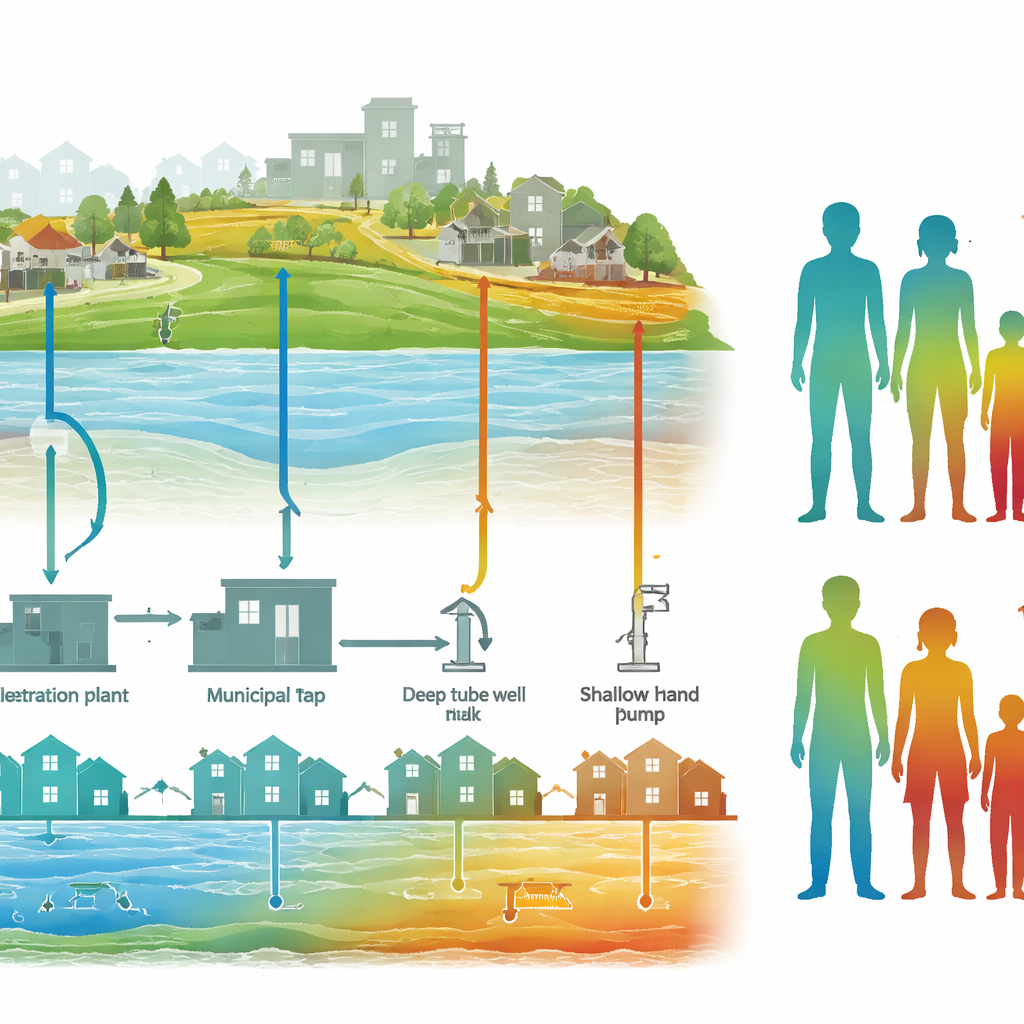
The study focused on four common sources of drinking water: filtration plants that provide basic treatment, deep tube wells that pump groundwater, shallow bore wells often used privately, and municipal tap water delivered through city pipes. In total, 48 samples were collected from both towns, each tested several times to ensure reliable results. The team measured simple physical traits like temperature and cloudiness, chemical ingredients such as dissolved salts and hardness, and biological signs of contamination, especially E. coli, a bacterium that signals fecal pollution. They then compared everything to guidelines from the World Health Organization to see how far the real water strayed from what is considered safe.
What the Tests Revealed in the Water
Some basic measures looked reassuring at first glance. The acidity level (pH) stayed within the acceptable range, and dissolved oxygen, total dissolved solids, and hardness were mostly within limits. But other clues told a more troubling story. Water in many sources was unusually warm, cloudy, and highly conductive to electricity—signs of heavy loads of dissolved ions and suspended particles. Cloudy water, in particular, can shield germs from disinfection. The biggest red flags were biological and metallic: E. coli was repeatedly detected in tap water, indicating that sewage or soil bacteria were finding their way into the distribution system, likely through old, corroded pipes laid close to sewer lines. At the same time, arsenic—a toxic element linked to cancer—was found above international and national limits in tap water from Hafizabad and above World Health Organization guidelines in several sources in both towns.
Turning Complex Data into a Simple Picture
To make sense of many different measurements at once, the researchers used a tool called a Water Quality Index. This method blends key physical and chemical values into a single score that groups water as excellent, good, poor, very poor, or unfit for drinking. While E. coli itself could not be folded numerically into the index, its importance was reflected in how the index was designed and then discussed alongside it. The results were sobering. In Hafizabad, filter plants, tube wells, bore wells, and especially local tap water mostly fell into the “poor,” “very poor,” or even “unfit” categories. In Pindi Bhattian, one filtration plant performed very well, but most other sources still only reached poor to fair quality. The team also tested how sensitive these ratings were to small changes in how the index was calculated or in the measured values, finding that poor ratings remained poor—suggesting that the overall picture is robust, not a quirk of the math.
Linking Water Quality to Long-Term Health
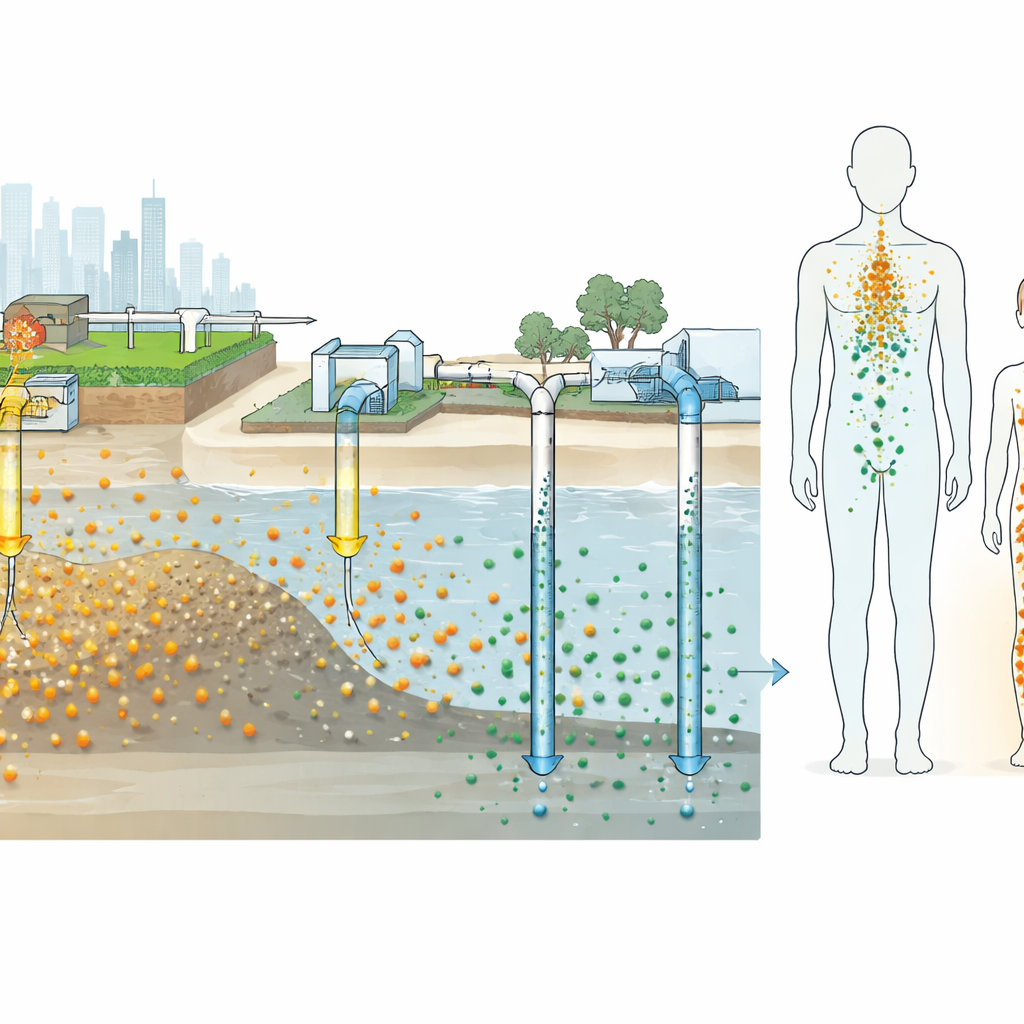
Beyond general quality, the study asked what these findings mean for the bodies of the people who drink this water every day. Using standard methods developed by the U.S. Environmental Protection Agency, the researchers estimated how much arsenic people of different ages would take in over a lifetime and what health risks this might carry. They calculated non-cancer effects through a “hazard quotient” and cancer risk through a probability measure. For both adults and children, hazard quotients for arsenic were above one across all sources, signaling a real likelihood of long-term health damage. The estimated lifetime cancer risks were far higher than international safety benchmarks—on the order of several extra cases per thousand people—highest for children and for those consuming Hafizabad tap water. While this assessment focused on arsenic only, the simultaneous presence of E. coli and high turbidity indicates that short-term illnesses like diarrhea, typhoid, and other gut infections are also a serious concern.
What This Means for Families and Cities
For residents of Hafizabad and Pindi Bhattian—and for many similar towns in developing countries—the study carries a clear message: the water coming from many taps and wells cannot be assumed safe. Even when it looks clear and tastes normal, it may carry a double burden of immediate germs and slow-acting toxins such as arsenic. The authors argue that improving water treatment, repairing and separating leaking pipes and sewers, and regularly monitoring key contaminants are urgent steps to protect public health. Until such changes are made, children and adults in these communities face avoidable risks every time they drink from common urban water sources.
Citation: Nasim, I., Nawaz, R., Farwa, A. et al. Water quality index and human health risk analysis in urban drinking water sources. Sci Rep 16, 12831 (2026). https://doi.org/10.1038/s41598-026-42789-1
Keywords: drinking water safety, arsenic in groundwater, E. coli contamination, urban water supply, health risk assessment