Clear Sky Science · en
Risk of bleeding in transbronchial biopsies in patients with pulmonary hypertension
Why this matters for people with lung problems
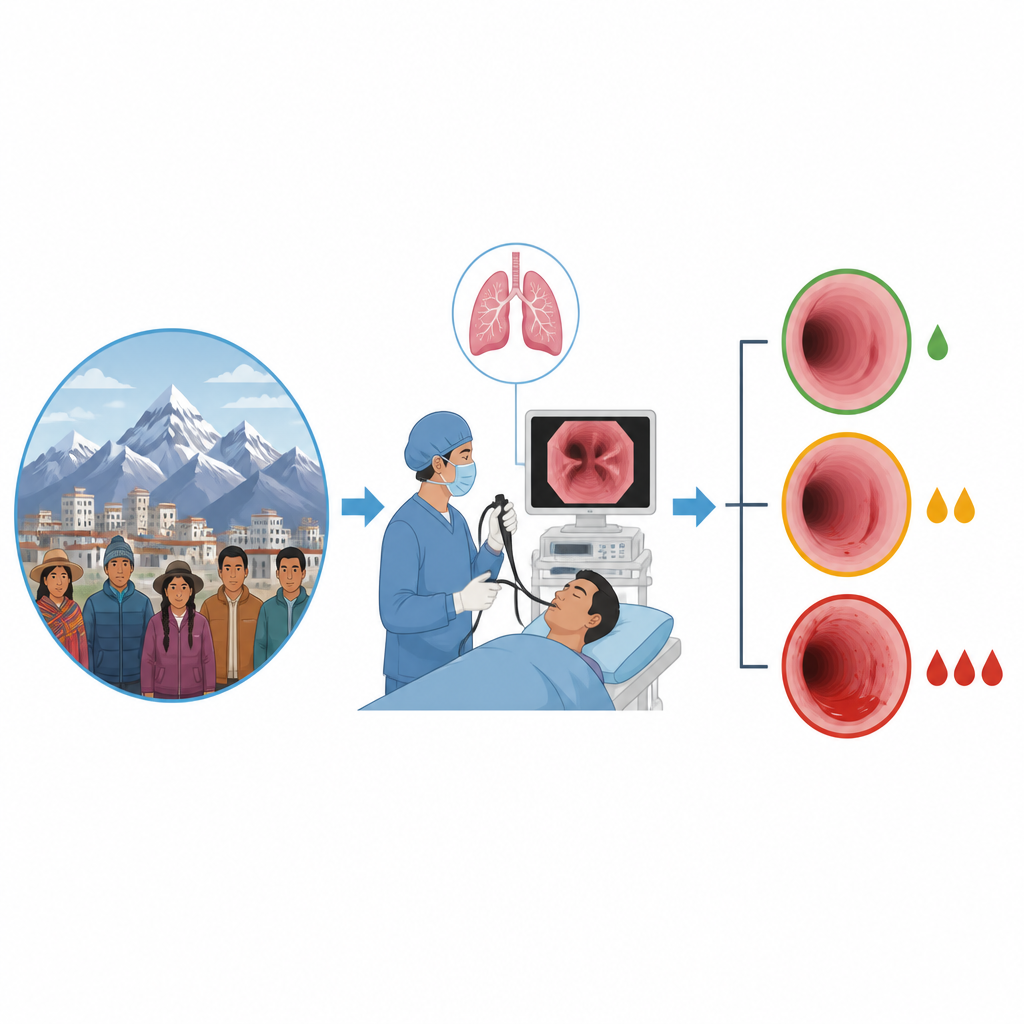
When doctors need to look closely at the lungs, they often use a thin camera and take tiny samples of lung tissue. This test, called a transbronchial biopsy, can sometimes cause bleeding. Many patients and doctors worry that people with high blood pressure in the lungs or those living at high altitude may face extra danger. This study from Bogotá, Colombia, asks a practical question: who is really most likely to bleed during this common test?
A closer look at a common lung test
Bronchoscopy lets doctors guide a flexible tube with a camera into the airways to see inside the lungs and, when needed, pinch off small bits of tissue for analysis. It is widely used to investigate lung masses, scattered tiny nodules, and stubborn areas of infection or inflammation. Most of the time the test is safe, but bleeding can occur where the tissue is taken. While serious bleeding is rare, even mild bleeding can lower blood oxygen levels and is a major concern in older or frail patients.
High altitude and blood pressure in the lungs
People living at high altitude breathe thinner air and often develop higher blood pressure in the vessels of the lungs. For this reason, many doctors see lung high blood pressure as a warning sign when deciding whether to perform a biopsy. In this study, researchers reviewed the records of 208 adults in Bogotá, 2,640 meters above sea level, who had a bronchoscopy with tissue sampling. All had heart scans and chest scans, which allowed the team to estimate how likely each person was to have high pressure in the lung vessels.
What the study found about bleeding risk
Bleeding happened in a little over one third of the procedures, but nearly all cases were mild and stopped with simple measures such as suctioning or brief pressure. Only one person had severe bleeding that required intensive care, and no one died. When the team compared bleeding with signs of high lung blood pressure on heart ultrasound or chest CT, they found no meaningful link. Patients who probably had high pressure in their lung vessels did not bleed more than those who did not, even though many showed enlarged lung arteries on their scans.
The hidden role of chronic lung disease
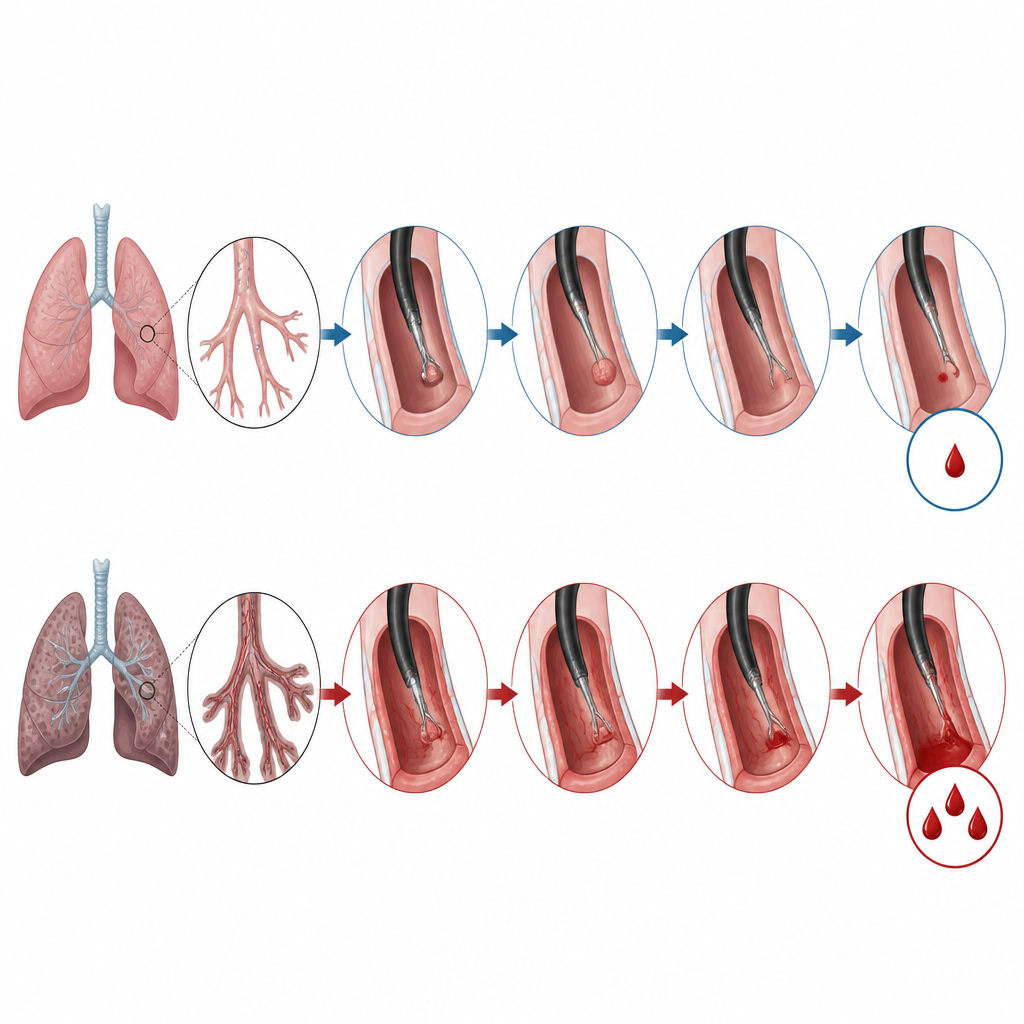
To tease out which factors truly mattered, the researchers used statistical models that accounted for age, heart failure, number of tissue samples taken, and pressure in the lung vessels. One clear pattern emerged: people with chronic obstructive pulmonary disease, or COPD, were more likely to bleed. COPD involves long standing irritation and narrowing of the airways, often from smoking, and can leave the inner lining of the breathing tubes fragile and inflamed. This fragile lining may make it easier for blood vessels to break when a biopsy is taken, even if the blood pressure in the lung arteries themselves is not extremely high.
What this means for patients and doctors
For patients at high altitude who need a lung biopsy, the study suggests that signs of high blood pressure in the lungs on routine scans should not automatically rule out the procedure. Instead, doctors may want to pay closer attention to chronic lung conditions such as COPD when weighing the chances of bleeding and planning extra safety steps. While the work has limits, including the small number of severe bleeds, it supports a more balanced view: careful bronchoscopy with biopsy can usually be done safely, even in people with suspected high lung blood pressure, as long as individual risks are thoughtfully considered.
Citation: Lutz, J.R., Galindo, J.L. & Barbosa, V. Risk of bleeding in transbronchial biopsies in patients with pulmonary hypertension. Sci Rep 16, 14830 (2026). https://doi.org/10.1038/s41598-026-42775-7
Keywords: bronchoscopy, lung biopsy, pulmonary hypertension, COPD, bleeding risk