Clear Sky Science · en
Adaptive machine learning models for predictive maintenance in industrial internet of things (IIoT) systems
Smarter Fixes Before Machines Break
Modern factories are filled with connected machines that quietly stream data every second. Hidden in those streams are early hints that something is about to go wrong. This paper explores how a newer breed of “adaptive” artificial intelligence can read those signals more like an experienced mechanic than a rigid checklist, helping industries fix problems before they turn into costly breakdowns and shutdowns.
From Scheduled Checkups to Data-Driven Care
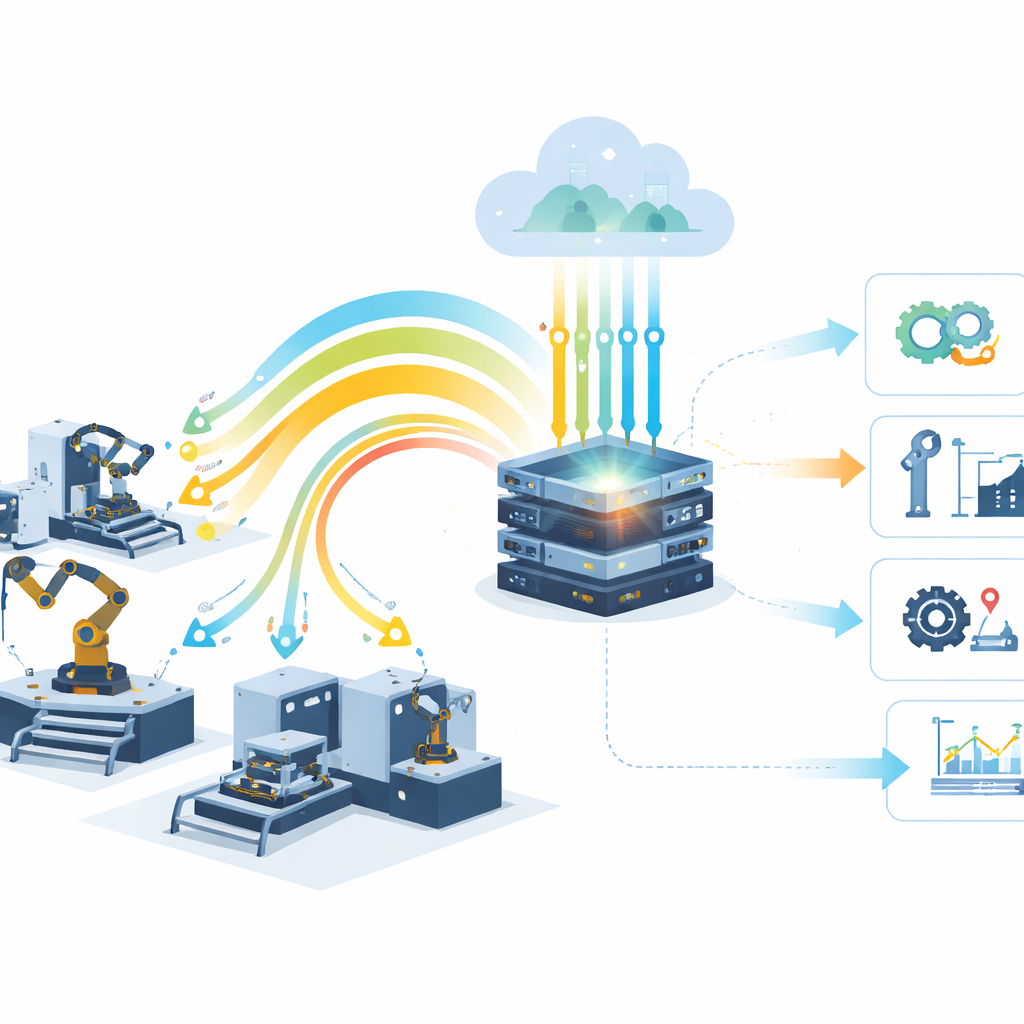
Traditional maintenance often works like a car’s fixed service schedule: check or replace parts after a set number of hours, whether they need it or not. Even when factories use machine learning, many models are trained once and then left unchanged, even as machines age, workloads shift, and sensors drift out of calibration. The authors argue that this “frozen in time” approach is poorly matched to industrial environments, where conditions constantly change. They instead focus on adaptive models that keep learning from new data and can switch to whichever model is currently performing best.
How Adaptive Models Learn on the Job
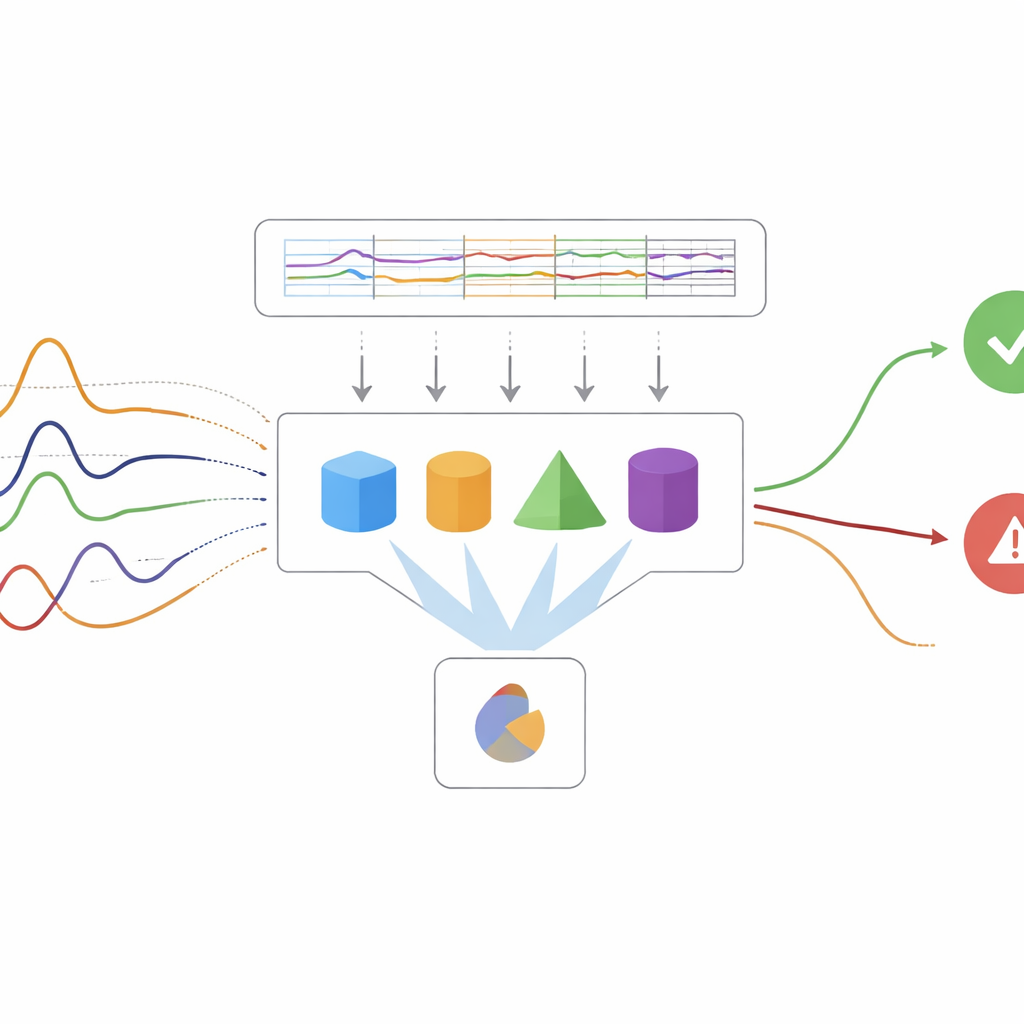
The study designs a full predictive maintenance pipeline that imitates a real Industrial Internet of Things (IIoT) setup. Sensors on engines and bearings record vibrations, temperature, pressure, and speed, drawn from well-known NASA and PRONOSTIA datasets. Because raw signals are noisy and messy, the system first smooths them, removes odd spikes, and compresses many sensor readings into a smaller set of informative features using statistical summaries and dimensionality reduction. The cleaned data then flows into a pool of machine learning models that are updated online as new information arrives. A “dynamic model selection” strategy continuously monitors their recent performance over sliding time windows and automatically deploys the model that currently makes the most reliable predictions.
Watching for Drifts and Rare Problems
A key challenge in real factories is that the data itself changes over time. Machines wear out, operators adjust processes, and new fault types appear. The authors address this “concept drift” with dedicated detectors that watch for performance drops. When drift is detected, the system retrains or adjusts only the parts of the model that need updating, instead of rebuilding everything from scratch. To handle rare but critical failures, the study emphasizes measures like recall and F1 score, which focus on catching faults without overwhelming staff with false alarms. Techniques such as boosting, incremental decision trees, and adaptive gradient methods are combined into an “Adaptive Ensemble” that benefits from both variety and continual adjustment.
Big Gains in Accuracy and Fewer Missed Faults
The researchers compare adaptive models with standard, non-adaptive approaches such as support vector machines and random forests. Across multiple test runs and strict statistical checks, adaptive methods consistently come out ahead. The best configuration, the Adaptive Ensemble, reaches about 93% accuracy and a very strong ability to distinguish healthy from failing states. Compared to traditional models, it improves recall by up to roughly 11 percentage points and precision by about 10 points, meaning it both misses fewer true faults and raises fewer false alarms. Analyses of false positives and false negatives show that the adaptive system can cut unnecessary maintenance and undetected failures by tens of percent, translating into estimated maintenance cost reductions on the order of 38–60%.
What This Means for Future Factories
For non-specialists, the main message is straightforward: instead of relying on rigid rules or one-off AI models, factories can deploy predictive systems that keep learning as machines and conditions change. By combining real-time sensor data, quick edge computing, and cloud-based analysis, the adaptive approach spots trouble earlier and more reliably, while staying fast enough for day-to-day industrial use. In practice, that means fewer surprise breakdowns, less wasted maintenance, and more uptime from expensive equipment. As these adaptive techniques mature and are integrated more deeply into IIoT platforms, they could become a cornerstone of smarter, more resilient industrial operations.
Citation: Subashree, S., Rajakumaran, M., Pushpa, G. et al. Adaptive machine learning models for predictive maintenance in industrial internet of things (IIoT) systems. Sci Rep 16, 12451 (2026). https://doi.org/10.1038/s41598-026-42666-x
Keywords: predictive maintenance, industrial internet of things, adaptive machine learning, fault detection, edge and cloud computing