Clear Sky Science · en
Anticarcinogenic effects of miR-199a-loaded gold nanoparticles on hepatocellular carcinoma: in vitro study
Why Tiny Particles Matter for Liver Cancer
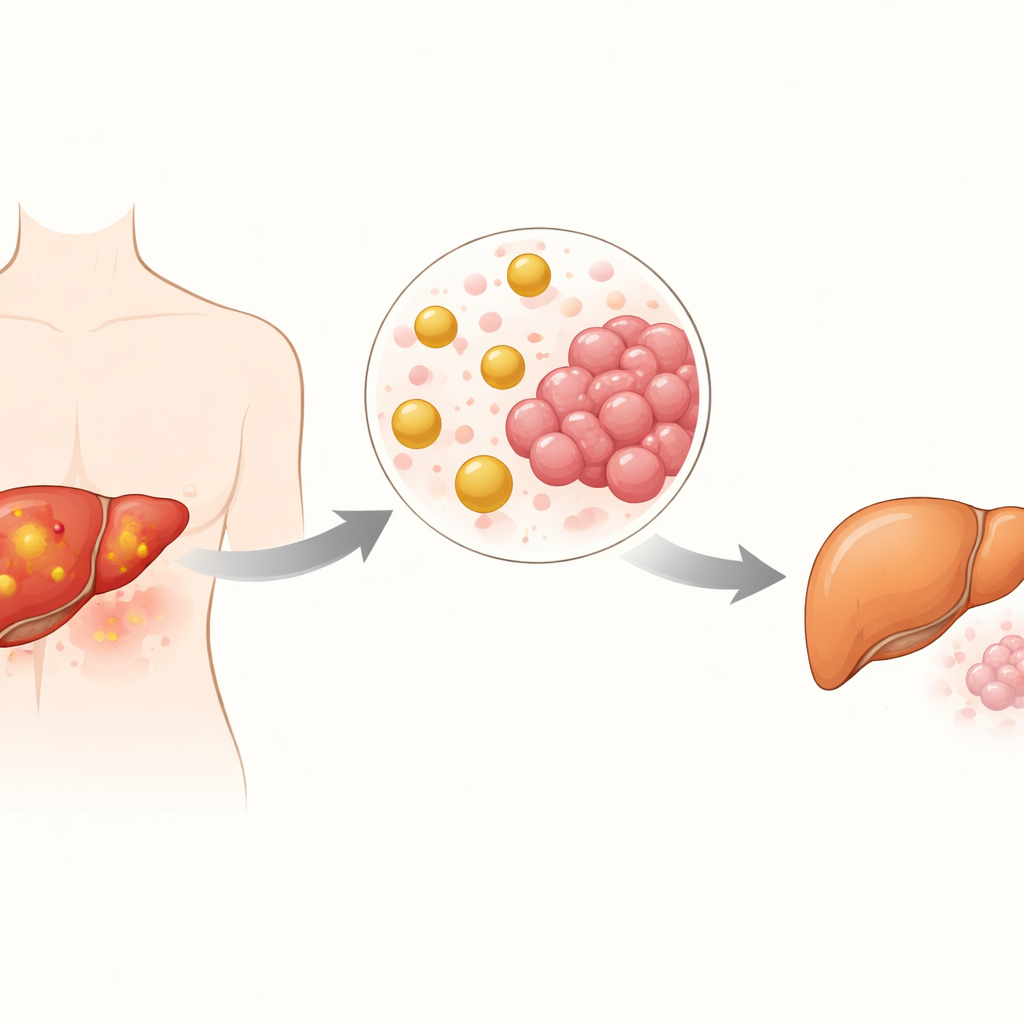
Primary liver cancer, especially hepatocellular carcinoma, is one of the deadliest cancers worldwide and is often discovered too late for surgery or standard treatments to work well. This study explores an inventive idea: using ultra-small gold particles as “couriers” to smuggle a natural cancer-fighting molecule into liver tumor cells. For readers, it offers a glimpse of how nanotechnology and genetic regulation might join forces to create more precise, less toxic cancer therapies.
Turning a Lost Protector Back On
Many liver tumors silence a small regulatory molecule called miR-199a, which in healthy tissue helps keep cell growth, movement, and survival in check. When miR-199a levels drop, tumor cells grow faster, spread more easily, and resist death. Restoring this lost protector could push cancer cells back toward normal behavior or even trigger their self-destruction. The obstacle is that miR-199a, like other fragile genetic messengers, is quickly broken down in the body and has trouble slipping inside cells on its own.
Gold Nanoparticles as Safe Couriers
The researchers built a delivery vehicle from tiny gold spheres only about 15 nanometers across—thousands of times smaller than the width of a human hair. They coated these particles with a flexible, biocompatible layer of polyethylene glycol (PEG) that carries a slight positive charge. This coating helps the particles stay stable in watery environments and attracts the negatively charged miR-199a strands, which can then cling to the particle surface. Careful measurements confirmed that, after loading, the particles became slightly larger and their surface charge flipped, clear physical signs that miR-199a had attached securely and stably to the gold cores.
Getting Inside Cancer Cells and Shutting Them Down
The team then tested these miR-199a–gold complexes on cultured HepG2 liver cancer cells. Standard cell-viability tests showed that bare gold particles alone were only mildly harmful, even at relatively high doses, indicating good basic safety. In contrast, when the same gold particles were loaded with miR-199a, cancer cell survival dropped sharply in a dose- and time-dependent way. At nanomolar concentrations—far lower than many chemotherapies—the complexes significantly reduced the number of living cells over 24 to 72 hours. Flow cytometry, a technique that counts and classifies cells one by one, revealed that this loss was driven mainly by apoptosis, a controlled form of cell suicide, rather than messy toxic damage.
Watching the Nanoparticles at Work
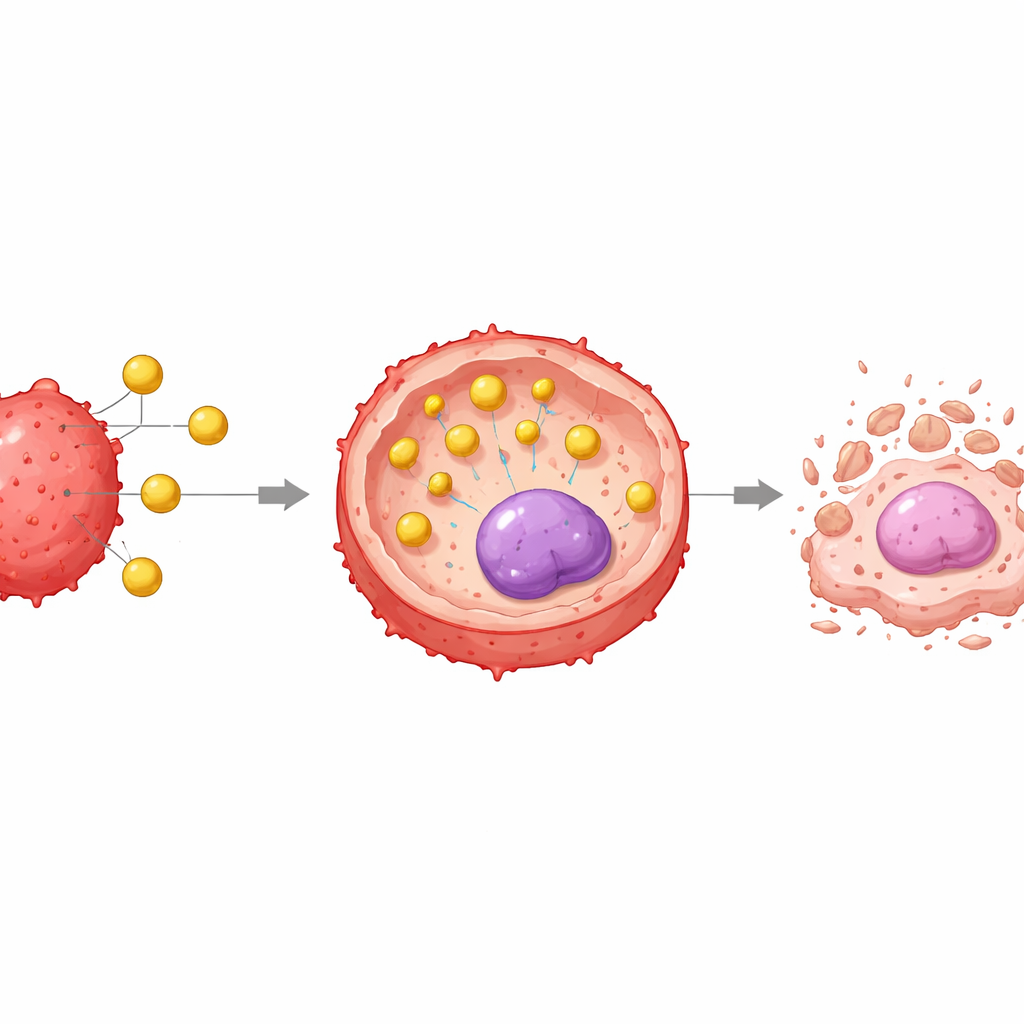
To see whether their courier system truly entered tumor cells efficiently, the scientists labeled miR-199a with a red fluorescent tag and tracked it using high-resolution microscopes. While free miR-199a produced only faint signals inside the cells, the miR-199a–gold complexes generated bright, increasing red glows in the cell body over time, confirming robust uptake. Electron microscopy went a step further, visually capturing dense gold particles clustered first on the cell surface and later inside membrane-bound sacs within the cytoplasm, consistent with uptake by endocytosis. At the same time, a proliferation marker called Ki-67 dropped dramatically: at the highest tested dose of the nanocomplex, almost all cells stopped dividing within 24 hours, showing that the treatment not only killed cells but also crippled their ability to multiply.
What This Could Mean for Future Cancer Care
In plain terms, the study shows that tiny, engineered gold particles can safely carry back a missing natural brake (miR-199a) into liver cancer cells, where it helps push them into self-destruction and halts their growth—using remarkably small doses. Although these experiments were done only in dishes of cells, not yet in animals or people, they highlight a promising direction: combining stable, customizable nanocarriers with specific genetic regulators to attack tumors more precisely and potentially with fewer side effects than traditional drugs. If future animal and clinical studies confirm these findings, this gold–miR-199a nanocomplex approach could become part of a new generation of highly targeted liver cancer therapies.
Citation: Achy, S.E., E. Moustafa, M., Fouad, M. et al. Anticarcinogenic effects of miR-199a-loaded gold nanoparticles on hepatocellular carcinoma: in vitro study. Sci Rep 16, 11357 (2026). https://doi.org/10.1038/s41598-026-42604-x
Keywords: liver cancer, gold nanoparticles, microRNA therapy, nanomedicine, targeted drug delivery