Clear Sky Science · en
Derivation and validation of a new prediction score for bacteremia in the emergency department
Why this matters in the emergency room
When someone rushes to an emergency department with a serious infection, every hour counts. Doctors must decide quickly who is likely to have dangerous bacteria circulating in their blood—a condition called bacteremia—and who does not. The usual lab test to confirm this, a blood culture, can take days and is often negative. This study set out to build a simple, numbers-only score that uses tests already drawn in the emergency room to estimate a patient’s chance of bacteremia within minutes, helping doctors act faster and avoid unnecessary tests and antibiotics.
A common and costly hidden threat
Bacteremia is a major cause of severe illness and death worldwide. If treatment is delayed, the risk of complications and death rises sharply. Yet blood cultures, the gold-standard test, have several drawbacks: results are slow, many tests are negative, and some positive results turn out to be harmless contaminants. Over-ordering cultures wastes money, exposes patients to needless antibiotics, and can extend hospital stays. Previous tools to predict bacteremia have mixed objective data, such as lab values, with subjective impressions like chills or suspected heart infection, or have relied on special tests that many emergency departments do not run around the clock. The authors asked whether a purely objective score, based only on standard vital signs and routine blood tests, could reliably flag patients at high or low risk.
How the study was carried out
The researchers analyzed records from a large community hospital in Japan. They looked at 7,196 adults who came to the emergency department between 2019 and 2021 with suspected bacteremia and who had at least two blood culture samples taken. The group was split by time into a “derivation” set to build the score and a “validation” set to test it. For each patient, they collected age, medical history, vital signs on arrival, routine blood test results, and final blood culture outcomes. They converted each numeric measurement into a simple yes/no flag, such as whether the temperature was at least 38 °C or whether the platelet count was below a certain level. Using statistical modeling, they examined which of these objective measures were most strongly linked to true bacteremia, as opposed to contamination or no bloodstream infection.
The new numbers-only risk score
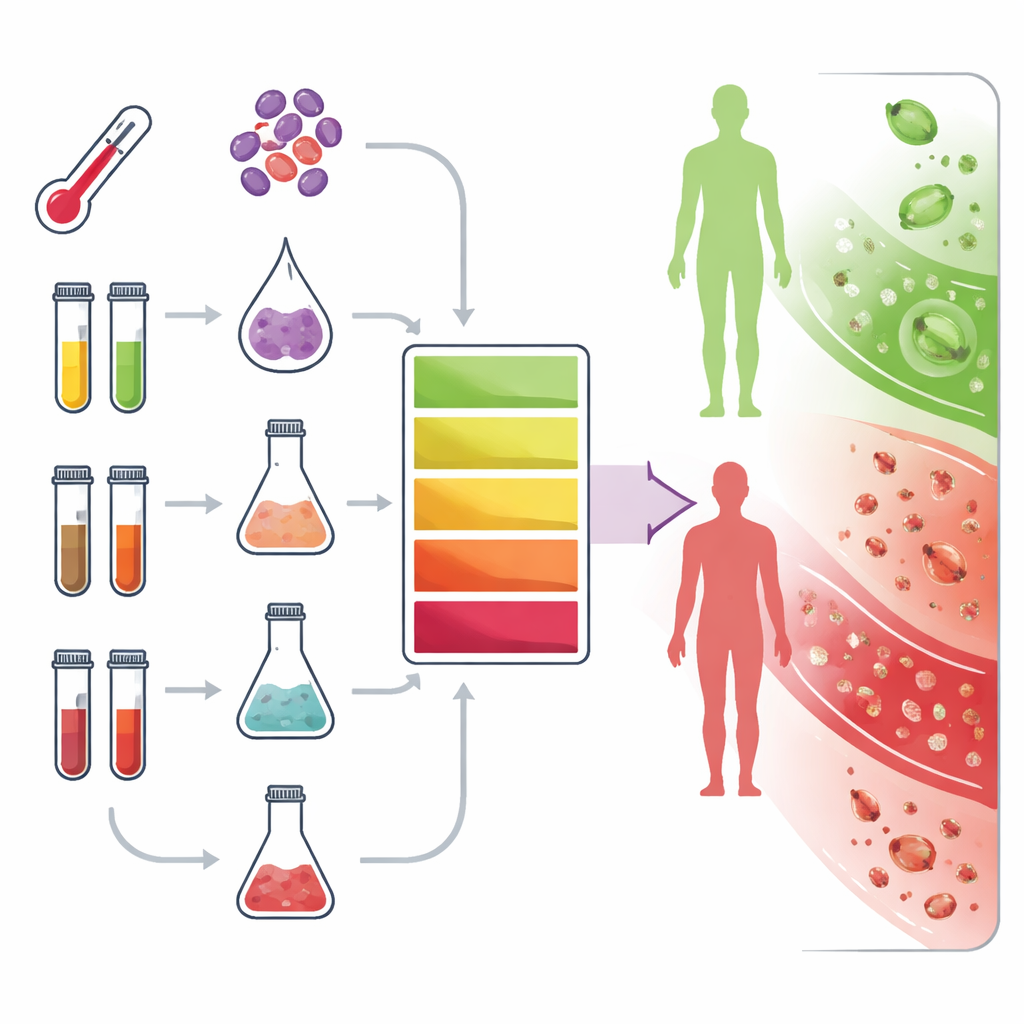
From eleven candidate measures, the final prediction score combined seven: elevated body temperature; low platelet count; a high neutrophil‑to‑lymphocyte ratio (a marker of how white blood cells are responding); low blood albumin; raised bilirubin; reduced kidney function as reflected by creatinine; and elevated blood lactate. Each item is scored as present or absent and then weighted according to its importance, with some factors, like the neutrophil‑to‑lymphocyte ratio and lactate, contributing more to the total score. In the derivation group of 3,725 patients, 12% had bacteremia; in the validation group of 3,471 patients, 14% did. The score’s ability to distinguish between patients with and without bacteremia was good in both groups and remained stable when tested with additional statistical checks for overfitting.
How the score could guide real-world decisions
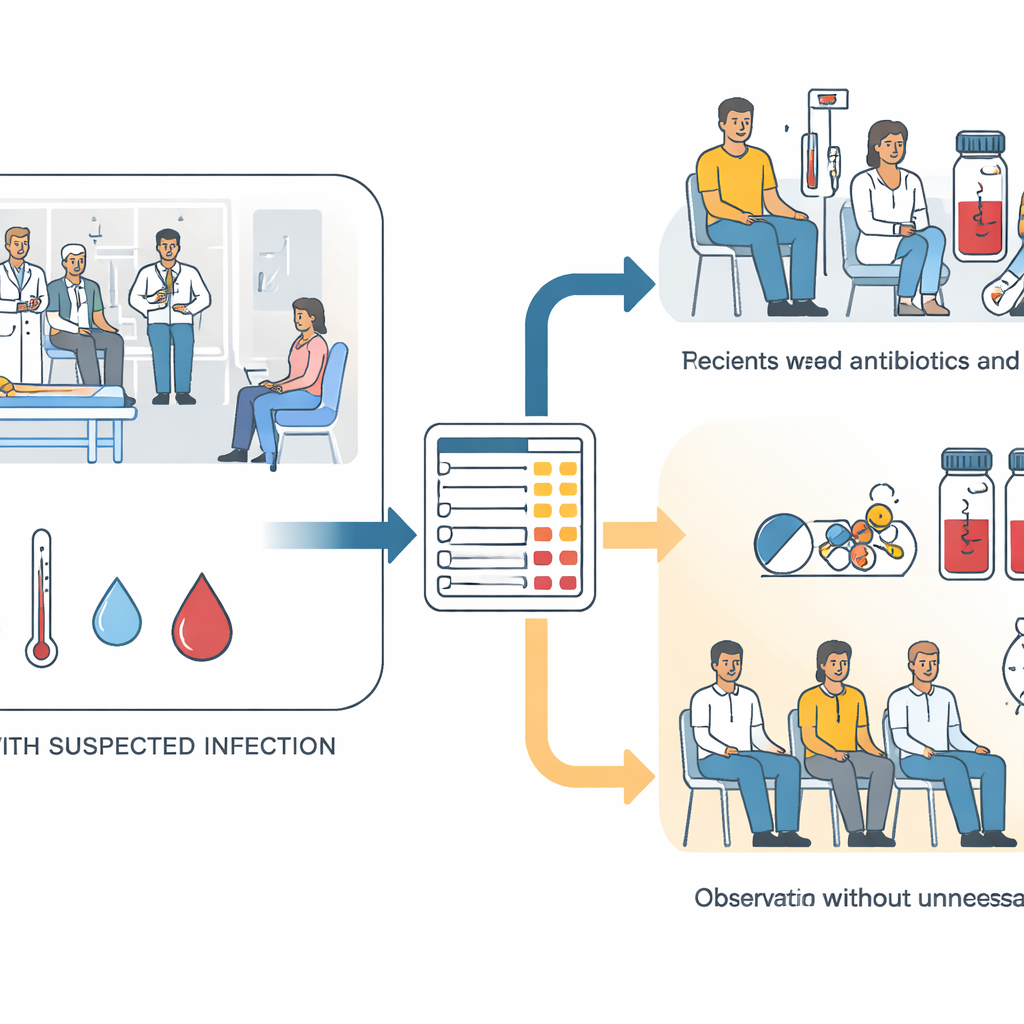
The team then translated the score into practical cutoffs for clinical use. At very low score values, almost no patients had bacteremia, giving the tool a very strong negative predictive value—meaning a low score made bacteremia unlikely. At higher score values, the proportion of patients with bacteremia rose steadily, and the chance of a true bloodstream infection became substantial. The authors illustrated this with two typical cases: an older man with multiple risk factors and abnormal tests who reached a high score, justifying immediate blood cultures and antibiotics, and a younger, stable woman with a score of zero, for whom close observation without blood cultures or antibiotics was reasonable. The score worked similarly well in both the derivation and validation time periods, suggesting that it is robust within this hospital setting.
What this means for patients and doctors
This study shows that a straightforward checklist of routine emergency department measurements can provide a quick, objective estimate of bacteremia risk, without relying on subjective impressions or specialized tests. A high score signals that doctors should act quickly—ordering blood cultures and starting antibiotics—while a very low score supports a more cautious approach, potentially sparing patients unnecessary procedures and drugs. Although the work was done at a single hospital and will need testing in other settings and populations, it points toward a future in which common lab results are turned into simple, reliable tools that help emergency doctors focus attention and resources where they are most needed.
Citation: Ohno, H., Takahashi, J., Kato, S. et al. Derivation and validation of a new prediction score for bacteremia in the emergency department. Sci Rep 16, 12284 (2026). https://doi.org/10.1038/s41598-026-42246-z
Keywords: bacteremia, emergency department, risk prediction, blood tests, sepsis